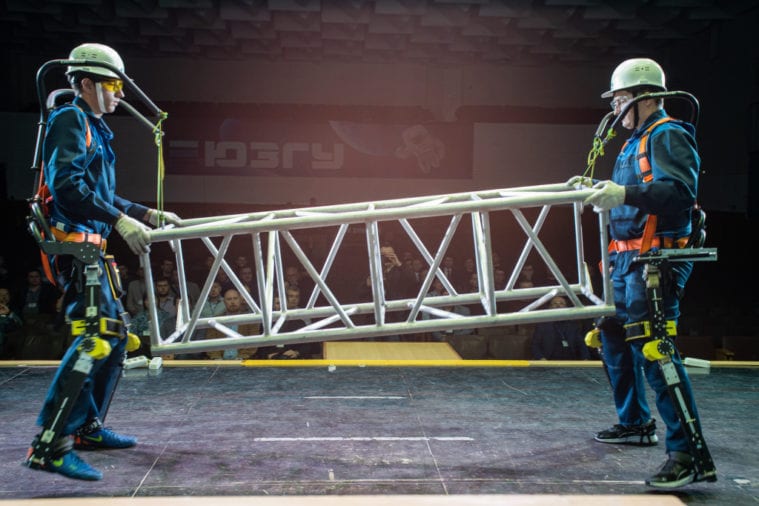
As part of a big modernization project, brand-new exoskeleton equipment was presented by Nornickel—the world’s largest nickel and palladium producer. Nornickel is currently developing industrial exoskeletons at its R&D unit and The Digital lab facilities in collaboration with the South-West State University in Kursk, Russia. Six pieces have been already prototyped to date. Furthermore, the testing of exoskeleton gear and its application is quite influential and goes beyond Nornickel’s Polar Division to different production facilities of other Russian metal companies.
Nornickel’s industrial exoskeleton is constructed of lightweight and wear-resistant aviation aluminum, which replicates human biomechanics. The main beauty and advantage of this equipment is its ability to take the weight off a person’s back muscles during any physical activity taking the strain onto its metal skeleton. The construction requires wearing the exoskeleton over a special uniform and mounting it onto the human body.
The application of the exoskeletons varies from industrial organizations to medical, as they can considerably reduce the load from the spine and legs of a person. According to recent experiments, one piece of this equipment is powerful enough to replace three people when it comes to hard physical duties. The use of exoskeletons does not only effectively resolve an issue of labor safety and protection at industrial facilities but also increases a plant’s productivity.
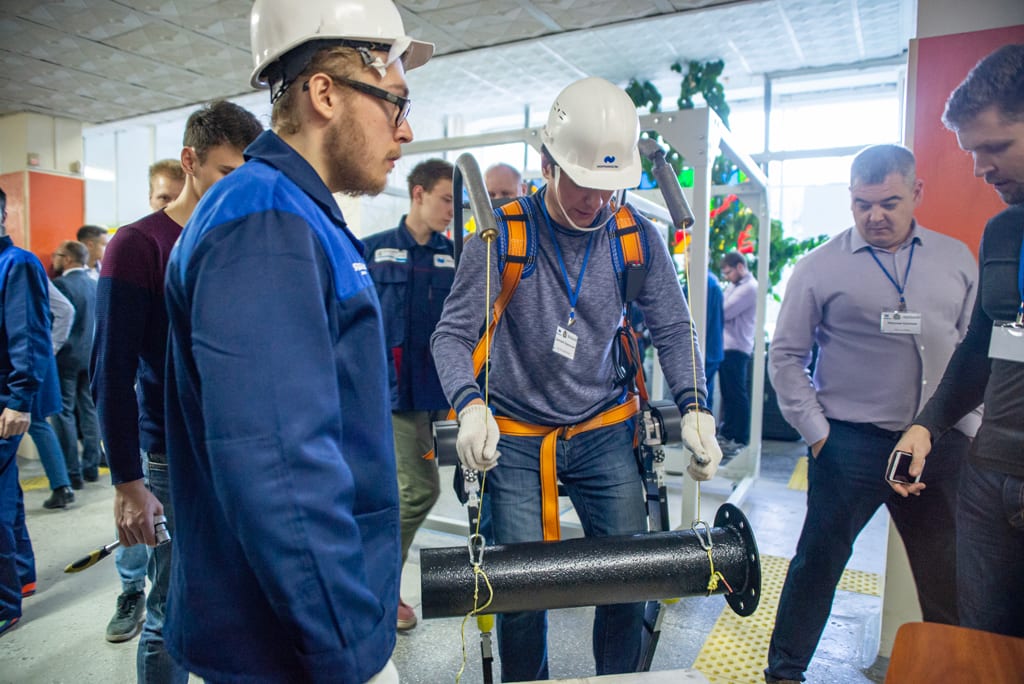
Nornickel is planning to supply staff working in mining and metallurgical spheres with exoskeletons in the near future. The company also aims to commercialize the solutions of its R&D division and sees this plan as realistic and feasible. Based on the American Grand View Research company, the exoskeleton market will reach USD 3.3 billion by 2025. At the same time, the industrial segment of it will be growing in the next seven years by an average of 60% per year. Nornickel’s investments in technological innovations cannot be considered as a trend-following motive but rather a real necessity at the plants combined with their corporate values.
The Digital Lab was created at the end of 2017 to introduce the “Industry 4.0” technologies to current production processes. Artificial intelligence (neural networks), the industrial “Internet of things”, the VR, unmanned aerial vehicles (UAVs or drones), surveying robots and, of course, the exoskeletons are just some of the remarkable results achieved by the lab so far.