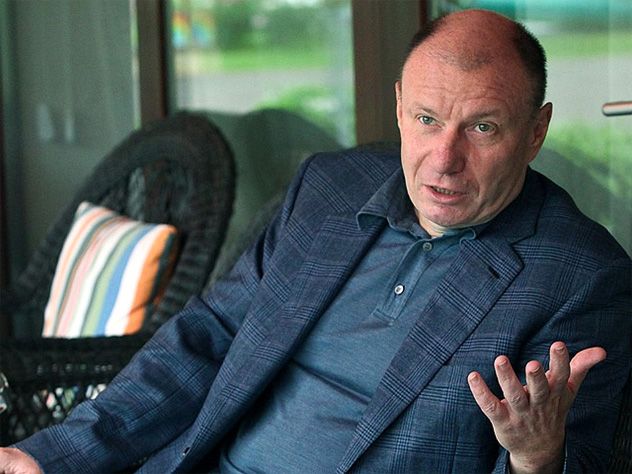
Vladimir Potanin, Russia’s “king of metals,” continues to amaze the world by remaining Russia’s most survivor.
He has not been sanctioned by the United States or the European Union, at a time when sanctions have been pouring down on all Russian businessmen.
In the first days of March, Potanin made statements that contradicted the Russian official narrative. Potanin urged the Russian authorities not to be aggressive towards Western businessmen leaving Russia.
At the same time, he acts as a kind of “savior” of foreign companies in Russia, expanding his own business and modernizing his own assets.
On Monday, Potanin’s Interros holding company said it had bought United Card Services, the Russian unit of US-listed Global Payments, for an undisclosed sum.
Last week, he bought 35 per cent of TCS Group Holding, owner of Russia’s leading online bank, from its founder Oleg Tinkov, who had bitterly criticised the war after TCS’s share price plunged.
Three weeks before that, the head of mining giant Nornickel bought back Rosbank from Societe Generale, to whom he had sold it more than a decade earlier.
That deal could further Potanin’s fintech ambitions. Rosbank is the banking partner of Atomyze, a blockchain platform in which Interros and Nornickel’s Global Palladium Fund are investors.
Global Palladium Fund is one of the first commodity firms to make such a move into digital transactions, and Atomyze is the first Russian firm authorised to exchange digital assets by the government, which is trying to promote a new sector despite objections by the central bank.
Potanin is one of Russia’s richest people, although his net worth depends largely on the value of his 36 per cent stake in Nornickel, the world’s largest producer of palladium and refined nickel – currently around $US17 billion ($23.5 billion).
Potanin’s standing will also have been burnished by his decision last December to move his offshore company Interros Capital from Cyprus back to the Russky Island economic zone in Russia’s far east.
The reason why Potanin avoided sanctions is not disclosed by Western governments. But the explanation could be in the importance of metals supplied to the world market by Nornickel, including metals for electric cars, as well as the difficult situation in the economies of many countries, following the pandemic of Сovid 19.
Earlier, Potanin spoke in defense of foreign investment in Russia, urging the Russian authorities to be cautious in taking steps to restrict the activities of foreigners in the country. And if foreign property or money were expropriated, it would take Russia back to 1917, when the Soviet revolution took place. Which shows – Potanin is one of the remaining open-minded businessmen in Russia who are in favor of settling controversial issues rather than confrontation.