The use of cash as payment has been steadily declining in recent years. In recent times, the future of cash transactions became even more uncertain. Now that fast, secure transactions seem to be the way of the future, customers are more inclined to use their credit cards directly.
Traditional cash-based economies around the world are now starting to take steps to shift to cashless. In the United States in 2020, there were only about 32% of cash transactions and 58% of payments were made using credit cards. In the UK, cash payments were even lower—just 12.4%. Credit card use, on the other hand, was up at 70%. (1)
Small business owners who don’t accept credit card payments are missing out on a lot of business, as more and more people are moving away from cash transactions. Additionally, credit card use has been steadily increasing over the years. There were more than 416 million credit card accounts in 2018; by 2021, the accounts have ballooned to almost 458 million in the United States. (2)
What you need to know about accepting credit cards
For businesses, not accepting plastic could mean potentially losing millions of customers who prefer to use credit cards. If you’re a small business owner who still has a cash-only option, here are a few things you need to know about accepting credit cards: (3)
Get a credit card processing provider
Merchant service providers or credit card processors will help you with the infrastructure to handle all your credit card transactions. You’ll also need a credit card processing tool like the one included in Jobber’s lawn service software or that can offer your business with software to monitor your transactions, chargebacks, fees, and more.
Since processing fees can differ between card and transaction types, you should find the provider that offers the most reasonable fees. If you’re operating a strictly online business, pick a payment processor that integrates well with your site. Additionally, you’ll also have to establish the credit cards your business will be accepting—that is, Discover, Visa, AmEx, MasterCard, etc.
Create a merchant account
You’ll also have to open a merchant account, preferably with the credit card processor. Your business is going to need a separate account to be used for accepting credit card payments. Usually, setting up such an account would require you to provide pertinent information about your company. You should also link it with your company’s bank account where your money’s going to be deposited.
The merchant account will establish you as a commercial enterprise, which would enable you to receive credit card payments. You can fill out an application at your bank to request for a merchant account to be opened for your business. Make sure you have an established website address, especially if you’re going to be dealing in online transactions. Expect also to put up a security deposit to your bank.
Arrange for payment terminals
Another thing you need to know about accepting credit cards is that you’ll have to arrange for payment terminals to be set up in your place of business. For a brick-and-mortar store, this would mean you have to order the proper hardware such as point-of-sale (POS) terminals and card readers.
You can choose which card reader type your company’s going to use. There are card readers that let you accept payment through a near-field communication (NFC) contactless tap, swipe, or the more secure chip or EMV readers. (4)
For online transactions, you’re going to need an online payment system. If you’re doing your online business through an eCommerce platform like Shopify, then you have nothing to worry about since it has its own payment portal. However, if you have your own business website, you’re going to need technical support from your developer or card processing provider. Credit card processing will have to be integrated into your site.
Ways of accepting credit card payments
There are three primary methods of accepting credit card payments. You’ll have to make sure to accommodate clients who’d prefer to use any one of these methods:
- Over-the-phone credit card payments – With this method, clients would have to share their card information with you and you enter it into a card reader or virtual terminal. A virtual terminal means you can turn your mobile devices like smartphones, tablets, or computers into something like a cash register in which you can enter your customer’s card information.
- Online credit card payments – Processed through a payment portal or gateway in which your clients will have to enter their details such as card number, code, expiration, and others. They could also use digital wallets like Apple Pay, Google Pay, or PayPal.
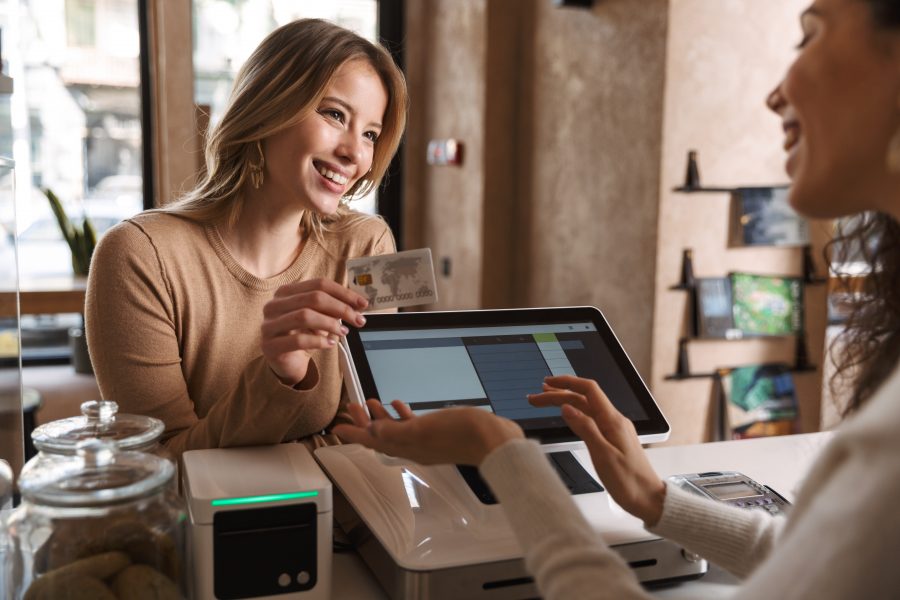
- In-person credit card payments – Mainly used by brick-and-mortar stores or mobile businesses. This type of payment is low risk since the cardholder is physically present; as such, the transaction fee is lower compared to other methods. (5)
Final thoughts
Customers who’d rather use credit cards rather than carry cash around are increasing, especially now that people are more concerned with data security. That’s why businesses who want to expand should start accepting credit card payments, as they could potentially miss out on a significant number of customers who prefer cashless business transactions.
References
- “Card Over Cash?”, Source: https://www.statista.com/chart/23950/preference-cashless-payment-selected-countries/
- “Credit card market share statistics”, Source: https://www.creditcards.com/credit-card-news/market-share-statistics/
- “Small businesses that don’t accept credit cards losing 11.8 million customers”, Source: https://www.finder.com/small-business-revenue-losses-not-having-payment-facilities
- “The ultimate guide to credit card readers: everything you need to know.”, Source: https://www.northamericanbancard.com/blog/the-ultimate-guide-to-credit-card-readers-everything-you-need-to-know
- “Card-present transactions”, Source: https://www.creditcards.com/credit-card-news/glossary/term-card-present-transactions/