The way you manage your refrigeration control and use and store your food will affect the amount of energy it uses. A full refrigerator will use less energy than a full fridge because there is less air to cool if all the free space has been taken up.
Store Food Carefully
Of course, by the same measure, you don’t want to over fill your refrigerator. If there is too much in the refrigerator air circulation can be hampered and this will make it harder to keep it cool. It is also a good idea to keep liquids covered properly and food properly wrapped when they are in the fridge. Not only do foods that are not properly covered and wrapped dry out and taste bad, but the moisture in the refrigerator will make it more difficult for the compressor to function properly.
Keep up With Maintenance
Providing your fridge with proper maintenance will also allow your fridge to last longer and keep the energy usage low as well. This is particularly important if you are running a business. You will want to make sure that the coils behind the refrigerator are kept cleaned and dusted as well. Keeping these coils dusted regularly will allow the airflow to remain optimal and will reduce the strain on the compressor as well. Another important thing to do will be to defrost the freezer as needed. A mere quarter-inch of frost can reduce the efficiency of the freezer considerably.
Checking the seals for leakage is another good way to ensure that the refrigerator is not wasting energy cooling down the rest of the house. Cold air that escapes the refrigerator will make the compressor work harder to keep the interior at the ideal temperature. Test this by taking a dollar bill and placing it between the door and the refrigerator at a point you believe the leak could be present. If the closed door grips the dollar bill firmly, the seal is good and your money is safe. If the dollar bill can be pulled out with hardly any effort, air from the interior is leaking into the void and taking your hard-earned cash with it.
Set the Right Temperature
If you are making your refrigerator and freezer run at extremely low temperatures, it will use a lot more energy than you possibly need.
Refrigerator settings should be at 37°-40°F and will still work at peak performance while reducing your energy costs. A Freezer doesn’t need to be any lower than 5°F unless they are the stand-alone freezers that will not be opened much in which case the settings can be around 0°. You can get a better idea of what the temperatures in the refrigerator are by placing a thermometer in a cup of water in the fridge. To measure the temperature of the freezer, just place the thermometer in between the packages in the freezer and measure after 24 hours.
Position Your Refrigerator Strategically
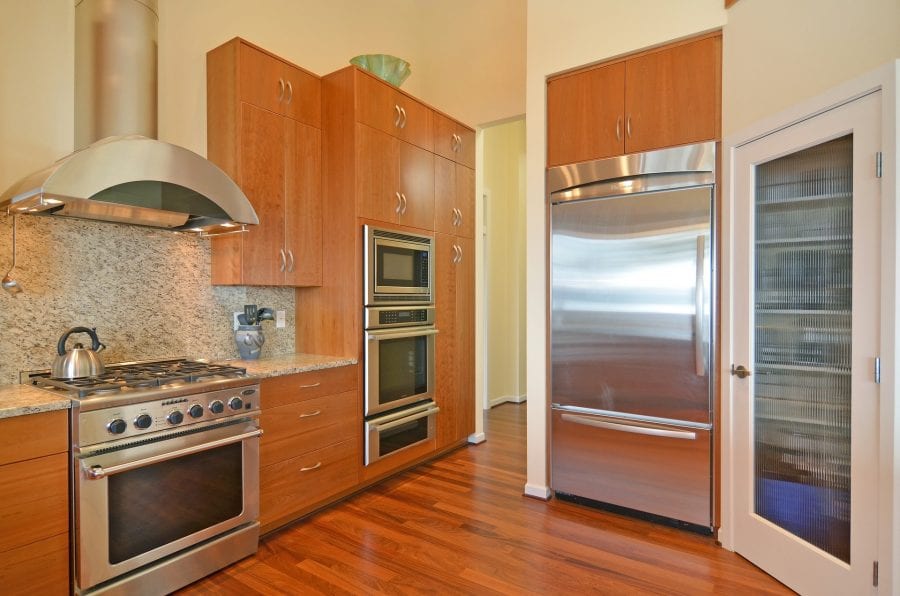
The location of the fridge is also going to affect its energy usage. Of course, this has to be near the electrical and water connections. But, if at all possible, the refrigerator should be strategically located according to FridgeXpress. Airflow around the unit will help maximize efficiency so make sure there is nothing around the refrigerator that could impede airflow suggest . Finally keep your refrigerator away from your stove, oven and direct sunlight. The best place for the refrigerator is in the coolest spot of the kitchen.