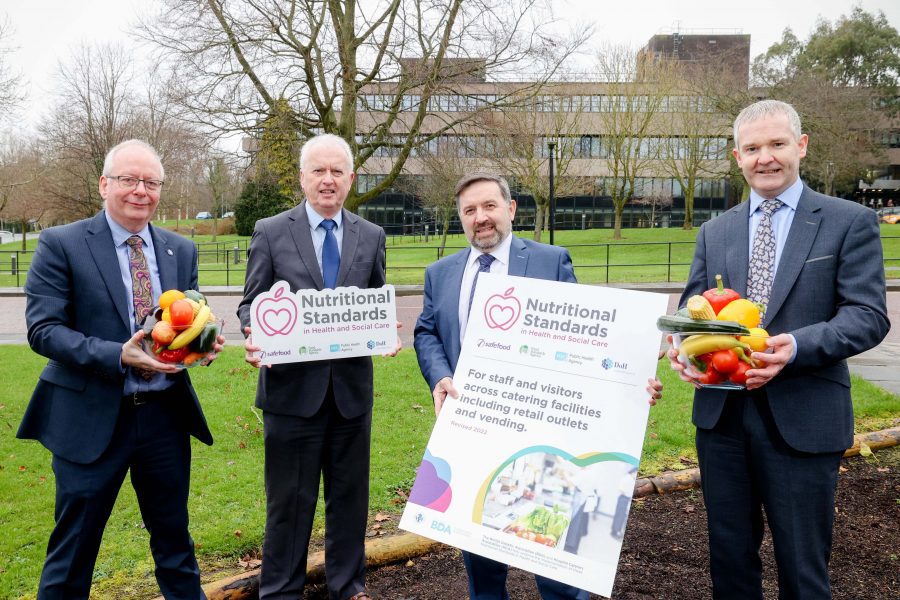
Updated Nutritional Standards have been announced today, designed to make the food on offer for staff and visitors in hospital cafés and restaurants, vending and retail outlets healthier.
The Public Health Agency (PHA), Food Standards Agency (FSA), safefood and Health and Social Care (HSC) colleagues have jointly developed and reviewed these Nutritional Standards, so that healthier food choices are available for staff and visitors in Health and Social Care settings.
Nutritional Standards
The overall aim of the Nutritional Standards is to help address overweight and obesity and improve staff and visitor health and wellbeing. These are food-based standards, modelled on the Eatwell Guide.
These Nutritional Standards were first introduced in 2017 and there has been ongoing work and support to implement them over the past five years. The Standards have been updated by an expert panel, taking into account the latest evidence and guidance. This has led to, for example, increasing fruit and vegetables and wholegrains while decreasing the amount of saturated fat, salt and processed meats. In addition to specific guidance for each food group, these now also address the topics of vending and the food environment.
The vending guidelines include recommendations for snacks and confectionery items and ensure all beverages on offer are sugar-free. The food environment standards include recommendations for fresh tap water to be freely available; no salt or sugar to be displayed at tables; and for all confectionary to be removed from the till area.
Launching the Nutritional Standards Minister Swann said, “Implementation of the Nutritional Standards across healthcare settings is a key outcome in my Department’s ‘A Fitter Future for All’ obesity prevention strategic framework, and supports delivery of a number of outcomes and priority areas. Implementation of these Standards creates a new opportunity for staff, teams and organisations to make positive changes for the wellbeing of staff and visitors.
Evidence shows that a healthy balanced diet, combined with physical activity, can help maintain a healthy weight, and lower the risk of diseases including heart disease, type 2 diabetes and some cancers. Facilities such as restaurants, coffee shops, vending machines, workplace canteens and retail outlets like hospital shops can impact on the quality of the food we eat, and how much we eat, through the food choices they offer. I am therefore delighted to support and endorse these new Standards as an important step in improving the health and wellbeing of our population. In fact, given the Health Service employs around 72,500 people, many of them consuming the food on offer at their place of work for meals and snacks, these Standards will have a particularly a positive impact on the health and wellbeing of our colleagues right across Northern Ireland.”