Northern Ireland faces higher levels of poverty and deprivation than many other parts of the United Kingdom. This reality has been worsened by economic shocks and rising living costs, with many households now facing new financial pressures.
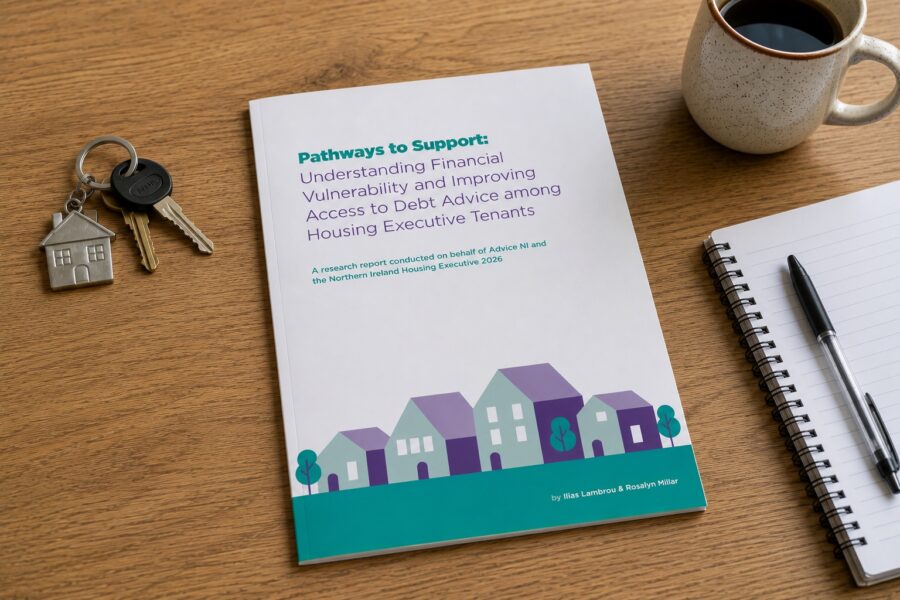
A report funded by the Department for Communities and conducted by researchers from Queens University Belfast on behalf of Advice NI and the Northern Ireland Housing Executive has today been published. It examines the main causes of financial stress that many Housing Executive tenants face.
The Housing Executive directly manages approximately 83,000 homes occupied by some of the lowest income households in Northern Ireland – 79 per cent of tenants are currently in receipt of full or partial Housing Benefit or Universal Credit support towards their rent, indicating the financial challenges faced by Housing Executive’s tenants.
Using anonymised data from Advice NI’s tenant referral records, and the Housing Executive’s Continuous Tenant Omnibus Survey (CTOS), the new report has found that tenants, regardless of whether they are receiving full, partial, or no support with their rent, are experiencing financial difficulties.
46 per cent of tenants stated they experienced financial difficulties in the year prior to the report, and 18 per cent lacked confidence in their current financial situation. A quarter could not cover an unexpected £200 expense, and others struggled to meet the demands of seasonal events such as the summer holidays, back to school, or Christmas.
To compound the existing financial difficulties caused by the high cost of living, those tenants not in receipt of benefits also reported income stagnation. Only 13 per cent of these respondents saw an increase in their income in the 12 months before the report was carried out, and of those whose income decreased, 52 per cent attributed the decline to employment instability caused by various factors including redundancy, reduced hours, and illness.
And yet despite experiencing ongoing difficulty, 57 per cent of respondents said they would first turn to family and friends for financial support. Sinead Campbell, Head of Money, Debt and Quality at Advice NI explained that the findings have revealed a clear gap between people developing their own coping strategies instead of using of external support services.
She said, “In addition to going overdrawn or delaying bill payments to cover their expenses, respondents also reported delaying loan repayments. Some tenants have had to limit their heating use, even in cold temperatures, and some have chosen to cut back on food shopping, highlighting the difficult trade-offs tenants pursue to try to make ends meet, all of which affects overall wellbeing.
“Worryingly, even those aware of debt advice services are reluctant to engage, suggesting that emotional barriers continue to limit the uptake of professional support. We must consider that this disengagement appears to be linked to the stigma, overwhelm, and fear that comes with debt or financial difficulty. More than half of our clients wait over two years before seeking advice, which increases stress and anxiety, but early intervention is crucial to improve financial outcomes.”
Housing Executive Director of Housing Services, Jennifer Hawthorne, said, “This report is a significant body of work. It demonstrates the difficulty Housing Executive tenants are experiencing but crucially provides clear recommendations on how to strengthen existing financial inclusion supports, particularly early engagement with debt advice services, to help break the cycle of debt and financial exclusion. We’ll use these findings to look at various ways to further develop our service in helping tenants to improve their financial resilience, including working more closely with Advice NI to strengthen awareness and give our tenants the confidence to connect with the service.”
In 2024/25, Advice NI supported clients with over £39 million in personal debt, an 80 per cent rise compared with the £21.7 million recorded in 2021/22. However, its Interim Chief Executive, Fiona Magee, says more can still be done to ensure people seek help when it is needed.
She said, “Our clients, including the Housing Executive tenants who have engaged with us, all report improved money management behaviours and experience better emotional wellbeing after receiving support. Last year, our expert advisers increased financial gains for clients by 185% compared to 2023/24, reaching a total of £2,441,383. In most cases, this meant getting the debt either fully or partially written off, giving the client a vital fresh start.
“As financial pressures continue, it is essential that specialist debt advice remains available to those who need it most. Northern Ireland needs to challenge and remove the stigma associated with debt whilst continuing to highlight the profoundly positive impact professional debt advice provides.”
Advice NI is funded by the Department for Communities. For free, confidential, and impartial advice, or to access its budgeting tools and debt resources, visit adviceni.net, phone 0800 915 4604 or email [email protected]