Post-virus everything is going to change. That’s the dominant view of national and international media. But how exactly do they see the future? This regular digest section gives some of their answers and views/Edited by George Hamilton
In this edition (16 Apr)
- More recurrent themes are beginning to appear. How do you put the surveillance genie back in the bottle post-virus?
- ..and why medical diagnoses delivered remotely are here to stay. As are the growth of UK-based call centres, staffed by humans, not machines
- ALSO: The global standing of the US is at rock-bottom – and that’s not going to change anytime soon
- And a polemic – but worth reading nonetheless – in the Guardian (where else?) saying post-virus the rich will be even richer
Growth in surveillance may be hard to scale back after pandemic, experts say
The coronavirus pandemic has led to an unprecedented global surge in digital surveillance, researchers and privacy advocates around the world have said, with billions of people facing enhanced monitoring that may prove difficult to roll back.
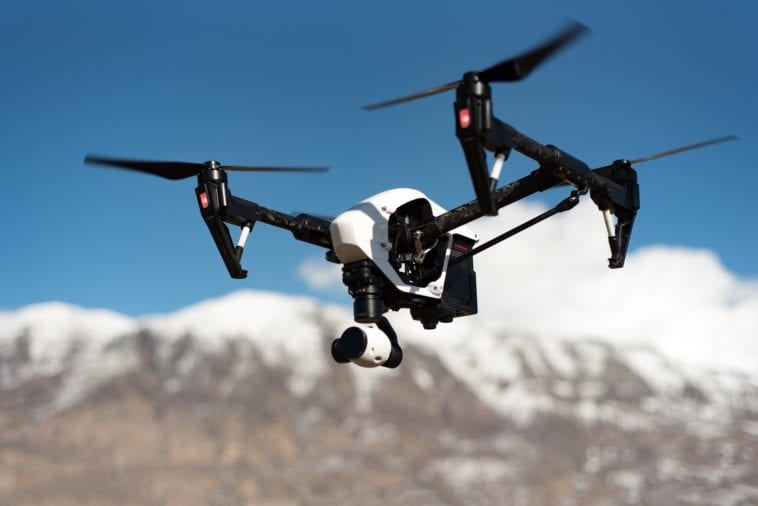
Governments in at least 25 countries are employing vast programmes for mobile data tracking, apps to record personal contact with others, CCTV networks equipped with facial recognition, permission schemes to go outside and drones to enforce social isolation regimes.
The methods have been adopted by authoritarian states and democracies alike and have opened lucrative new markets for companies that extract, sell, and analyse private data. One of the world’s foremost experts on mobile phone surveillance said the pandemic had created a “9/11 on steroids” that could lead to grave abuses of power.
“Most of these measures don’t have sunset clauses. They could establish what many people are describing as a new normal,” Ron Deibert, who heads the Citizen Lab at the University of Toronto, said
In China, hundreds of millions have installed mandatory “health code” apps that determine whether users– given colour-coded designations of green, yellow, or red (for confirmed Covid-19 patients) – can travel or leave home.
In Europe, some of the world’s most privacy-conscious governments are collecting telecom data, employing drones and copying contact-tracing apps pioneered in Asia. In the US, Apple and Google have announced they will open up their mobile operating systems to allow for similar apps, which will run on iPhones and Android phones alike.
In India, local authorities have experimented with solutions such as mobile tracking apps, geolocated selfies, and releasing the addresses of coronavirus patients.
Israel, with its global reputation for both state and private sector intelligence gathering technology, was quick to implement surveillance on a national scale, initially with phone tracking measures endorsed by the prime minister, Benjamin Netanyahu.
The adoption of tracing apps and other electronic surveillance measures has become a live issue of concern in Brussels, where member states have been warned of the risk to the EU’s “fundamental rights and freedoms”.
Authorities in Poland, the Netherlands, Spain, Ireland and the UK have all either expressed an interest or started to roll out mobile phone apps to help them track and trace those infected with the virus.
The UK health secretary, Matt Hancock, announced plans for a Bluetooth-based app that will warn users if they have recently been in close proximity to someone suspected to be infected with the coronavirus. The Dutch health minister, Hugo de Jonge, said last week at least 60% of the population would need to download the Netherlands’ similar app for it be effective. “We are looking at whether you can require everyone to do it,” he said during a press conference.
Meanwhile, telecom operators in Italy, Spain and other EU countries have released “heat maps” of users’ movements, arguing that the data was sufficiently anonymised and aggregated to prevent the tracking of individuals, which would be a potential violation of GDPR.
The UK’s last EU commissioner, Julian King, who held the security portfolio in Brussels, said he was concerned about the lack of debate so far “about what kind of society we want, and what values we hold dear”. Guardian 14 Apr
Demand for telemedicine has exploded in the UK
Family doctors in the U.K. have seen their day-to-day work routines radically altered by the coronavirus pandemic.
Many are turning to online consultation services to see patients who are stuck at home.
AccuRx built a video chat tool in one weekend last month — it’s now being used in 35,000 consultations a day.
It’s a radically different primary care model that physicians say won’t go away once the COVID-19 outbreak ends.
Dr. Mandip Thiara was surprised at how swiftly U.K. health start-up AccuRx was able to set him and his colleagues up with its new remote video consultation software. The Watford-based family doctor said such technology had been talked about in his field for at least four years.
“It’s just funny how, when we’re in a crisis situation, over the course of 24 hours they can press a button and turn this thing on for us,” Thiara told CNBC. “With the NHS, everything is slow,” he said. “There are all sorts of hoops to jump through in terms of funding.”
GPs across the U.K. have seen their day-to-day work routines radically altered by the health crisis. They’re having to do much of their consultations online or via telephone as patients are stuck at home due to the country’s lockdown measures.
Some have set up “hot hubs,” Thiara said, which are for coronavirus patients who “absolutely need to be seen” — particularly the elderly. But the vast majority are encouraged to undergo triage over the phone or online and consult their doctors remotely.
But there are myriads of people still requiring treatment for non-coronavirus illnesses. Recovering cancer patient Neil Hart returned to the U.K. from a planned vacation to the Philippines last month.
With the U.K. on lockdown, Hart had to seek medical advice remotely. So he called his local GP surgery, which set up a phone appointment with his nurse.
“The video quality was probably better than Zoom, it was seamless,” he said. “I was able to straight away show her a close up of the wound. She reassured me that I was doing the right things and working in the right direction.”
Will telehealth continue in the future?
Dr. Clare Gerada, who formerly chaired the U.K.’s Royal College of General Practitioners, has seen a significant change to the way she works.
“About 99% or more of our care of patients has moved digitally or remotely onto the telephone, which is very strange,” she told CNBC. “It has transformed.”
Gerada is also a co-founder of eConsult, an online health system set up by her NHS partnership, the Hurley Group, to help patients consult their GPs. The platform can access a patient’s health records, allowing doctors to determine what form of care they should recommend.
“The use of eConsult is now exploding across the country,” Gerada told CNBC. Two months ago, it was handling around 300 consultations a month on average. “We’re now doing 3,000 every hour.”
For many clinicians in the country, it’s a radically different primary care model that’s unlikely to go away once the COVID-19 pandemic ends. “We can never see ourselves going back to how it was prior to this,” said Thiara.
Gerada says she has been trying to persuade hospital outpatient departments to use her company’s eConsult software. “Maybe that will happen,” she said. But for now, she says, those departments mainly rely on phone calls and Zoom’s video conferencing platform. CNBC 9 Apr
Virus has strengthened case for UK call centres offering human touch
David Wighton: It is too soon to make many confident predictions about the lasting impact of coronavirus on British business, but one industry that looks certain to benefit is call centres.
With about 800,000 staff, contact centres employ almost a third as many people as the whole of manufacturing. It was the growth of call centres in the 1980s and 1990s that helped to offset some of the jobs lost in manufacturing and mining. Indeed, they were often set up with the aid of government grants in areas that had suffered big plant closures.
Many call centres are big employers in vulnerable local economies, particularly in the north of England.
The crisis will have a profound impact on the British contact centre industry, according to Sukand Ramachandran, a senior partner at Boston Consulting Group. “All businesses will pay more attention to resilience and their ability to withstand scenarios like this and contact centres will have a key role to play,” he says.
The crisis is also expected to accelerate the migration of activity online, increasing demand for contact centre services.
Although contact centres will continue to invest in new technology, Mr Ramachandran believes that the crisis will highlight the value of human interaction, which is “especially true when people are feeling vulnerable”.
Another factor that could underpin employment in the UK will be companies bringing back closer to home operations that had been moved to countries such as India, according to John Devlin, chief executive and co-founder of Ascensos, a contact centre business with operations in Britain and Europe.
This has been a trend in recent years as companies have responded to concerns about quality of service. As contracts come up for renewal, the trend is likely to accelerate, Mr Devlin believes.
Mr Devlin predicts that the crisis will lead to a permanent increase in the number of contact staff working from home. This should improve employment prospects for groups such as parents of young children and people with disabilities. It also will make it easier for people to live and work in economically “left behind” areas rather than be forced to move to find jobs.
For a government focused on “levelling up”, that should be very helpful, but of course it will happen only if there are decent broadband services. When the government turns its attention to rebooting the economy, delivering the rollout of high-speed broadband across the country should be right at the top of its list. The Times 14 April
US’s global reputation hits rock-bottom over Trump’s coronavirus response
Simon Tisdall: Lasting resentment over how the US went missing in action in the coronavirus wars of 2020 may change the way the world works.
Donald Trump’s response to the coronavirus pandemic, which he once dismissed as a hoax, has been fiercely criticised at home as woefully inadequate to the point of irresponsibility.
Yet also thanks largely to Trump, a parallel disaster is unfolding across the world: the ruination of America’s reputation as a safe, trustworthy, competent international leader and partner.
Call it the Trump double-whammy. Diplomatically speaking, the US is on life support.
“The Trump administration’s self-centred, haphazard, and tone-deaf response [to Covid-19] will end up costing Americans trillions of dollars and thousands of otherwise preventable deaths,” wrote Stephen Walt, professor of international relations at Harvard.
“But that’s not the only damage the United States will suffer. Far from ‘making America great again’, this epic policy failure will further tarnish [its] reputation as a country that knows how to do things effectively.”
This adverse shift could be permanent, Walt warned. Since taking office in 2017, Trump has insulted America’s friends, undermined multilateral alliances and chosen confrontation over cooperation. Sanctions, embargoes and boycotts aimed at China, Iran and Europe have been globally divisive.
For the most part, oft-maligned foreign leaders such as Germany’s Angela Merkel have listened politely, turning the other cheek in the interests of preserving the broader relationship.
But Trump’s ineptitude and dishonesty in handling the pandemic, which has left foreign observers as well as Americans gasping in disbelief, is proving a bridge too far.
Erratic behaviour, tolerated in the past, is now seen as downright dangerous. It’s long been plain, at least to many in Europe, that Trump could not be trusted. Now he is seen as a threat. It is not just about failed leadership. It’s about openly hostile, reckless actions.
The furious reaction in Germany after 200,000 protective masks destined for Berlin mysteriously went missing in Thailand and were allegedly redirected to the US is a case in point.
Europeans were already outraged by Trump’s reported efforts to acquire monopoly rights to a coronavirus vaccine under development in Germany. This latest example of nationalistic self-interest compounded anger across the EU over Trump’s travel ban, imposed last month without consultation or scientific justification.
US reputational damage is not confined to Europe. “Trump’s battle against multilateralism has made it so that even formats like the G7 are no longer working,” commented Christoph Schult in Der Spiegel. “It appears the coronavirus is destroying the last vestiges of a world order.”
Trump’s surreal televised Covid-19 briefings are further undermining respect for US leadership. Trump regularly propagates false or misleading information, bets on hunches, argues with reporters and contradicts scientific and medical experts.
To a watching world, the absence of a fair, affordable US healthcare system, the cut-throat contest between American states for scarce medical supplies, the disproportionate death toll among ethnic minorities, chaotic social distancing rules, and a lack of centralised coordination are reminiscent of a poor, developing country, not the most powerful, influential nation on earth.
That’s a title the US appears on course to lose – a fall from grace that may prove irreversible. The domestic debacle unleashed by the pandemic, and global perceptions of American selfishness and incompetence, could change everything. According to Walt, Trump has presided over “a failure of character unparalleled in US history”.
Do Americans realise how far their country’s moral as well as financial stock has fallen? Perhaps at this time of extreme stress, it seems not to matter. But it will matter later on – for them and for the future international balance of power.
Heiko Maas, Germany’s foreign minister, said he hoped the crisis would force a fundamental US rethink about “whether the ‘America first’ model really works”. The Trump administration’s response had been too slow, he said. “Hollowing out international connections comes at a high price,” Maas warned. Guardian 12 Apr
Don’t be fooled: Britain’s coronavirus bailout will make the rich richer still
Christine Berry: Wage support is being funded by large-scale public borrowing of the kind we were told was unaffordable just a few months ago (although this is now being supplemented by direct financing with newly created money from the Bank of England). Yes, this could usher in a new era of state intervention – but it could just as easily herald a new era of austerity.
Conservatives such as Sajid Javid – who tweeted that “the whole point of fiscal conservatism in normal times is to be able to act decisively if there is a genuine economic emergency” – are already trying to reconcile the crisis response with austerity politics. Fiscal hawks will be keen to draw a line under the crisis period and insist that we now need to tighten our belts again to pay for it.
Meanwhile, mortgage and rent “holidays” and guaranteed loans for small businesses require people to take on private debts that they will have to pay back when the crisis is over. One way or another, then, the bulk of the costs will still eventually be borne by ordinary people.
On the other hand, virtually no sacrifices have been demanded of banks, landlords or profitable corporations, such as utility companies. The only people in society not being asked to share the burden are “rentiers”: those who make money by owning assets they can charge others to use.
[Govt] guidance innocently declares that mortgage holidays for landlords “will mean no unnecessary pressure is put on their tenants”. Unsurprisingly, emerging anecdotal evidence suggests precisely the opposite. The business interruption loan scheme has already had to be overhauled after banks failed to extend low-cost credit to struggling businesses, while the Financial Conduct Authority was forced to stop them hiking overdraft charges. Meanwhile, some large companies are still laying off workers, or at best, pocketing government support and refusing to top it up from their own coffers.
The government has built an economic bunker from which rentiers will emerge unscathed into the scene of devastation wreaked on the rest of the population. As economist Gary Stevenson points out, if some of this windfall is spent on property, the result will be to push house prices up – adding insult to injury for the low-paid renters who will have borne the brunt of the crisis. All of this is simply indefensible.
Crises always create winners as well as losers. The bank bailouts of 2008 should have taught us that state intervention is not necessarily progressive. Back then, the state assumed the liabilities of finance capital and ordinary citizens ultimately footed the bill. Now, we are seeing a very similar story play out again – but the mechanisms at work are more subtle, the implicit subsidies for rentier interests passing under the radar.
Perhaps, as Stevenson suggests, we should also be demanding an emergency wealth tax to redress this huge tilting of the scales towards the asset-owning rich. Without such measures, we should be under no illusions: this crisis will leave our economy even more unequal and unstable than it was before. Christine Berry is a researcher, writer and consultant Guardian 13 Apr






