Post-virus everything is going to change. That’s the dominant view of national and international media. But how exactly do they see the future? This regular digest section gives some of their answers and views/Edited by George Hamilton
In this edition (24 Apr)
Come fly with me – but when?
Airline recovery could take to 2022, says Fortune magazine, not least because of health fears when cooped up at 35,000 ft. And Zoom-type meetings could curtail corporate travel.
The Right turns Left
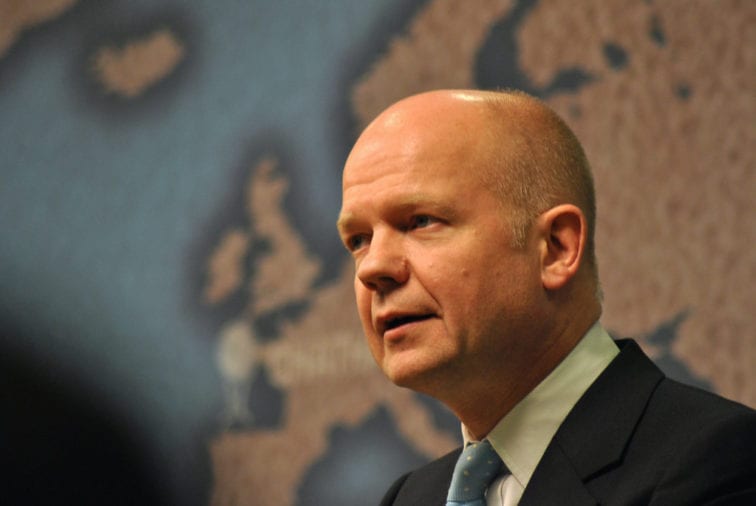
Many Right-wingers are expressing Left-wing views eg increased taxes, more for the young less for the elderly, as they look at the world post-virus. Here’s ex-Tory Leader William Hague plus a piece from a former adviser to Theresa May and BoJo
Medical revolution continues
Around 75 pc of patients in England, because of the virus, are using screens/phones to see GPs, but 50 pc of doctors surveyed couldn’t use IT at home – because they didn’t have a laptop
What will Northern Ireland look like post-virus?
Pandemic planning has meant hospital closures, services re-structured. Will these changes remain post-virus? And while the local housing market may recover, it might mean the end of the traditional office
Trumped: the new US special envoy to Northern Ireland
Mick Mulvaney,told by Trump to go to Ireland and “make sure things go smoothly over there”, says virus impact on Brexit is key issue
…and, finally. The French kiss-off
Survey shows most French people, post-virus, will stop kissing work colleagues. Coming next, maybe: the Japanese bow
Airlines in freefall: return route is long, bumpy
[Because of the virus] by April, airlines had already drastically cut their fleets, in moves that will likely far outlive COVID-19. American is opting to retire more than 100 of its 900 planes, and Delta says it is considering early retirement of older aircraft. Manufacturers are also bracing for tough times. GE Aviation cut 10% of its staff in March and furloughed half the others until May. In April, Boeing offered all employees voluntary buyouts.
That is just the start. Leaner and poorer, airlines will tread with extreme caution in putting planes back in service, unless they are sure passengers will fill them. In interviews, most analysts believe the industry’s recovery could take at least until 2022. Meanwhile, travelers will feel the difference, as routes and flights shrink. “There have been too many airlines in the world,” says John Grant, vice president of aviation analytics company OAG in Luton, England. “The industry would broadly agree with that.”
The overcapacity is especially acute in Europe, where about 120 companies compete for business, compared with the U.S., which has just four major airlines and a handful of smaller regional carriers.
Indeed, the airlines’ losses are epic. Brian Pearce, chief economist of the industry group IATA, estimates the carriers will lose about $252 billion in revenues this year and that without government help, several “might not be able to last” until next year.
In fact, dozens of airlines—especially low-cost tourist carriers—face shaky prospects for survival. “Is it essential to have 9 pound ($11) flights to Majorca, or nine flights a day to Lisbon?” says Daniel Röska, senior airlines analyst at Bernstein Research in London.
Being sealed in an aircraft with dozens of strangers, whose health status is unknown, may still feel like a high-risk act even months after the pandemic wanes. “There are very few economic activities where people experience such crowding as air travel,” says Joseph Schwieterman, a transportation expert and professor at DePaul University in Chicago. People will want to travel again, he says. But true ease, where people again fly carefree, will likely require much more solid assurance. “It will take medical breakthroughs,” he says.
That will take time. And until vaccines and drug treatments are developed, the second factor—corporate travel—could determine when airlines might recover. The two are closely linked: So long as there is some risk to travelers, companies might hesitate to dispatch their employees, especially while trying to cut costs in a recession.
The 2008 financial crisis and Europe’s debt crisis of the 2010s bear that out. Companies cut travel spending—at first temporarily, and then more permanently. “That never really came back,” Röska says. “Companies adapted to a different spending policy, with 20% less travel a year.” The tourism surge cushioned the blow.
A decade on, the impact could be even deeper, for one reason: better technology. Since whole countries began locking down in March, countless corporate meetings, and even the leaders of the G7 nations and OPEC, have convened online. Such meetings are not quite as vibrant as the real-life ones, but neither have they been too disappointing. “Everyone is becoming virtual, Zooming,” says Mark Manduca, managing director covering airlines at Citi in London. “This has to be a long-term effect.” Fortune 19 Apr
Coronavirus will transform everything
William Hague, former Tory party leader and Foreign Secretary: The forces that will shape all our futures – the global tensions, the economic policies, the political ideas, the new technologies – are being sped up. We are about to experience the next twenty years in twelve months, and we need to get ready for it.
For an obvious example of this, take a look at the eurozone. To put it crudely, Italians will not work as productively as Germans, and Germans will not agree to pay off the debts of Italians. [With this] crisis, the foundations of the euro …have yawned wide open. When Italy has looked north in its hour of need, it has found belated sympathy and precious little help. Suddenly, the EU faces an existential crisis.
Or think about the drift to great power rivalry between America and China, already gathering pace in recent years. In a US election year, candidates will vow to take a hard line on ensuring American technology is separated from that of China. Other Western capitals and company headquarters will conclude they cannot be dependent any longer on supplies from one country, in a world where borders close at the first hint of trouble. And so the process of “deglobalisation” – more of what we consume being made closer to home, even if it is more expensive – will accelerate. Instead of happening slowly as developments like 3D printing change manufacturing techniques, it will happen quickly driven on by political and security imperatives.
Even so, the Asia Pacific economies look likely to get through the coming months with considerably less damage than most in the West. As things stood, 2020 was already going to be the year in which Asia’s GDP overtook the rest of the world combined. It was already going to account for 90 per cent of new middle-class people in the next decade. Perhaps we can revise that up to 95 per cent now. The Pacific century is going to arrive faster than anyone thought.
It has been the natural tendency of the new technologies of recent decades to widen inequality, increasing the returns to capital rather than labour and leaving poorly educated people out of the booming global economy. Here comes the sharpest recession of our lives on top of that. It will push to the forefront of politics fundamental issues about the taxation of wealth, the case for basic incomes provided by governments, and the responsibility of companies for their employees.
With young people the most severely affected socially and economically – the year they are losing can never be restored and the jobs they were hoping for will be in shorter supply – the issue of how to handle the vast debts now being accumulated will shoot to the top of election agendas.
Most suddenly of all, the immense questions about who owns data about each of us, and what use the state can make of it, are coming in weeks instead of over many years. Once we are all carrying around an app on our phones to show where we have been and who we have met, pressure will grow to use that information for other purposes. Do we use it to stop a terrorist attack? To solve a murder? To detect a spy? If the answers are yes, what is the new boundary between the state and the individual?
But be in no doubt as the long days at home seem to pass ever so slowly. In its effect on societies, politics and the distribution of power in the world, Covid-19 is on track to be the Great Accelerator. Daily Telegraph 20 Apr
Business must adopt a new social contract as we reinvent capitalism
Jimmy McLoughlin: Every 35 to 40 years, British politics and the economy go through a dramatic shift in the social contract. In the 1920s, it was the first Labour government and a focus on the workers; in the 1940s, it was the Second World War and the foundation of the welfare state; the 1970s and 1980s brought Margaret Thatcher and the reinvigoration of UK capitalism.
I am a free-market Conservative and so the following is hard for me to write, but the reality is the tax burden is going to have to rise. The question is not if, but where?
It is time for a new social contract between business, government and society. As part of that, business needs to help to suggest where taxes will rise.
Yet at the same time the country is going to need the economy firing on all cylinders as quickly as possible, so business will be in the position where it can request “whatever it takes” to achieve this. The business lobby needs to come up with specific requests, not merely broad and banal demands about more investment in infrastructure and skills.
Fifty-six per cent of respondents in the Edelman trust barometer (an annual survey by Edelman Intelligence, a consultancy) said that capitalism does more harm than good in the world. Most businesses do play a key role in local communities, but they must be clearer: rather than a small poster in your local supermarket stating the total they raised for the local NHS hospital, customers should be told where and how they can join in. Capitalism has changed before to survive, but it is about to go through its most drastic reinvention. Jimmy McLoughlin was an adviser to Theresa May and Boris Johnson and was in Downing Street from 2016-19. The Times 20 Apr
Only one in four GP appointments now conducted in person
Only one in four patients is now seeing a GP face to face, with the vast majority getting care through telephone and video consultations, research shows.
The “revolution” in how patients access family doctors – a direct result of the coronavirus – is revealed in figures collected from around 500 GP practices by the Royal College of GPs.
In the four weeks to 12 April, GPs in England undertook 25% less clinical activity than in the same period in 2019.
Among patients who sought GP care in that time, only 26% came in to a surgery for an appointment while 71% had their consultation over the phone. That was an almost exact reversal of the patient access patterns seen a year earlier, when 71% attended and just 25% were dealt with remotely.
“We’ve seen a very rapid and necessary revolution in the way care is delivered in general practice and the way GPs, our teams and our patients have adapted to this has been remarkable”, said Prof Martin Marshall, the college’s chair.
Marshall said too few GPs had secure access to patient records from home, which meant some who self-isolated because of the virus were unable to keep on working.
He wants ministers and NHS leaders to cover the cost of GP surgeries buying thousands of laptops for doctors and practice nurses so that they can talk to patients on the phone while using a VPN link to look at their medical records.
Of the 50% of GPs who have not been working from home recently, 44% were unable to do so because they did not have a laptop, research for the college found. Guardian 19 Apr
What will Northern Ireland be like after coronavirus lockdown?
NHS: Hospital units have been closed, services restructured and staff redeployed to where they are needed most.
Health Minister Robin Swann refused to give a commitment that services and units that have been closed will reopen once the coronavirus crisis has passed.
While that brought little comfort to communities in the likes of Newry, where the emergency department at Daisy Hill Hospital has been temporarily closed, the fact is Northern Ireland has too many acute hospitals and too many A&Es.
It may be unpopular, but perhaps Mr Swann will use the response to coronavirus as an opportunity to push through some of the more controversial proposals to build a safe and sustainable NHS.
The economy: Dr Esmond Birnie, senior economist, Ulster University: A lockdown lasting “only” three months could lead to a decline of about 10% in the size of the local economy. The main explanations will be a collapse in household spending on non-essentials alongside lower investment.
It might have been hoped that the crisis would produce the sense of common purpose in the Executive that has been lacking since 2007 or 1998. So far the evidence is mixed. North-South co-operation has also sometimes been lacking and the responsibility for that has sometimes been as much in Dublin as in Belfast.
Property market: There may be no immediate change to Northern Ireland’s housing market while online interest in properties has surged amid coronavirus lockdown, it’s been claimed by estate agents
In the commercial sector – offices, hotels, retail and hospitality – Richard McCaig, associate director at Osborne King, said: “The use of online ordering and delivery has now become even more important to smaller businesses and we may see increased demand for more industrial/business space to accommodate these changes rather than the more traditional shop space.
“The crisis has undoubtedly accelerated the demise of many high street occupiers who were already on shaky ground. The need to reshape and repurpose the traditional high street will come into focus more than ever.
The end of office as we know it? Nial Borthistle, business development manager at Glandore, which provides high-end flexible workspace and serviced offices in Belfast and throughout Ireland, says that the situation is “likely to change the way corporates approach office space”.
But he added: “A lot of companies have already been looking at more flexible office models for a while now. If they weren’t considering a more flexible approach before, the global pandemic has certainly pushed the question to the forefront of any long lease holder’s mind.
“I think it will be an opportunity for global companies to reassess their real estate portfolios. Having been able to facilitate working remotely during the pandemic, businesses may decide they don’t need such a huge overhead.
The church: ‘Tech-based ministry to grow’ Churches have adapted quickly to social distancing, delivering a wide range of remote broadcasts, according to Simon Lee, lecturer in religious studies at Belfast Met.
However, he says he does not expect to see remote broadcasts replacing weekly gatherings at a place of worship once lockdown is over
“There is also a lot of potential in terms of pastoral care to more frequently ‘check in’ with vulnerable members of the church community where travel time would have made this impossible.” Belfast Telegraph 19 Apr
Coronavirus: Brexit a key issue, says US special envoy
The US special envoy for Northern Ireland, Mick Mulvaney said a key focus for him in the coming weeks is how the Covid-19 crisis will impact on Brexit. The British government’s plan to deal with legacy issues from the Troubles, announced on March 18th, also promises to be a focus when normal life resumes, he said.
Mr Mulvaney was appointed by President Donald Trump in March “The president knew that Brexit is going to be a big deal – it’s a big deal just generally, and in terms of North-South relations – so he said to me: ‘Jared is going to go and take care of the Palestinians and Israelis, you make sure things go smoothly over there,” says Mr Mulvaney. The husband of Mr Trump’s daughter, Ivanka, is widely viewed to have had minimal success with bringing peace to the Middle East.
The role of Northern Ireland envoy falls under the remit of the US state department, and Mr Mulvaney will report to Mr Trump and US secretary of state Mike Pompeo. Irish Times 18 Apr
Coronavirus forces the French to kiss their greetings goodbye
Social distancing is now de rigueur thanks to the pandemic, and likely to continue for many months, so the French will have to find another way to greet friends, family and colleagues when they finally leave their homes after the lockdown.
A recent opinion poll suggested 72 per cent would abstain from kissing colleagues when they return to their offices.
Mathieu Avanzi, a lecturer in linguistic science at the Sorbonne University in Paris and a specialist on regional French customs said: “These reactions stem from a much deeper sentiment, that of being sick and tired with a habit that has become more and more common over time. Today everyone kisses everyone, whereas it used to be reserved for the family circle.”
The change followed the May 1968 student uprising, which sought to overturn traditional conservative values in an ultimately misleading stampede towards progress. Men started to kiss close male friends; women kissed pretty much everyone. Commentators hailed an era of egalitarianism.
Now the question is what comes next? With handshakes also likely to be excluded in a new world, many French people are calling for the introduction of a Japanese-style bow. They say it is a sign of respect and social integration, with none of the disadvantages of the kiss. The Times 20 Apr






