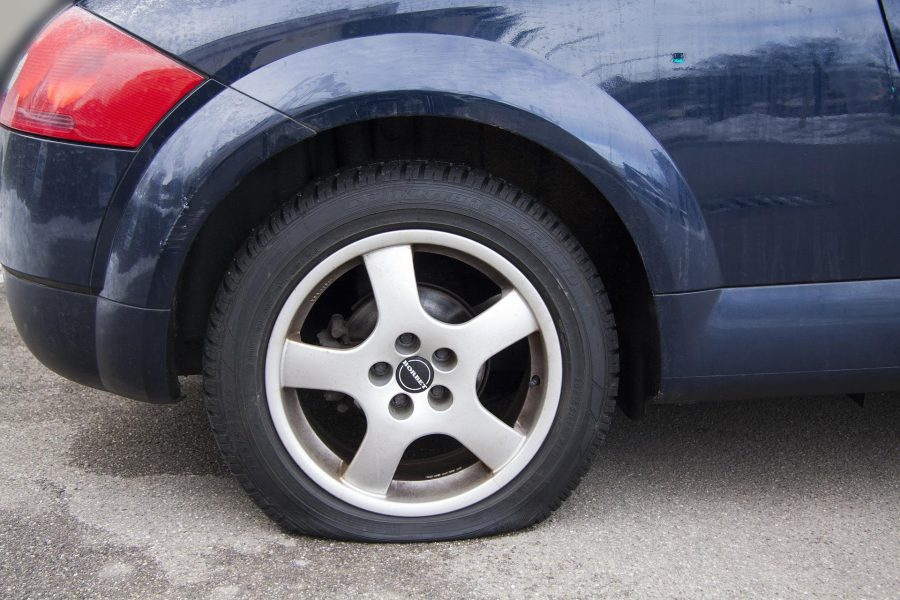
The condition of your tyres has a huge impact on the overall performance of your vehicle, and on your likelihood of being involved in a collision. It’s therefore vital that you regularly inspect your tyres for damage and wear and replace them wherever appropriate.
Tyre Bulging
If your tyre’s walls are bulging outward, then it means that the air pressure is insufficient to prevent the car’s weight from pushing the tyre downwards. This will increase friction between the tyre and the car, which will hugely increase the risk of a blowout.
Tyres which are underinflated will also wear unevenly, since the centre of the tyre will be slightly withdrawn relative to the sides. You’ll also be vulnerable to sudden damage from pot-holes, which will deform the tyre hugely, without resistance from the air pressure on the other side.
Punctures
Many cars in the UK are being driven on slow punctures, without the driver even being aware of it. This means that you might inflate your tyre one week only to have air gradually escape, such that your tyre is hugely underinflated the next week.
The way to spot punctures is to be vigilant against them. Check your tyre pressure regularly at a convenient garage forecourt. Alternatively, you might invest in a miniature device that will allow you to check the pressure yourself.
Keeping a foot-pump handy in the boot of your car will allow you to protect yourself against sudden damage, too, and to pump up a replacement tyre in the event that you need to make switch. While a slow puncture might go unnoticed, as the effect on your driving experience is gradual, the same can’t be said of a sudden puncture. These will cause an immediate and unmistakable decline in handling performance.
In some cases, you might be able to repair a puncture and eke a few more months of life out of a tyre. A puncture might be a sign that you tyre is nearing the end of its natural lifespan, however. Get a replacement. You can buy tyres online, and keep a supply of them ready in your garage.
Sidewall Damage
The sidewall of your tyre is the bit that faces outwards. These are designed to resist the compression forces caused by the weight of your car. In some cases, they might even be reinforced to the extent that you can safely drive on a punctured tyre, at least far enough to get it repaired.
Sidewalls can be damaged in several ways: bulges and cuts. You should be inspecting your tyres regularly for both. Neither can be fixed, since once they’re inflicted, the damage to the tyres underlying structure will have already been inflicted. If you see this kind of damage, then it’s time to install a replacement tyre.