Whether it is fleet management for commercial transportation or a series of company cars for upper-level management, dealing with car ownership isn’t just for consumers. Businesses must necessarily wrestle with keeping them all operating well and getting them fixed when there’s a weird rattle that cannot be identified, etc.
The decision of whether to move away from a reliance on petrol or diesel vehicles and convert over to electric is a major one. Not every employee who currently has a petrol or diesel car likes the idea. They fear performance issues or running out of juice on a holiday with the family. So, it’s not a no-brainer decision for companies.
In this article, we consider what’s involved with updating a car fleet to electric ones and whether it should be done sooner or later.
What Are the Buying Options for Electric Cars?
For businesses, they don’t always purchase a company car with funds from the business account. Sometimes, they choose to finance it when they need to acquire a few of them and don’t want the cash equivalents to decline too suddenly. Because of businesses regularly borrowing to make asset purchases, stretching to borrow enough to acquire a collection of electric vehicles isn’t as much of a hardship as it sometimes is for consumers. Sure, it’s a bit more upfront and the interest will add up on any loans for them, but it’s not that off-putting when there are sensible reasons to do so.
Environmentally Friendly Company
Some companies like to push their environmentally friendly credentials. In their industry, it may either separate them from the pack, appeal to customers, or simply match what others are already doing. There are also Gen Zer employees joining – the first group is between 18 and 23 now – who are highly environmentally conscious. They’re also quite vocal on their views and maybe urging the company to switch to electric cars to become a greener operation. This may pressure the business to change strategies to embrace planet-friendly behaviours even if this wasn’t obvious doing so before.
Should the Fleet Be Changed Gradually or All at Once?
Even when it has been decided that the fleet of vehicles or company cars should be changed to electric versions, there is still the question of how soon it should be done. Is it necessary to do it right away across the entire fleet? Or should it be done gradually only as a car becomes too old? The answer to this may relate to how the vehicles are purchased and what the business can afford. Should the business decide to lease the vehicles instead of purchasing them outright, it will reduce the upfront cost.
Another alternative is borrowing to purchase outright, but with the additional debt to service. All of these are a factor in what the company can afford to do. Therefore, pragmatic financial reality may conflict with eco-friendly desires at some point.
Charging Stations Will Be Needed
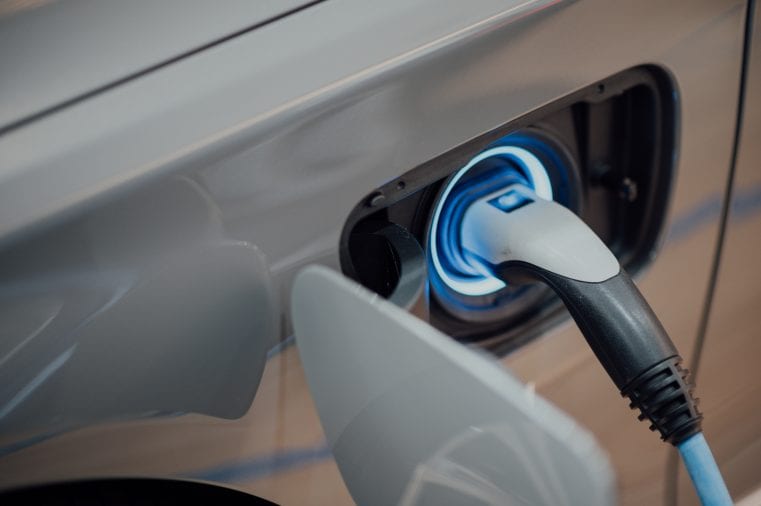
Companies should make allowances for the space required to get charging stations installed for any EVs that they purchase or lease. There are currently some incentives from the UK government to support the installation of charging stations. The scheme does not cover the total cost and there are limits on how many stations can be installed too. Yet this is one indication that switching to electric and getting subsidised stations put in is sensible. The scheme will surely not be available forever, and in some cases, UK government subsidies have already started to be reduced.
Most companies will want to create a bank of charging connections to charge all their EVs during the night, so they’re ready the next day. Alternatively, rapid charging stations can complete their cycle within just a few hours.
Are Electric Cars Expensive to Run?
As ElectriX demonstrate, the cost of running an electric car does vary, but currently it falls within a narrow band. ElectriX provides useful suggestions for companies considering making the switch to electric vehicles. This is definitely worth reviewing. Smaller vehicles can cost a little less per mile than larger ones, all other things being equal. While petrol costs can vary from 11 pence up to 16 pence for the biggest company cars, this exceeds other options. Hybrids are popular and reduce the cost to 10 pence. However, electric cars do better still.
Smaller electric cars only cost up to 3.8 pence per mile and some are even cheaper. For executive size electric cars, a cost nearer to 4.1 pence per mile is likely. Therefore, businesses that pay for a transportation fleet including the fuel will save considerably. For employees, they will save similarly if they pay for some or all of the fill-ups currently.
Benefit in Kind Savings for Employees
Keeping on the subject of employees, they pay a Benefit in Kind (BIK) cost for their company car. This varies from petrol-guzzling cars and electric ones. Presently, the BIK is at least £1,000 per year, but only £100-200 for electric vehicles. This has risen recently, but there remains a sizable saving on what employees pay for company cars powered by electricity.
Other Cost Savings for Employers
Businesses pay Class 1 National Insurance based on their company cars and CO2 emissions. For companies that have electric vehicles, they pay considerably less than petrol or diesel cars. Purchasing costs are also currently subsidized. For EVs below £35,000, they receive a grant of £2,500 presently. A different grant is applied for smaller and larger vans, like those used for deliveries. The grant is acted upon at the dealer level where it effectively reduces the cost of the new vehicle.
Driving into Congestion Zones or Low Emission Zones
Many cities are drawing up plans or have already begun to charge for accessing their city centres or driving around the suburbs.
For van-owning businesses, they will certainly pay in certain areas. With company cars, it could be a personal trip or a business one, so whether the company covers these extra daily charges is up for discussion.
However, London has their Congestion Charge and ULEZ zone for charging extra for vehicles with high emissions. Other cities are following. Yet, when driving an electric vehicle with no emissions, there are no charges to pay. This is a major incentive for businesses to switch to electric vehicles, especially if they’re not perks and are genuinely used on business matters.
Can EVs Be Maintained Just as Easily?
On the maintenance side, this is a learning curve. Only so many garages currently have mechanics trained to work on electric vehicles. This will surely increase significantly over the next few years. In the meantime, it’s necessary to take the EVs to specialist garages to get worked on. Fortunately, EVs tend to be more reliable because combustion engines in petrol cars are a fairly dirty technology compared to battery-powered vehicles. This helps to avoid as many unexpected breakdowns as possible.
Moving the fleet over to electric vehicles is something that companies are increasingly doing. Some are promoting their green credentials on social media too. Major bulk car orders are being placed to replace entire fleets now. Nevertheless, it’s unnecessary to move that fast if it’s not affordable to do so. However, businesses are leading the charge, rather than consumers when it comes to going electric. They already see the future and they know it’s getting greener every day.