If you’re into manufacturing, your core business is producing and selling goods that your target customers can easily consume. You must balance the intake of raw materials for sufficient processing to produce valuable goods for the market.
It can be challenging if you lack proper management systems to control processing, and realizing returns on investment can be a wild goose chase. Therefore, you need to strategise your approach to running a manufacturing plant.
Luckily, the need for lean manufacturing has become a fallback plan in many industries after numerous trials and errors on waste reduction. Ideally, lean manufacturing targets the elimination of waste throughout production processes and delivers quality goods for the profitable market for your business.
However, the concept of lean manufacturing requires an in-depth understanding of operational processes and highlights waste in your business. You might seek the services of professionals like Lean consultants in UK to evaluate and review your control systems and give measurable guidelines for implementing a waste reduction in your industry.
The following are modern ways to reduce waste through lean manufacturing:
Identify Waste
In lean manufacturing, you’re looking at value-added activities that contribute to the maximum yet efficient production of goods and services. All your operational functions must collaborate to avoid gaps and wastes that may go unnoticed in your production plant. You can walk through production stages and look at what’s not adding value to your overall manufacturing goal. It helps identify waste and informs you of the next course of action.
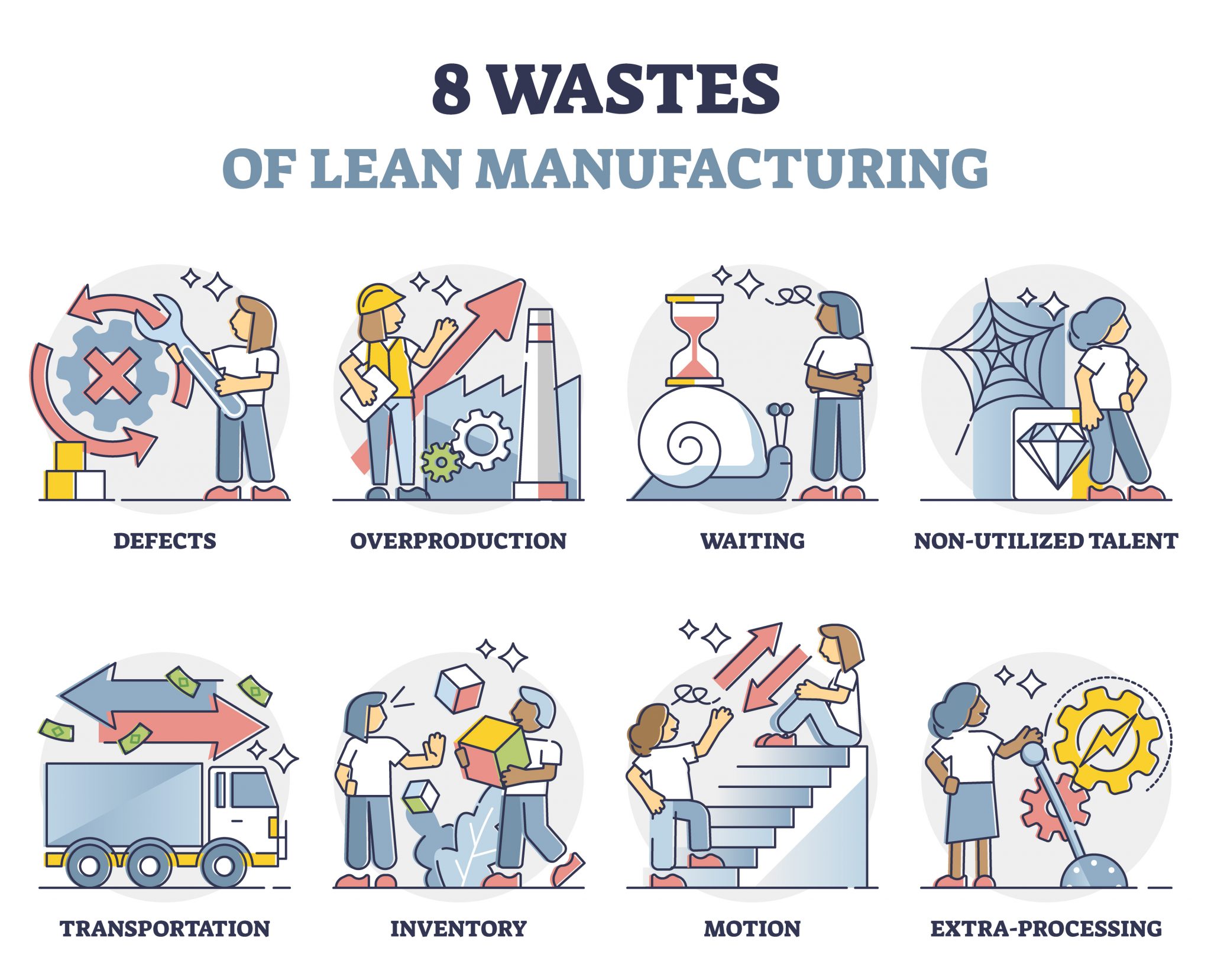
The most common waste identification plan uses the acronym DOWNTIME to signify non-value-adding activities in your industry. Here’s what the acronym stands for:
Defects: Defective products that require rework due to errors in the production processes force you to start afresh and take more resources to get the right products.
Overproduction: Producing more than the market demands is tying up capital and stagnating your growth.
Waiting: This refers to delays in your work cycle due to waiting for materials and supplies. As a result, your workforce becomes unproductive.
Non-Utilization of Resources: You’re looking at unused skilled workers, missing opportunities, wastage of resources.
Transport: Moving products and parts unnecessarily doesn’t add value to your manufacturing process. You only move products to the market to make sales.
Inventory: Holding more than your market requires, not in your manufacturing process. Having large volumes of stock doesn’t translate to more profits.
Motion: Unnecessary movement of your workforce, machines, and parts to complete tasks is time-consuming. Ensure high ergonomic standards for your team.
Excess Processing: Repeating the production process beyond the required standards keeps the customer second-guessing your delivery date.
Once you recognize eight wastes in your process, you must evaluate what adds value to your production processes. Start eliminating them by implementing a new organizational culture to help improve production and performance in your industry.
 Use Kaizen Theory
Your business activities must contribute to lean manufacturing through continuous improvement of processes. Kaizen theory is a popular concept in manufacturing whose main objective is continuous improvement through quality assurance, timely deliveries, use of efficient equipment, and waste reduction. It also works to ensure organisational cultural changes by instilling new ideas and positive shifts in workforce behaviour.
You can use the Kaizen theory to make gradual changes to your manufacturing practices and reduce wastage in the process. That way, small changes snowball to a considerable improvement impact in your industry, and you manage to cut wastes all over your production.
The Kaizen philosophy is teachable to everyone in your industry and requires refresher training from time to time. Also, managerial support is needed to reduce waste through lean manufacturing successfully.
Monitoring Systems
To achieve lean manufacturing, you must collect data and analyze what wastes you’re incurring within your processes. You could be repeating mistakes in your production lines unknowingly and wonder why you’re not getting returns on investment. Perhaps your team doesn’t understand the significance of lean manufacturing practices to reduce waste. Hence, using flow meters from CSI and other monitoring systems can help contain wasteful activities in your production plants.
You can incorporate lean manufacturing principles and tools like value and value streams to support your goal of reducing waste. In addition, you can have monthly audits and reviews to ensure implementation of lean manufacturing is working in your industry. It helps to know if there are information gaps regarding waste and develops the best approach to eliminate such occurrences.
Conclusion
Lean manufacturing aims to filter unnecessary activities from your production that don’t add value to your industry. It opens doors to cost-cutting measures, optimization of opportunities and resources, and improves general productivity while meeting the customers’ demand for quality. Therefore, it’s crucial to identify waste in your processes to deliver top-notch products to the market efficiently. It keeps you ahead of the competition and realizes profit throughout your industry lifetime.