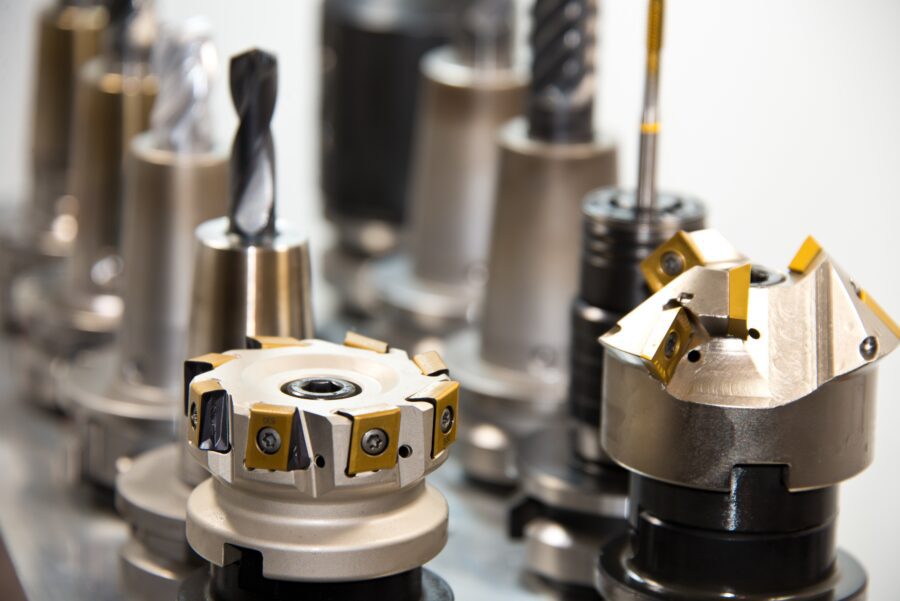
CNC machining is a fundamental part of manufacturing for almost all businesses and sectors worldwide.
With multiple techniques for machining, this form of fabrication is vital to everything from smartphone production to vehicle components.
Products with large or small metal or plastic parts often use a CNC machine at some stage to get those parts produced, so the possibilities and benefits of CNC manufacturing are limitless.
If you’re interested in learning how CNC machines can benefit your business, keep reading. We’ll explain what these machines can do for you.
CNC Machines For Speed And Precision
A key advantage of CNC machining is its flexibility. You can produce parts in mass or smaller batches with speed and precision.
Your business can use the powerful capabilities of CNC machines to produce limitless components.
Examples of CNC produced parts include:
- Landing gears, engine mounts, and turbine wheels for the aerospace sector.
- Gearboxes, brake discs, pistons, and valves for automobiles.
- Surgical equipment, microscopes, X-Ray machines, and medical scanners.
Choosing the right CNC machine tool allows you to remove the reliance on third-party manufacturers to produce your parts, and you can outsource the excess manufacturing capacity to other businesses.
CNC machining is optimal for producing high-volume components, using computerized instructions and pre-set actions to replicate identical parts.
Automated production is also of great advantage for businesses with high production volumes without sacrificing quality or speed.
Improving Productivity With CNC Machine Tools
We’ve established CNC machining precision, and its ability to improve productivity is just as valuable.
Production lines are a vital part of manufacturing in millions of sectors, but numerous risks come when using manual controls and less accurate machines in production lines.
CNC machine tools can create a significant savings in costs by:
- Reducing the demand for different production lines for separate components.
- Preventing the need to invest in multiple machines for varying applications.
- Lowering the factory space needed for tooling equipment.
- Cutting utility costs from simultaneously powering multiple machines.
- Deploying personnel more efficiently to other processes.
Businesses reliant on production lines or multiple machines to manufacture high-volume products will likely save a considerable amount of money by switching to CNC machining.
Using CNC Machines For Enhanced Consistency
The vast majority of components have some tolerance once manufactured – but when made with less advanced machines, flexibility is often minimal and less precise.
The advanced nature of CNC machine tools leads to greater accuracy and flexibility.
They can produce almost any part imaginable, allowing businesses to diversify across different industries and move as demand shifts.
Flexible manufacturing is crucial for a risk-averse strategy. It ensures that if one customer sector experienced a decrease in production needs, the business could still use the CNC machines with alternative industries.
If you need to switch industries, a CNC machine creates infallible levels of product consistency through:
- Producing identical components with design and quality replicated across all production runs.
- Instant programming to create a set production run.
- The flexibility to reduce manufacturing volumes immediately and avoid overproduction or excess inventory.
The parts can be as complex and intricate as required because CAD or CAM programs and toolings can produce extreme precision, far beyond that available through manual machines.
Limitations Of CNC Machine Tools
One important consideration when deciding whether to invest in CNC machine tools is the cost.
If you have small production runs, it may be less cost-effective, but it provides immense value for larger production.
CNC operators must also have specific skills to run the machines, and therefore if you don’t currently have any experienced staff, it will be crucial to recruit an operator.
However, the benefits of CNC machines far outweigh these potential disadvantages.
While you may have some higher upfront costs and need to hire operators, another benefit is that CNC machines have built-in safety features that will minimize the risk of workplace accidents.
Those properties include:
- Safety panels
- Emergency stop buttons
- Curtain guards
- Bulletproof casings
- Diagnostic testing
CNC machines are vital to many production operations, so replacing manual appliances with a more advanced option or upgrading production is an excellent way to improve workplace safety.
Overall, the long-term opportunities of CNC machining present higher production speeds, improved quality, enhanced safety, and lower costs – making it a profitable endeavor for many businesses in the manufacturing space