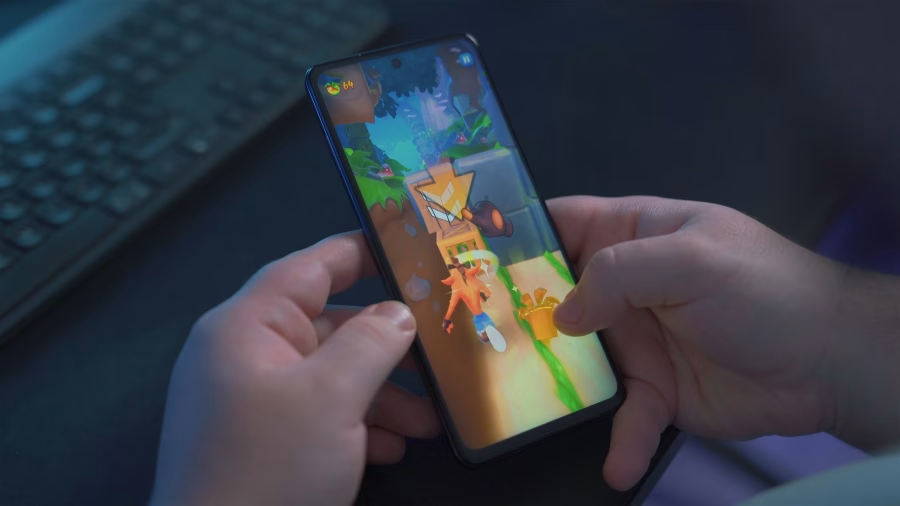
The popularity of mobile games has turned the gaming industry on its head, changing the rules of traditional entertainment and making it easier for anyone to play games than ever before. After all, who doesn’t carry a smartphone with them almost everywhere they go? The prevalence of smartphones and people’s desire to use them as entertainment devices has fueled the rise of mobile gaming and created new opportunities for business. Mobile gaming has changed the way companies look at marketing, customer service, and technological advancement. In this article, we look at the economic impact of mobile gaming and how it has opened up new opportunities in the business world.
Growth of Mobile Gaming
The numbers tell the story of the growth of mobile gaming, and they are staggering. Between 2023 and 2024 alone, experts project the industry’s valuation will increase from $91.08 billion to $100.54 billion, and by 2028, it’ll stand at $149.30 billion. These are incredible numbers by any measure and show how successful the gaming industry has been in reaching the public with titles they’re excited to play. Besides increased smartphone penetration, the availability of high-speed internet services like 5G has made mobile gaming even more attractive to the public.
The increasing affordability of augmented and virtual reality headsets has also contributed to this trend, with game developers coming up with new titles that put these technologies to good use in innovative ways. When we compare mobile gaming to gaming platforms like PCs and consoles, mobile gaming’s appeal becomes even clearer. Unlike traditional gaming devices, mobile gaming offers accessibility and convenience that allows gamers to take their favorite titles with them on the go. All of these factors have come together to contribute to mobile gaming’s success in the gaming market.
iGaming and Online Casinos
From betting to casinos, igaming refers to interactive gaming that takes place over the internet and it’s making its mark in the business world. The sector includes popular games like roulette, betting on sports events, and skill-based games. According to some estimates, online casinos alone are expected to rake in $184.28 billion by 2032, an increase of 190% over a decade. These unprecedented numbers have made the igaming section especially attractive to entrepreneurs and start-ups seeking new opportunities. It’s easy to see why the sector has experienced so much success. Online casino games draw gamers into the action, whether they’re playing live dealer games or spinning the reels.
It’s hard to talk about casinos without mentioning slot machines, and those in online casinos have mastered the art of combining colorful graphics with interesting themes that keep players engaged. For example, the slot Gonzo’s Quest takes people on a Mayan adventure with cascading reels, scatter symbols, and multipliers. It features impressive 2D and 3D animation and 2000 paylines. These types of titles are changing business as usual in the gaming industry as a whole, driving innovation and competition.
Mobile Gaming Market Dynamics
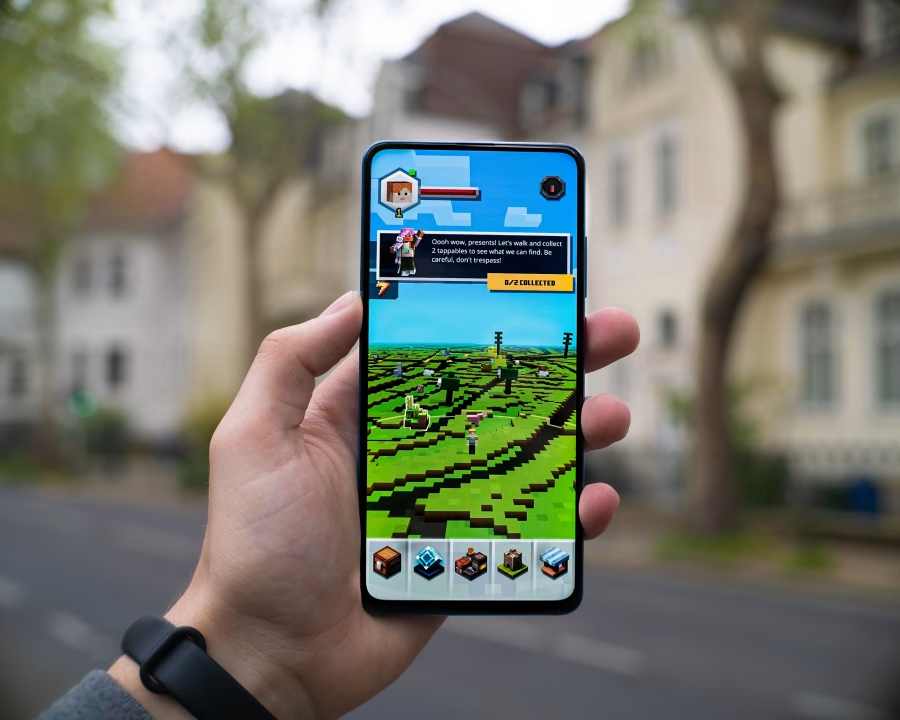 Tencent, Activision Blizzard, and Electronic Arts are the big players in the mobile gaming industry. All three companies have a variety of revenue models, including in-app purchases, advertisements, and premium game sales, which allow them to monetize their games in different ways. Most people are familiar with the freemium model. With this model, you can play the basic game for free, but you have to pay (in-app purchases) to access the special features the game offers.
While this model may not seem very profitable at first glance, gaming companies generate significant revenue with it as people are willing to pay to get a leg up on the competition. Another way gaming companies make money is through advertisements, and you’ve probably seen your fair share if you’ve played mobile games using the freemium model. Advertisements can generate significant revenue and many games give players the option to remove ads if they’re willing to pay a few bucks to do so.
Mobile games owe a lot of their success to Google Play and Apple’s App Store, which give them a way to distribute their games to large numbers of people and monetize them. Without these stores, game developers would have a hard time reaching a global audience.
Photos from unsplash