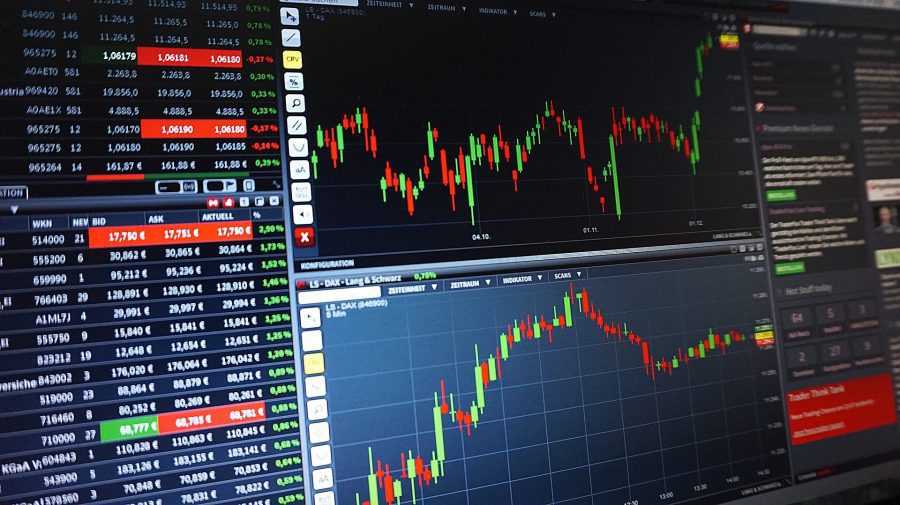
The foreign exchange market (commonly known as the FX market) is the world’s largest and most liquid market, with an average daily transaction of more than $5 trillion. It is sometimes referred to as the FX market. It is the location where currencies are bought and sold and is important since changes in currency value may have a significant impact on the operations of international corporations. In this paper, we will look at how fluctuations in the foreign currency market impact the operations of multinational corporations.
Currency fluctuations and businesses that import and export goods or services
The import and export of goods and services is one of the most prominent ways that fluctuations in trading forex may affect the operations of multinational corporations. When a company acquires goods or services from another country, the payment must be made in that country’s national currency. If the value of the currency with which they are paying increases in contrast to the currency of the country from which they are buying, it will cost them more money to complete the transaction. On the other hand, if the value of the currency they are paying with falls, so will the price of the item.

Imagine the example of a company in the United States that wants to acquire things from Japan but must pay in Japanese yen. If the value of the yen rises in relation to the value of the dollar in the United States, the price that the American firm must pay to buy the same amount of yen will rise as well. As a result, the American firm will have to pay a higher price for imported goods. If, on the other hand, the value of the yen falls in relation to the value of the dollar in the United States, the number of dollars required by the American firm to acquire the same number of yen will be less. As a consequence, the US corporation’s total cost of imported commodities is reduced.
Currency value fluctuations with multinational corporations
Multinational corporations, or MNCs, are businesses that operate in more than one country. Since their assets and liabilities are denominated in several currencies, these companies are highly exposed to currency fluctuations. Changes in the value of one currency relative to another might have a significant impact on the international corporation’s financial statements.
Imagine a multinational company (MNC) with operations in Europe and assets denominated in euros. If the euro’s value increases in contrast to the US dollar, the multinational corporation’s assets denominated in euros will be worth more in US dollars. Yet if the euro decreases in value relative to the dollar, the multinational corporation’s assets denominated in euros will be worth less in dollars. Similarly, a change in the value of the euro relative to the value of the US dollar may have an impact on the MNC’s liabilities if the MNC has commitments denominated in euros.
Currency exchange rate fluctuations and foreign investment
Currency fluctuations have an impact on the operations of multinational corporations via the channel of foreign investment. When a company makes an overseas investment, it must convert its currency into the currency of the country in which it is investing. A rise in the value of the foreign currency relative to the firm’s currency will result in an increase in the value of the investment. The value of the investment, on the other hand, will reduce if the value of the foreign currency falls in contrast to the currency utilised by the enterprise.
Consider the following scenario: A US-based firm acquires a European company and wishes to convert US cash into euros. If the value of the euro grows in relation to the value of the dollar, the American firm’s investment in the European business will be worth more in terms of dollars. If, on the other hand, the value of the euro falls in relation to the value of the dollar in the United States, the American firm’s investment in the European business will be worth less in dollars.
Currency fluctuations and the hedging practice
Businesses may utilise hedging options to mitigate the risks associated with fluctuations in currency values. Hedging is the process of creating a position in the foreign exchange market that is inverse to the firm’s exposure to fluctuations in the value of the currency. For example, a company that is sensitive to a drop in the value of the US dollar might opt to enter the foreign exchange market and benefit from the currency’s reduction in value.
A common hedging approach is the use of forward contracts. A forward contract is an agreement to buy or sell a currency at a predetermined exchange rate at a later date. The currency’s exchange rate is predetermined. Companies may utilise forward contracts to decrease their exposure to currency swings and lock in exchange rates. Yet, it is important to remember that hedging has its own set of risks and expenses. Two examples are the cost of the hedging instrument itself and the potential opportunity cost of missing out on favourable currency changes.
Currency value movements and their impact on international financial institutions
International financial institutions (IFIs), such as the International Monetary Fund (IMF), also play a role in mitigating the detrimental impacts of currency fluctuations on the operations of multinational corporations. IFIs are organisations that provide financial assistance to countries experiencing economic difficulties, notably those induced by currency fluctuations. For example, the IMF may provide loans to countries to help them preserve economic stability during times of currency volatility.

International financial institutions (IFIs) also work to guarantee global economic stability via international cooperation and coordinated policies. They advocate for measures such as solid macroeconomic policies and flexible exchange rates to reduce the dangers associated with currency volatility. By encouraging stable and predictable currency markets, IFIs may help reduce the impact of currency fluctuations on the operations of multinational corporations.
The impact of currency market volatility on small and medium-sized companies (SMEs)
Small and medium-sized firms (often known as SMEs) are particularly vulnerable to the negative impacts of currency fluctuations. SMEs have fewer resources to deal with currency risk than larger worldwide organisations. It is likely that they lack the requisite expertise and resources to implement hedging measures or that they lack access to international financial institutions that may assist them during times of economic turmoil.
Currency fluctuations may have a considerable influence on the profitability of SMEs, especially those that rely heavily on imports or exports. This is particularly true for firms that operate on a global scale. For example, a small company in the United States that exports items to Europe may struggle to compete if the euro’s value rises compared to the value of the United States dollar, making their products more costly for European buyers. If the value of the euro falls in relation to the value of the dollar, a small European-based merchant who imports things from the United States may experience an increase in their expenditures.

Conclusion
Finally, changes in the value of the currency exchange market may have a significant impact on the operations of international corporations. Currency changes affect not just product and service imports and exports but also multinational corporations, international investment, hedging, international financial institutions, and small and medium-sized enterprises. Despite the fact that there are procedures and institutions in place to mitigate the risks associated with currency fluctuations, it is critical for companies to be aware of and prepared to react to any changes that may occur in the foreign exchange market. Businesses that understand the impact of currency movements on their operations may make more informed decisions and better manage their currency risk.