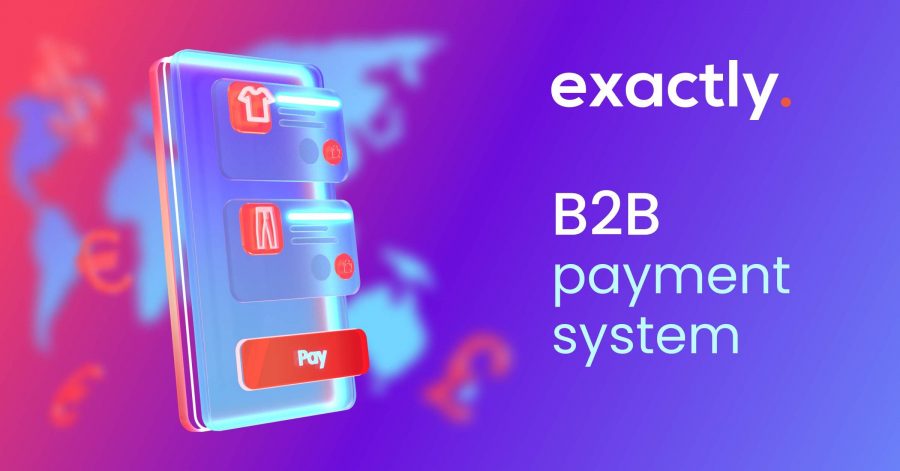
B2B payment system is a convenient way of money transfer between businesses. So in B2B, we are always talking about business relationships and large remittances, not ordinary purchases. Such payments can be one-time or regular, depending on the type of agreement and relationship between the parties. The main difficulty is, in this case, payment transactions take longer.
Typically, these transactions happen between different businesses, for example, between wholesalers and retailers. Another common example: cases when a manufacturing company buys raw materials from suppliers.
Main Features
B2B payment systems help to speed up and simplify financial transactions between trade transactions. Regardless of the business model chosen in the company, the following qualities are expected from any B2B payment system:
- Guarantee of transfer of payment from the buyer to the seller (credit rating).
- Elimination of fraud during financial transactions between the parties. A high-quality B2B system guarantees quick collection of regular or mobile payments, but on the other hand, it is able to provide a payment window extension for the buyer.
- Ability to provide reports on shipments of goods, all agreements between participants in transactions, as well as on invoices and other data critical to the company’s global reporting. This data must be not only relevant but also correctly formatted, i.e. such that it can be used in the company’s workflow.
Also, a good B2B payment system is distinguished by the ability to reduce or completely eliminate any costs associated with manual settings or transactions.
Benefits
The number of B2B solutions on the market is amazingly large. Such a wide range of solutions exists due to the growing demand from the business side, as businesses already look for ways to conduct risk-free and convenient payments.
Modern payment systems help to cope with the problems and issues that any business constantly faces. When a business owner prefers modern ways to replace outdated payment methods, he can choose from a whole range of benefits:
Establishing cash flow
In business, it is very effective to manage cash flows. In B2B systems, transactions occur automatically, and therefore it is easy to track patterns in incoming and outgoing transactions, thus not only optimizing procedures but also minimizing negative trends in financial management.
For example, entrepreneurs allow you to set strict deadlines for payment for their goods or services.
Configuring security
At the same time, the protection of digital payments is also growing. Modern systems are reliably protected from hacking. To do this, they use modern protocols and encryption methods, regularly monitor the state of all constituent components and maintain them in such a way as to make transactions and the system itself as a whole immune to hacker attacks.
Resource optimization
The introduction of a B2B payment system enables the company to save time on preparing and carrying out financial transactions. Also, the reconciliation of accounts that use such a system is done automatically. Thus, the employees of the enterprise are unloaded and freed for other productive tasks. Thus, work in the company focuses on those tasks and areas of activity that are really important and contribute to the further growth and development of the business as a whole.
Simplification of document flow – accounting and taxes
B2B payment systems reduce the burden on the accountant and his assistants. They don’t have to manually handle a huge amount of records that are easy to lose and prone to errors. In the system, these checks are recorded and executed automatically.
The Most Popular Types of B2B Payments
- B2B systems are possible as different payment systems, and the systems themselves. So, payment systems can;
- Provide the same services online provided by a bank or financial company;
- Officially cooperate with banking institutions;
- Cooperate with electronic payment networks, e.g. SEPA, ECheck, ACH.
B2B payment methods can vary too. In each case, the parties choose the option that is most convenient for them.
- Checks. They remain one of the most popular payment methods.
- ACH. These are electronic payments in the form of direct deposits. This payment method continues to grow in popularity and is expected to account for half of all B2B payments by 2022.
- Electronic transfers. Such transfers account for only 1% of the total number of B2B payments, but the turnover in such transactions already amounts to 93% of the total amount.
- Credit cards. Bank cards typically charge up to 4% fees for processing payments, however, Visa remains one of the most popular payment methods among small businesses.
At the same time, cash settlements in business have almost completely lost their relevance due to the fact that non-cash payments turn out to be much more convenient in terms of carrying out the transaction itself and further reporting, both for the seller and the buyer.
Areas of Use
B2B systems help to conduct transactions with large corporate accounts much faster. This is relevant for enterprises of different structures, but most often they are used by medium and large businesses.
- Cashless payments via B2B systems are an ongoing practice for manufacturers. Manufacturers of digital or media technology buy components. For example, Samsung partners with Intel or Panasonic with Micron Technology. The companies conclude an agreement among themselves for the supply of components and further payments.
- Often B2B transactions are carried out in the automotive industry as well. Many of the parts, electronics, tires, and mechanisms used in the automotive industry are manufactured by independent manufacturers, and large automotive concerns order supplies of these products. Such companies also actively use digital B2B payments for settlement.
- Real estate companies are also active users of such systems.
These are only the most active areas that need B2B systems to automate and optimize financial flows. But this list is far from exhaustive. They are popular in digital, industry, wholesale, and even retail.
Best Providers
The number of fintech b2b payment platforms is growing. But some providers have been in the market for a long time and have an impeccable reputation. Top b2b payment solutions include:
- Exactly.com is a payment system that suits any type of business. There are several tariff plans in the system: exactly® builds price offers individually taking into account specific needs of each client. The payment solution is quickly set up and launched thanks to simple and straightforward tools. At the same time, it opens up ample opportunities for tracking transactions and further accounting. By defining system roles for your employees, exactly® will expose each of them to a set of specialized tools that can be useful for their work. Comparison of exactly® with other alternatives leads to the conclusion that it is one of the most flexible and transparent payment systems for b2b industry.
- Fundbox Pay is a small business lender. Allows the seller to receive payment immediately, while the buyer has the option to defer payment for up to 60 days.
- Paypal allows you to make payments from any bank card (including credit cards) without hidden fees. The $30 Paypal Payment Pro subscriber package makes it possible to accept payments even by phone or fax. Also in this package, an online checkout is available in any area. The commission is 2.9%.
- Square, unlike Paypal, does not provide the ability to make payments from a bank account linked to a wallet. But the service supports other convenient payment solutions. Square transaction fee is 2.75%.
- Transpay is focused on international money transfers. It supports 200 countries and 60 currencies. The platform is beneficial for small businesses due to fees that are significantly lower than international bank transfer fees ($ 5-20 per transaction).
How Do You Choose the Best Method?
By entrusting the payment provider to be an intermediary and guarantor in carrying out large financial transactions, each of the parties is interested in ensuring that the data is securely encrypted, the money is protected, and the commissions remain within reasonable limits and do not exceed the potential profit on the transaction.
To make sure that these criteria are met, you should pay attention to the following distinctive features:
- The platform technically suits your requirements. For example, if you need to make an international payment, it supports them.
- The system is quite reliable in the use of modern methods of data protection and encryption, and in the use of high-quality hardware and software. This is usually reflected in customer reviews.
- The ability to integrate with accounting tools to simplify reporting, filing tax returns, etc.
- Simplified transaction processing process, which does not require understanding complex digital algorithms and unreasonably long studying of the system.
Ideally, a modern and high-quality provider is convenient for all business partners. In such an environment, the seller can easily use time tracking, invoice the buyer immediately after the product or service has been provided, or invoice for full or partial prepayment. He also has the ability to remind the buyer about the payment using the system’s tools. If the payment was late, the seller is able to issue a penalty.
At the same time, the buyer in such a system can delay the payment until the transaction amount is finally approved or other important conditions between the parties are met. Also, they can request a deferred payment, cost reduction, and other benefits.
Thus, the new technology turns out to be a mutually beneficial solution for all parties to the agreement. Modern business transactions are more complex than before, and the automation of this process makes it possible not to get lost in paperwork, and to focus on what is really important for the development of the company and its promotion in the market.
Fortunately, the automated payments industry is evolving and offers many alternatives. Some are acceptable for big businesses, others are actively used by medium-sized companies or small entrepreneurs. Everyone will find what is suitable for them to solve a specific set of issues. This will give them an opportunity to grow, develop, cooperate with a large number of partners and keep their business afloat even in the era of a pandemic.