Are tech companies and, in turn, tech stocks in jeopardy? Even a cursory look through mainstream media headlines in recent years tells the story of an increasingly fractured relationship between big tech, governments, and the general public. Although the financial fortunes and cultural significance of Facebook, Twitter and Google continue to grow, there are increasing concerns about their social impact. With billions of users and just as much money in the bank, the largest tech companies not only have the power to create business monopolies but social ones.
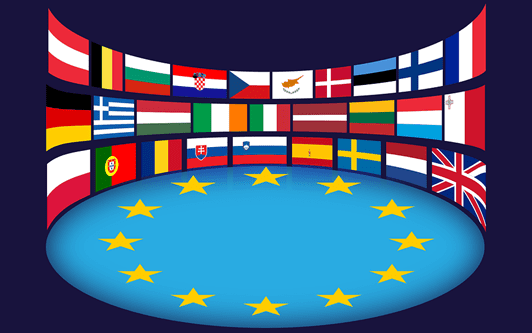
Regardless of whether the accusations carry any weight, there are legitimate concerns that Facebook et al can influence and control social discourse. For better or for worse, there is a monopoly at the top of the tech world and that’s something European Union (EU) regulators want to tackle. According to reports by the Financial Times and the Irish Times, EU regulators are drawing up a “hit list” of 20 big tech companies. The assumption is they’ll create new rules designed to curb the “market power” of Google and its equivalents. The who and the how are yet to be determined, but the why is clear.
EU Wants to Break Up Big Tech Monopoly
The EU is reacting to complaints it’s been slow to act against the emerging monopoly. Sources speaking to the Irish Times said certain companies are “too big to care” and they’re operating unchecked and crushing competition before it has a chance to flourish. Breaking up monopolies is par for the course. Governments and their watchdogs are forever ensuring a culture of competition and consumer choice remains alive and well. However, the latest challenge could be the most difficult yet. In the first instance, big tech companies will want to protect their stocks.
Today, trading stocks and shares online is easier than ever. Flexible trading methods such as contracts for difference (CFDs) sit alongside out of hours opportunities. No longer are traders confined to one way of doing things. As such, the market has grown and that’s placed much more emphasis on the company’s shares. In fact, with COVID-19 causing problems in 2020, the financial fortunes of Google et al are under the spotlight more than ever. Now, traders are looking at share price movements during a so-called “earnings season“ to determine how businesses have fared during the 2020 lockdown.
Erasing Indelible Marks Isn’t Easy
What this means in practice is that more people have a vested interested in tech companies. Because they’re easy to invest in and they’ve traditionally provided positive returns, tech shares are big business. Because of this, neither the companies themselves nor those with investments will want to see EU regulations upset the applecart.
Then there’s the social aspect. A new tech company from Northern Ireland could create a world-class platform but, given the current status of Twitter et al, it will struggle to make a mark.

Image: Pixabay
In essence, it may be too little, too late. The leading tech companies have billions of users combined. These users aren’t going to defect overnight. Even if the EU imposes new rules on 20 of the largest platforms, it won’t change the fact Facebook and the like are ingrained in our lives. Almost everything we do revolves around one of the major tech companies. Breaking that hold isn’t easy and, realistically, it won’t be done with new regulations.
That’s a potentially bleak message for start-ups in Northern Ireland. Investors will be happy, but the current dynamics suggest that the best a new tech company can hope for is one of two things. Either they build a loyal following and become a moderate success. Or they wait to be bought out by one of the big guys. The EU can try to change the dynamics but, again, it may be too little too late.