Post-virus everything is going to change. That’s the dominant view of national and international media. But how exactly do they see the future? This regular digest section gives some of their answers and views/Edited by George Hamilton
In this edition (May 8):
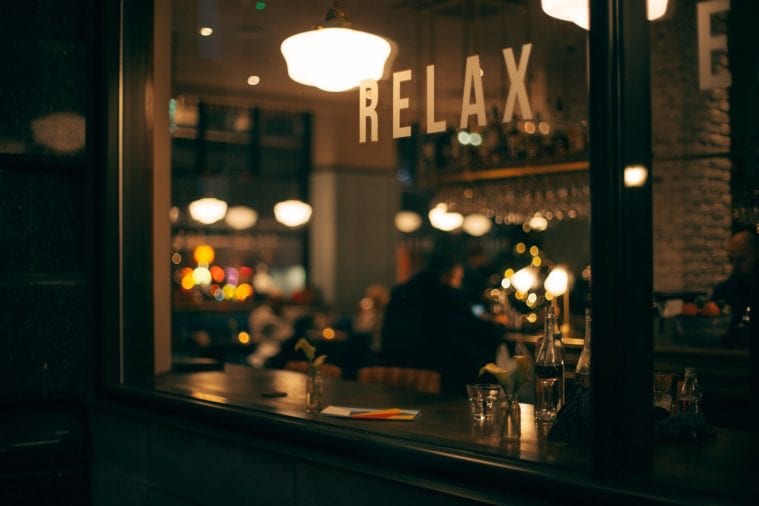
- Can the night-time economy in the UK (and NI) survive the pandemic?
- This week Michael Deane, one of Belfast’s top chefs, warned that if restaurants here didn’t open as early as next month, as many as half were going under “and Belfast is going to be a lot worse than it was in the 70s”. This article, looking at the whole UK situation, supports his concern and says its feared thousands of venues have closed for good
- £82 billion of property purchases on hold – but industry confident of re-bound
- One estate agent says “we’re running on fume” but she, and others, say “industry coiling like a spring” waiting to recover post-virus
- Covid-19 throws Europe’s tourism industry into chaos
- Like NI, countries around Europe don’t know if summer tourists will arrive, or how businesses will survive as it is estimated Europe’s hotels and restaurants will lose half their business this year.
- Will America be cut off to the world once the lockdown ends?
- Immunity passports, pre-boarding tests, face travellers to and from the US
- For the chop: food sharing in China – and in the West?
- In China, because of the virus, authorities have launched a campaign to ban communal eating “double dipping”. My question: where does that leave buffets in the West?
- UK academy for 50,000 customs form-fillers
- The customs agents are essential for us to trade with EU from 2021. But they will cost an estimated £1.5 billion annually.
- Brexit ‘could impede coronavirus contact tracing on island of Ireland’
- Robin Swann admits no EU/UK trade deal could jeopardise data sharing
Can the night-time economy in the UK survive the pandemic?
The lockdown means there will be no queues any of the UK’s 1,600 nightclubs tonight or, indeed, any time soon as crowds have become the nation’s enemy.
And with no vaccine there is also no light at the end of the tunnel for the UK’s 106,000 bars, pubs, clubs and restaurants, which will be the last to reopen after the coronavirus crisis abates.
“We’re about socialising, not social distancing,” says Peter Marks, who runs Deltic, the UK’s biggest nightclub operator. “It is a low-margin business that relies on a lot of footfall. We get around about 7 million customers a year, but they spend £15 or £16 plus VAT each.”
The JD Wetherspoon pub chain has floated the idea of reopening in June but many within the hospitality trade see that as fanciful and are focused on how to survive the next few months of no, or very low, sales.
One campaign gaining momentum is #NationalTimeOut which is being led by Jonathan Downey, the entrepreneur behind London street food business Street Feast and the Milk & Honey cocktail bar in Soho.
Without help, Downey says, more than half of hospitality venues and as many as 2 million jobs will not survive the lockdown – and even that could be “lowballing it”.
“We were the first sector to be shut down by the government and therefore it stands to reason that we may be one of the last to reopen,” says Rob Pitcher, chief executive of Manchester-based Revolution Bars, a nationwide chain aimed at 18- to 30-year-olds. “Opening with any sort of social distancing is very problematic. We would rather stay closed for slightly longer and be able to open with far less restrictions.”
Other problems loom. With job losses mounting across the economy many people will just have less money to spend on shopping and nights out after the lockdown ends. Karl Chessell, the director for food and retail at consultancy group CGA, says there is a genuine fear that some venues have “closed their doors for good”.
For the time being Revolution’s “best estimate” is that its bars might be up and running by late summer. Until the lockdown the chain served 100,000 customers on an average Saturday night and Pitcher reckons they will be keen to come back. “We are well aware,” he says, “they will be desperate for a night out when the time comes.” Guardian 2 May
PROPERTY SALES: #1 In the U.K., £82 Billion Worth of Property Purchases Are on Hold
A total of 373,000 property purchases worth £82 billion are on hold in the UK, with the number of new sales running at a 10th of the levels recorded in early March, online real estate portal Zoopla said.
Richard Donnell, director of research and insight at Zoopla, said: “Without doubt, once the coronavirus restrictions are relaxed, we should expect the release of demand that has been building since Brexit and political uncertainty destabilized market sentiment,” Mr. Donnell said.
The impact on pricing is yet to be seen, “given new sales volumes are 90% down on the start of March,” he added.
The virus and the lockdown will result in 56,000 fewer homes being built and delivered this year, a 35% drop compared to last year. Mansion Global 27 Apr
#2 Experts predict sharp recovery after coronavirus lockdown
UK house prices could rebound after the coronavirus lockdown eases, after they grew at the fastest pace since 2017 before the crisis, Nationwide Building Society has said.
But coronavirus has seen UK house prices growth “grinding to a halt” since the lockdown kicked in. Banks have also granted 1.6m mortgage holidays to worried homeowners.
And Nationwide warned the medium-term outlook is “highly uncertain”. Robert Gardner, chief economist at Nationwide, said. “Much will depend on the performance of the wider economy,” predicting a significant contraction in the short term.
However, estate agents and housing experts today predicted a sharp recovery in UK house prices after the coronavirus lockdown lifts.
Lucy Pendleton, founder of independent estate agents James Pendleton, agreed. “This market may be running on fumes right now. But the vast majority of the clients we are speaking to aren’t being panicked into lowering their prices.”
She added: “The market is coiling itself up like a spring just like it did during the Brexit years. This time we’ll be expecting just as big a post-lockdown leap in activity to make up for all the lost time.” City AM 1 May
Covid-19 throws Europe’s tourism industry into chaos
From the Algarve in Portugal to the Greek islands, and from the chic resorts of Italy’s Amalfi coast to the pubs and clubs of the Spanish costas, no one knows whether Europe’s holidaymakers will come this year, or how to survive if they do not.
The losses are already dramatic. The European commission estimates that the EU’s hotels and restaurants will lose half their income this year. Tourism revenues fell by 95% in Italy and 77% in Spain in March, according to the banking group UBS.
The EU’s transport and tourism roadmap suggests travel restrictions within the bloc could first be eased “between areas with a comparably low reported circulation of the virus”, prompting the Czech Republic, Slovakia and Croatia, which have reported low numbers of infections, to propose corridors to the Adriatic coast.
These could perhaps be accompanied, it has been suggested, by a common “Covid-19 passport” testifying to the bearer’s health before travel, or by in-resort testing once they arrive.
Some hotels and restaurants are still counting on being able to reopen, but the head of the Algarve tourist business association, Elidérico Viegas, has said many will not. Foreign visitors are unlikely to return until April next year, he said.
Spain was the world’s second most-visited country in 2019, with nearly 84 million tourists. A heavy economic reliance on tourism has left administrations scrambling to develop protocols capable of protecting what travellers do this summer.
Greece says it foresees a July start to the season, with a low rate of infection and Covid-19 deaths fuelling optimism it can project itself as a safe destination. Resorts in northern Greece are looking to boost occupancy from neighbouring Balkan states that have also handled the pandemic well.
Italy’s small business federation CNA expects 25 million fewer foreign visitors between July and September. Sicily, one of the country’s flagship destinations for summer tourism, is already reporting 65% of bookings cancelled. The National Tourism Agency forecasts a €20bn fall in income compared with 2019.
Businesses are experimenting with four-metre plexiglass barriers on beachfronts and restaurateurs with glass shields between tables, but all know the impact on tourism will will be felt for years to come. Business is not expected to return to pre-coronavirus levels until 2023. Guardian 2 May
Will America be cut off to the world once the lockdown ends?
While several US states are already lifting their lockdown restrictions and opening up for business, it is unclear when America will reopen to the outside world.
In March, Donald Trump introduced restrictions on travel from European countries, including the UK, to the US which the US president said would last for 30 days. However White House officials have hinted that these restrictions could in fact be extended for several months.
The ban has worried industries reliant on tourism, such as airlines and hotels. Europe represents the biggest source of tourism to the US after Canada and Mexico.
The US Travel Association said that eight million jobs are projected to disappear by the end of April due to declines in travel, a bigger number than in the aftermath of the 9/11 terror attacks.
It it is also likely that travel restrictions in Europe will affect Americans travelling to the continent for some time too. Several European countries – including France, Germany and Italy – have said they remain closed to international passengers.
The UK government has also suggested that it may introduce a 14-day quarantine for international passengers which is likely to affect the number of American short-term holidaymakers coming to the country.
Meanwhile many American airlines have either paused or severely reduced flights from Europe. If recent surveys of Americans’ attitude to future travel plans are anything to go by, this is unlikely to change any time soon.
A Harris Poll found that the majority of Americans say they will not stay in a hotel in the next three months, while most said they would not resume flying until four to six months after the government signals that Covid-19 is abating. Daily Telegraph 2 May
For the chop: food sharing in China
In the aftermath of the coronavirus outbreak, Chinese authorities are pushing for a “dining table revolution” to change long-held traditions of communal eating, where diners take from shared plates with their own chopsticks.
Authorities have launched an aggressive campaign to convince diners to use designated serving utensils known as gongkuai or gongshao, or “public chopsticks” and “public spoon”. Officials are also encouraging the serving of separate portions rather than “family style”, where a group shares several dishes.
It will be a difficult feat to pull off. After the 2002-03 Sars epidemic, a similar initiative petered out. More challenging is that sharing food is a key part of Chinese social life and a sign of intimacy.
The gongkuai – more common in Japan, Korea or Taiwan – tend to be seen at higher-end restaurants in China and rarely used at home. Among family or friends, asking for the serving utensils can be awkward or perceived as rude.
Under chopstick etiquette, taught at an early age, one should touch only the food one intends to eat. But Chinese health officials say the practice leaves too much opportunity for germs to be passed through saliva from one’s own set of utensils to the shared dishes.
Across the country, celebrities, business tycoons, public health experts, and teams of propaganda workers have been deployed to educate the public. “Divide meals, not love,” state media have declared.
The campaign appears to be working at restaurants. A manager at the Tianzhu chopstick factory in Zhejiang province said the company has seen orders for gongkuai, which are longer and decorated differently, go up as much as 30%.
Edward Wang, author of Chopsticks: A Cultural and Culinary History said: “Gradually people will become more adjusted to the idea that even if we don’t share food, we are still friends.” Guardian 1 May
BREXIT: #1 UK to set up academy for 50,000 customs form-fillers
A special academy is to be set up to train up to 50,000 people to fill out customs forms to enable post-Brexit trade with the EU.
Government ministers are liaising with businesses to establish a £34 million “customs agent academy” to prepare for trade with the EU at the end of the Brexit transition period – scheduled for December 31
Cabinet Office minister Michael Gove revealed the plans for the academy, earmarked for a location in Kent, and said the government is in talks with freight-forwarding industry to get it off the ground.
Currently, there are around 50m customs declarations filled out each year due to UK trade with the rest of the world.
The Road Haulage Association (RHA) has estimated that, under a Cananda-style trade deal between the EU and UK, which would elimate most tariffs but still involve customs declarations, an extra 200m forms could be generated each year.
If each agent was paid £30,000 a year, this would amount to any extra cost £1.5bn annually for businesses.
The news comes amid a row over the EU’s bid to maintain an office in Belfast to help monitor the UK’s implementation of the Brexit withdrawl agreement, under with the UK agreed to checks on trade between Northern Ireland and Great Britain.
A letter seen by RTE says the UK Government agreed to an EU office in the city in February 2019.
“The UK Government supports the continued presence of EU offices in Edinburgh and Cardiff, alongside London and Belfast, given the longstanding relationship the EU has with all devolved nations,” Sir Simon McDonald, permanent secretary at the Foreign Office, wrote.
The UK Government has since said the office is not needed and would be “divisive”. Cabinet Office Minister Michael Gove said it was an un-necessary “mini embassy” Belfast Telegraph 4 May
In the Irish Times, London Editor, Denis Staunton says the “smart money in London and Brussels remains on a deal being agreed this year, although both sides expect it to come later rather than sooner. But the deal is likely to be a bare-bones agreement that will put British trade with the EU on a significantly less favourable basis than today.
“Brinkmanship on the Northern Ireland protocol is undermining confidence in the good faith Britain brings to the negotiations and putting even a rudimentary agreement at risk.” Irish Times 2 May
BREXIT #2 ‘No deal could impede coronavirus contact tracing on island of Ireland‘
Brexit could put at risk the contact tracing of coronavirus patients on the island of Ireland if the UK crashes out of the EU without a trade deal at the end of the year, health minister Robin Swann has conceded.
Contact tracing may face challenges if the virus, as is probable, continues to threaten communities beyond the 31 December deadline for a Brexit trade deal
The tracing of number plates, flight passenger lists and coronavirus test results could become impossible unless the UK agrees a deal on its future relationship with the EU that includes security and data-sharing arrangements.
“What detail, what level of information we share [in 2021] has still to be worked out,” said Mr Swann.
Data shared between authorities in Belfast and Dublin helped in February to trace passengers on a plane that landed in Dublin airport who may have had contact with a resident who went on to Northern Ireland and later tested positive for coronavirus. Guardian 1 May






