Post-virus everything is going to change. That’s the dominant view of national and international media. But how exactly do they see the future? This regular digest section gives some of their answers and views/Edited by George Hamilton
In this edition (20 Apr)
- Global food supply is in crisis, says Belfast expert
- Virus treatment: drug companies to decide who lives and dies?
- Zooming Granny will change how oldies buy
- Post-virus the young must get a better economic deal – not least to give the Tories a future
- Brexit express speeds on: UK rejects IMF plea for extension to transition
- Google searches: fans spinning up, but IKEA wardrobes going down
- And, finally: Rentokil to clean up (literally)
The global food supply chain may never recover says Belfast expert
Chris Stokel-Walker: Around one in eight litres produced at UK dairy farms is exported globally; of the remainder, half goes into the retail sector, and half into food service – supplies to restaurants, cafes and industrial suppliers. “A lot of that consumption was through food service,” says Chris Elliott, director of the Institute for Global Food Safety at Queen’s University Belfast. “We’re not eating cheese sandwiches, cups of tea and lattes in cafes and restaurants. That whole market has closed now.”
The dairy industry mirrors a larger problem. Across the country the food supply industry – which has developed and evolved to be part of a globalised, international world operating on a just-in-time supply basis – has begun to falter and fail. In some cases, we don’t have the ability to produce food. In other cases, we can produce it, but don’t have the ability to process and package it. It’s resulting in an industrial-scale food crisis.
As the days get sunnier – tempting us outside – there are vast numbers of crops that will need harvesting across British fields.
At the minute, the industry has enough workers for the crops it’s harvesting. But industry estimates reckon another 15,000 will be needed in fields in May to harvest everything in time. Currently, Sarah Boparan of fruit picking firm Hops, thinks the industry will make it, but is clear: “The pressure is on for everybody in the sector.” Otherwise summer fruits and vegetables won’t get harvested, and won’t end up on our supermarket shelves.
The National Beef Association said that beef that would have made its way into burgers was being redirected to other points in the food chain, but that’s easier said than done, reckons Elliott.
“People will say if they’re producing the same amount of food they should switch to the retail sector,” he says. But it’s not that simple, because retailers have long standing contracts with suppliers that are difficult to attain, and packaging requirements – and even the kinds of cuts needed – are different between the restaurant and food sector and home cooking. “You might not have the right equipment to produce the right cuts, or the correct packaging equipment,” says Elliott.
Matters have been complicated by staff shortages. Elliott speaks to a number of large meat processing companies based in Northern Ireland who supply large retailers. They’re finding that between 20 and 30 per cent of their workforce are either self-isolating or ill – “and that’s causing them major difficulties”. Elliott claims that companies have put out calls across the food service sector asking for any workers who can be transferred to meat processing plants to help. “That’s happening, and people are being mobilised, but you have to go through training,” says Elliott. “Behind the scenes, people are really scrambling to keep things going.”
There’s little support for food producers from the government. But there should be. Because every business in the food supply world that goes to the wall now will cause problems when demand returns to normal. “What worries me is we’re all cutting back on milk now,” explains Abi Reader, a Welsh dairy farmer. “But that tap isn’t going to easily turn back on again.” Drawing down supplies now could be problematic when July or August rolls around and grass is less plentiful, supply chains are hobbled, and cows produce less milk.
This isn’t just a problem for the UK: the meat industry in the United States is nearing meltdown; fresh produce in Europe is struggling. South east Asia’s palm oil industry is in turmoil. Animal feed grains, which the world sources from Indonesia and South America – are in a perilous state. “There are lots of issues here, across multiple sectors,” says Elliott. “The amount of lateral thinking so many people are doing at the moment is quite incredible. We talk lots about people in the health service doing this fantastic job, but the same thing is happening in the food sector.”
The challenge will be ensuring we’re safe in the future. “Some of these changes downstream will come back to bite us,” says Elliott. “We’re shifting from a globalised supply chain to local ones. It’s like trying to unpick the world’s most complicated jigsaw and put it back together again.” Wired 17 Ap
We’ll find a treatment for coronavirus – but drug companies will decide who gets it
Although there is every indication that treatments for coronavirus may soon emerge, the mere fact of their existence is no guarantee that people will be able to access them. In fact, Covid-19 is more likely to end in the same way that every pandemic ends: treatments and vaccines will be buried in a thicket of patents – and pharmaceutical companies will ultimately make the decisions about who lives and who dies.
Already we’ve seen how medical monopolies have restricted access to coronavirus treatments. We know, for example, that health workers don’t have enough N95 respirator masks; less well known is that 3M holds more than 400 patents for respiratory protection, severely restricting who can produce and supply them in the US. Politicians have called on 3M to release its patents during the pandemic so production can be increased. Amidst an acute shortage of tests for Covid-19, a French diagnostic manufacturer submitted a test kit to the US FDA for emergency approval to sell it in the country, and was sued for patent infringement by a subsidiary of Softbank (this was later withdrawn).
There is every possibility that a Covid-19 vaccine will be encumbered with multiple patents. Vaccines are now a big business. Take infant mortality caused by pneumonia. India uses the Pfizer vaccine, which retails at $250 for a full course but is available to the government at a discounted rate of £8 through GAVI, the Vaccine Alliance funding.
But given that demand in India runs into the tens of millions, even the subsidised cost is unaffordable, and only a small fraction of babies end up getting the vaccine. And so, 40 years after a vaccine for pneumonia was developed, 127,000 Indian babies continue to die from it every year, while the vaccine they can’t afford continues to generate £4.5bn for Pfizer annually.
Compulsory licensing of patents – a legal measure by which countries can suspend patents on a product – is gaining popularity. Last month, Chile declared that the pandemic justifies the use of compulsory licensing; others soon followed. Israel issued compulsory licenses for lopinavir and ritonavir, Ecuador approved a resolution that asks the minister of health to issue compulsory licences over all patents related to Covid-19, Canada and Germany amended their patent laws to enable the swift grant of a compulsory licence, and Brazil is in the process of amending its patent law to make compulsory licensing easier.
Costa Rica recently submitted a proposal to the World Health Organization for a global Covid-19 technology pool – a place where all the necessary intellectual property, such as patents, designs, trade secrets and software could be brought together. The pool would encourage governments to share innovations and make them available globally. The Covid-19 technology pool is far from a done deal, but support for it is growing.
Given that this is a pandemic, it may well be that no corporation can afford to wield the stick for a Covid-19 monopoly. If Covid-19 treatments were free from monopoly control, we would have a real shot at reaching everyone. If this happens – and it’s still a big if – we might realise that such a pharmaceutical system is not only what we need to survive Covid-19, but also what we need to survive other diseases.
• Achal Prabhala is a Shuttleworth Fellow and the co-ordinator of the AccessIBSA project, which campaigns for access to medicines in India, Brazil and South Africa.
• Ellen ‘t Hoen is the director of Medicines Law & Policy, a researcher at the University Medical Centre Groningen, and a founder of the Medicines Patent Pool. The Guardian 15 Apr
Silver surfers are zooming ahead and that won’t end after lockdown
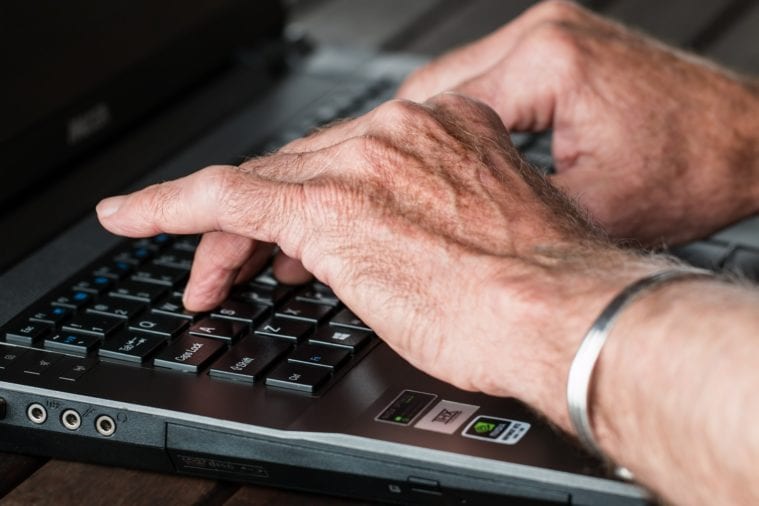
Garry White: Now Granny knows how to Zoom, the global technology revolution is almost complete. A section of society that was reticent about the benefits of technology has been shown its substantial power.
The simple act of keeping in touch with loved ones through video conferencing has brought millions of people from older generations into the new economy – with significant implications once this crisis ends. The billionaires of Silicon Valley will be utterly delighted.
The Office for National Statistics has carried out an annual online usage survey since 2011, which showed that adults aged 75 years and over are consistently the lowest users of the internet out of any age group. In 2011, just 20pc of this cohort were recent internet users, but this jumped to 47pc in 2019. Nevertheless, still more than half of people aged over 75 were not using online services last year.
The recently retired are much more active on the internet. Use in the 65 to 74 age group increased from 52pc in 2011 to 83pc in 2019, closing the gap on younger age groups. These figures are little changed for adults aged 16 to 44 years, where use is at its highest, since the data series began.
Once this crisis is over, many of the changes in people’s lives that they have made in the last, frenetic few weeks will remain. Ordinary business can use the trend to encourage its older customers towards digital communications – saving substantial costs in print and post. But those with a more proactive approach have a big opportunity.
Lloyds Banking Group says it plans to provide up to 2,000 customers over the age of 70 with free tablet devices and it has set up a dedicated phone line to provide training and support to help vulnerable people access online banking.
Although small, this is exactly the type of thing old-economy businesses should be doing to compete in the now turbocharged internet world. The power of the silver surfer is on the rise; firms that fail to change with the market do so at their peril.
Garry White is chief investment commentator at wealth management company Charles Stanley. Daily Telegraph 17 April
Older generation must give more to the young
OPINION Philip Collins: Cuts to public expenditure between 2010 and 2015 exempted the old and fell hard on the young. Workers in their thirties suffered the worst depletion of wages and most have not caught up yet. The capping and freezing of working-age benefits and rising housing costs hit the income of younger people while the state pension and universal benefits, such as winter fuel payments to pensioners, were protected.
There has been a bias in public policy towards the elderly for a long time. Since 1979 pensioner benefits have tripled in value and a third of all benefits now accrue to the over-60s.
This is going to get worse before it gets better — if it ever gets better. The Office for Budget Responsibility predicts unemployment may break 10 per cent and the victims will be younger rather than older. Mortgage payers tend to be older than renters and it is the latter who will build up arrears, especially as they are more likely to be unable to work from home during the lockdown.
The nation has suffered an economic shock which will cost it a fortune. Yet we feel it impossible to draw on the vast unmortgaged wealth that has accumulated in our properties. Wealth taxes are unpopular but they can also be just. There is no merit, no skill involved, in the house prices from which a generation of buyers benefited. It was an unearned boon. The nation needs the money and if the choice falls between taxing the income of younger working families and the accidental riches of their parents or grandparents it is obvious where the tax should be levied.
Then there is one of the issues of the hour, which is social care. It is a blight on a decade of Conservative government that social care is still such a mess. The lack of decent care homes means retired people understandably rattle around in large houses instead of moving. If these houses do not come onto the market families wishing to trade up cannot do so and they, in turn, do not release smaller houses for first-time buyers. A decrepit social care system gums up the housing market.
These are treacherous waters for the Conservative Party but they will find there are no other waters even after the immediate health crisis is over. The shift in public spending towards the elderly is due as much to the sheer size of that generation as it is to a political strategy on the part of the Conservatives. Yet the economic impact is deeply unfair.
The economic logic of recessions unfortunately coincides with a political logic. The Conservative vote is old and getting older. The political incentive to do what is right is not strong
Quite how the Tories were going to keep winning as their voters aged was already an intriguing question. The crisis sharpens it and brings it forward. The Times 16 Apr
Government rejects IMF advice to extend Brexit transition period
The UK Government has rejected the International Monetary Fund’s advice that the UK should extend the Brexit transition period in order to buy more time for trade negotiations with the EU.
“We will not ask to extend the transition period, and if the EU asks we will say no,” said the Prime Minister’s spokesman.
“Extending would simply prolong negotiations, create even more uncertainty, leave us liable to pay more to the EU in future, and keep us bound by evolving EU laws at a time when we need to control our own affairs. In short, it is not in the UK’s interest to extend,” tweeted David Frost, Britain’s chief negotiator.
The UK and the EU have agreed to hold large-scale online trade negotiations in a bid to avoid extending the transition, which would mean the UK paying the EU a membership fee.
IMF managing director, Kristalina Georgieva enraged Brexiteers by saying that the UK and EU should not “add to uncertainty” by refusing to negotiate an extension. She told the BBC that, because of the “unprecedented uncertainty” arising from the pandemic, it would be “wise not to add more on top of it”.
“It is tough as it is – let’s not make it any tougher,” she said. “My advice would be to seek ways in which this element of uncertainty is reduced in the interests of everybody – the UK, the EU and the whole world.” The Times 16 Apr
Online searches now: who’s up and who’s down
There is a fascinating article posted on a blog run by ClickThrough, who term themselves “digital performance experts”, looking at how the virus has affected the way consumers are searching online.
The research company Kantar has got Google UK search terms for March 2020 which ClickThrough then compares with March 2019. The comments are from the company:
TELECOMS: Individual mobile phone handsets eg ‘Samsung Galaxy S8’ are up by 42.4%, indicating that consumers who are confined to their homes are spending time looking at handsets rather than mobile phone talk plans.
In decline: The term ‘Huawei phone’ is down 76.8%, possibly due to public concerns following the manufacturer hitting headlines over the last few months. ‘iPhone screen repair’ is also down by 13.5%. With lockdown restrictions meaning people are spending more time at home than ever before, perhaps fewer phones are being dropped outside of (often carpeted) homes.
What is also notable is the decline in search volume for the term ‘unlimited data plan’, which is down by 47.3% year-on-year. This no doubt reflects the fact that people are spending more time at home using their home broadband and connecting their phones to the internet (as opposed to using mobile data).
ECOMMERCE: The terms ‘ASOS’, ‘Top Shop’ and ‘Misguided’ are all seeing 50% growth year-on-year. Are bored consumers spending their free time browsing apparel sites now they’re no longer able to access the high street? Amazon has seen its customers around the world spending almost $11,000 a second during the crisis.
Going down: ‘IKEA wardrobe’ is currently down by a stonking 61.1%. This is likely because it is an item that people must collect, which they are unable to do at the moment. The phrase ‘DFS sofa sale’ also posts a 21.0% decline.
HOME AND GARDEN: As quarantined gardeners make the most of the early sunshine, the term ‘gazebo’ is up by 42.4%, ‘hot tub’ by 42.4% and ‘sheds’ by 49.3%. Likewise, ‘swimming pool’ and ‘fans’ are up by 21.1% and 425.6% respectively. ‘Grass seed’ has shot up by 261.6%
HEALTH INDUSTRY: With exercise restricted, people have more time to focus on their diet, which explains the increase in search volume for the terms ‘BMI’ (18.2%) and ‘BMI calculator’ (12.7%). Additionally, the term ‘how to lose weight fast’ has also seen a 13.2% increase. But the term ‘gym near me’ is down by 48.4%
The term ‘depression symptoms’ is up by 10.8%, and interestingly, ‘ovulation calculator’ has also seen a search increase of 19.6% over the last year, which may give us a clue as to how some couples are passing their time under lockdown!
AUTOMOTIVE: ‘Auto Trader UK’ has a significant increase of 111.4% year-on-year. This may be because those earning a lower wage are being forced to sell their existing vehicle to raise extra funds, or choosing a second-hand option as opposed to a costly new car.
‘Lease car UK’ fell by 43.7% as commuters remain on lockdown and/or delay major financial outlays. Even the term ‘tyre prices’ is down by 31.5%, which can be explained by the number of cars simply parked on their owner’s driveway, rather than out on British roads burning (expensive) rubber! ClickThrough 17 Apr
Rentokil plans to clean up after lockdown
A workplace hygiene and pest control group is retraining 7,000 of its employees to deep-clean offices, shops and passenger transport.
Rentokil Initial said that it was moving from the crisis phase of the pandemic, when many of its customers were closed and it cut costs, to a recovery phase, as its clientele begin to implement their exit plans from lockdown.
It said that in addition to its existing 1,000 specialist hygiene staff, it had retrained 7,000 of its other workers to be dispatched in full personal protective equipment “to perform disinfection and deep-clean services”.
They will be sent to offices, schools, government buildings, food retailers, bus fleets and emergency vehicles. “As businesses begin to reopen their premises, we anticipate that many of our customers will have an increased requirement for our pest control and hygiene services, particularly hand-cleaning services and specialist disinfection clean-up services,” Rentokil said. The Times 17 Apr






