Blockchain technology is making waves in various industries, and gaming is no exception. This revolutionary technology is set to transform in-game transactions and ownership, providing gamers with unprecedented control and security over their virtual assets. With developments continually emerging, the landscape of blockchain gaming is both dynamic and promising. For the latest insights on this topic, you can visit VPESports https://www.vpesports.com/.
The Rise of Blockchain in Gaming
The integration of blockchain technology into gaming introduces numerous benefits, including enhanced security, transparency, and true ownership of in-game assets. Unlike traditional games where assets are controlled by game developers, blockchain games enable players to own their items as NFTs (Non-Fungible Tokens), which can be traded, sold, or even rented out. This paradigm shift not only empowers players but also opens up new economic opportunities within the gaming ecosystem.
Key Benefits of Blockchain in Gaming
- True Ownership: Players have genuine ownership of their in-game assets, recorded on a decentralized ledger. This ownership is immutable and cannot be altered or revoked by developers.
- Interoperability: Enhanced NFT standards allow for greater interoperability across different games and platforms, enabling players to use their assets in multiple virtual environments.
- Security and Transparency: Blockchain ensures that all transactions are secure and transparent, reducing the risk of fraud and cheating.
- Decentralized Finance (DeFi) Integration: Many blockchain games are incorporating DeFi elements, allowing players to stake assets, participate in liquidity pools, and earn yields.
- Monetization Opportunities: Players can monetize their gaming skills and time through various models such as play-to-earn and move-to-earn.
Major Trends in Blockchain Gaming
Play-to-Earn and Move-to-Earn Models
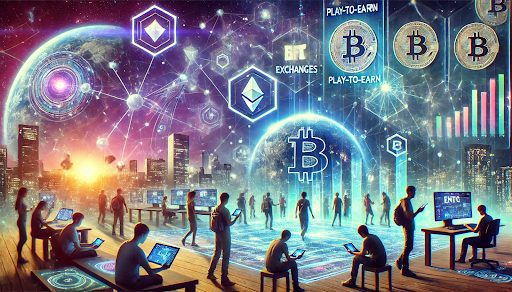
Play-to-earn (P2E) has become a defining feature of blockchain games, allowing players to earn real-world rewards by participating in games. These rewards are often in the form of cryptocurrency or NFTs, which can be traded or sold. The move-to-earn model takes this concept further, rewarding players for physical activities linked to their gaming experiences.
Enhanced NFT Interoperability
The ability to use NFTs across different games and platforms adds significant value for players. Enhanced interoperability standards are being developed, allowing seamless transitions of assets between virtual worlds. This creates a more cohesive and engaging gaming experience.
Integration of Decentralized Exchanges
Decentralized exchanges (DEXs) within games are becoming more common, enabling players to trade assets directly without needing external platforms. This integration provides players with greater financial autonomy and control over their in-game economies.
Blockchain-based AI NPCs
The convergence of blockchain and artificial intelligence (AI) is introducing dynamic and responsive non-player characters (NPCs). These NPCs adapt to player behavior and decisions, creating more immersive and unpredictable gameplay experiences.
Environmental Sustainability Initiatives
As blockchain technology evolves, there is a growing emphasis on adopting environmentally sustainable practices. Many blockchain platforms are shifting to greener consensus mechanisms like Proof-of-Stake (PoS) to reduce their carbon footprint.

Notable Developments and Games
Several blockchain games have made significant strides, showcasing the potential of this technology in the gaming industry. Here are some noteworthy examples:
- Axie Infinity: Known for its robust P2E ecosystem, Axie Infinity has regained popularity with new expansions and mobile game releases.
- Gods Unchained: This game has announced major updates, including a mobile launch, server improvements, and new game modes.
- DeFi Kingdoms: Integrating Synapse Protocol, DeFi Kingdoms offers near-instant bridging between chains and access to a vast liquidity network.
- Alien Worlds: This game continues to be a top performer, with millions of tokens staked and new game modes introduced.
Investment and Growth
The blockchain gaming sector has seen a significant influx of investments, reflecting growing confidence in its potential. In Q2 2024 alone, investments reached $1.1 billion, a 314% increase from the previous quarter. Major investment firms like a16z and Bitkraft Ventures are leading the charge, supporting innovative game studios and infrastructure projects.
Challenges and Future Prospects
Despite the promising developments, blockchain gaming faces several challenges, including regulatory uncertainties, user onboarding complexities, and technical scalability. However, the industry’s trajectory suggests that these issues will be addressed over time, reshaping the gaming landscape.
Conclusion
Blockchain technology is revolutionizing the gaming industry, offering players unprecedented control over their in-game assets and creating new economic opportunities. With trends like play-to-earn, enhanced NFT interoperability, and decentralized exchanges, the future of blockchain gaming looks bright. As the industry continues to evolve, it promises to redefine how players engage with games, merging virtual and real-world experiences into a seamless and rewarding ecosystem. The ongoing advancements in blockchain technology and the rise of innovative game models are set to transform the gaming landscape, heralding a new era of interactive and immersive gameplay.