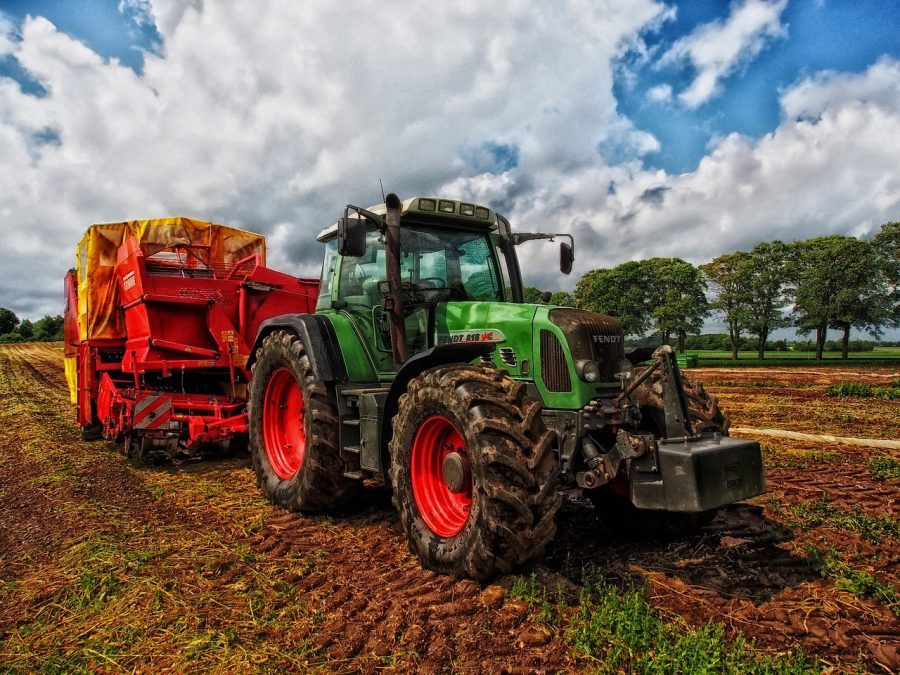
Agriculture and farming are widely believed to be purely traditional sectors that are not open to new technologies and digitalization. However, this thesis is far from reality. These sectors not only positively welcome tech solutions today but also have been gradually adopting them for a while.
One of the key technologies that has already found its use cases in agriculture is the Internet of Things. The network of smart devices and special sensors can help farmers automate a lot of processes and get important insights for making better decisions. As a result, the implementation of IoT-powered systems at farms has a positive impact on the quality and quantity of products that farmers can provide.
The growing adoption of technologies in this industry can be proved by statistics. The global smart farming market value is projected to achieve $33B in 2027 while in 2022 this figure was $15B.
In this article, we offer you to have a look at the most popular applications of IoT in agriculture that brightly demonstrate the benefits of the Internet of Things for this industry.
Precision farming (agriculture)
If you start googling for the most commonly known use cases of IoT in farming and agriculture, it’s highly likely that you will find this one among the top positions. The concept of precision agriculture (or farming) presupposes the introduction of various methods and tech tools typical for smart farming. As a rule, such solutions are powered not only by IoT but also by AI, ML, big data, and other advanced technologies. All this is done with a view to increasing the accuracy of all the farming processes and getting the possibility to execute better control over them.
What methods are typically used in this use case? For example, livestock and crop monitoring, vehicle tracking, and inventory management. Thanks to the fact that tech solutions can gather and efficiently analyze data, farmers can make better-informed decisions that will bring higher value.
Monitoring of weather conditions
Weather conditions are among the most important factors that have influence on crop production. Farmers need to clearly understand what to expect in order to ensure the most favorable conditions for their plants. For example, if it is known that the whole week will be extremely rainy, there is no need to water plants.
Quite often to save plants, farmers need to act as soon as possible, and to do it they need to have access to real-time weather data. That’s exactly what the Internet of Things can ensure.
To enjoy these benefits, it is necessary to install different types of sensors, including those that will gather information about air temperature, humidity, rainfall, etc. The most advanced sensors can send notifications related to the expected changes in weather conditions.
Use of drones
Drones are widely known as modern flying devices that allow users to create amazing videos and photos. And of course, it is true. But it is far not the only use case of drones. Some of their models equipped with special sensors can be also used in farming and agriculture in order to gather important agricultural data.
Moreover, already today they are able to perform a row of more challenging tasks. For example, they can spray crops to protect them from infections and pests. Today agricultural drones are quite expensive devices which is a serious barrier to their mass adoption.
Livestock tracking
Though the majority of IoT use cases that are discussed in this article are related directly to agriculture, we should mention that this technology can bring advantages to farms engaged in cattle breeding as well. Such solutions can contribute to the enhancement of the health and well-being of livestock. Special devices are designed to get access to the real-time location of cattle herds, define sick animals, as well as monitor conditions in the stalls where animals are kept.
Smart greenhouses
In general, even speaking about traditional greenhouses we should admit that their role in farming can’t be underestimated. Thanks to them, farmers can control environmental factors on their own which has a great impact on their vegetables and fruits. Nevertheless, it is not always possible to control and adjust all the necessary parameters without supportive solutions. When everything is managed exclusively manually, it can lead to a great number of mistakes caused by a human factor. However, IoT and automatization can address the existing issues.
Smart greenhouse systems are usually enriched with numerous sensors. They can track and control such factors as temperature, lighting, and air humidity among others. And what is really important is that all this is possible without the participation of farmers.
Sensors can gather all the required data in real-time and then send it to cloud servers where it will be processed. Based on the results, a system will apply the relevant actions (for example, it will switch on lighting or water plants).
Final word
Despite all the existing stereotypes, agriculture and farming are among those sectors that positively welcome innovations and advanced tech solutions that help to increase the efficiency of all the efforts and processes. Already today we can observe the gradual adoption of IoT-powered solutions at farms and agricultural enterprises and it will be sensible to suppose that this tendency is here to stay.