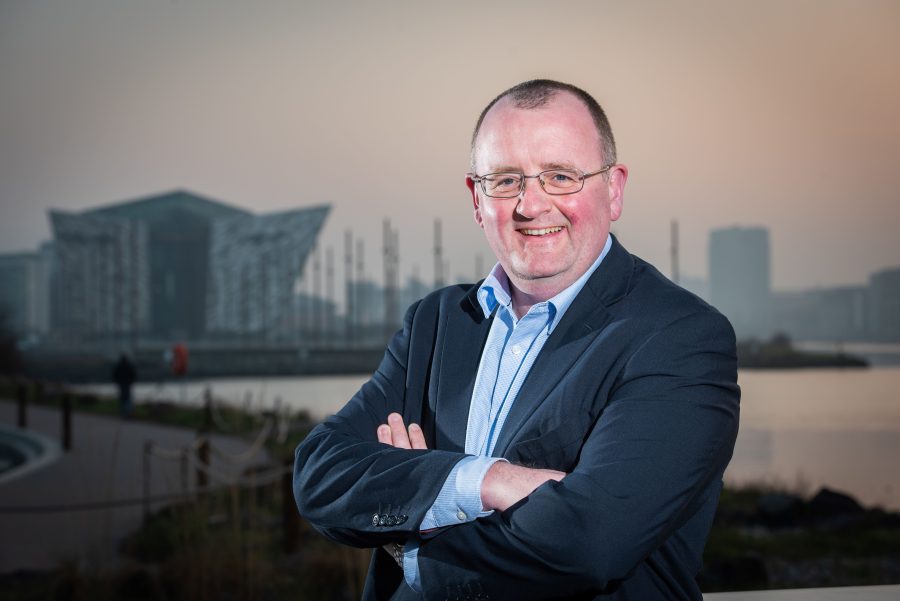
I can’t help but think ‘here we go again’ when the Chancellor recently announced yet another efficiency drive. Rachel Reeves hasn’t all of sudden clocked that the civil service is too costly – every Government for decades has tried and failed to achieve better headcount targets, writes Ross Boyd, founder and director of Belfast-based chartered accountancy, RBCA
The budget cuts of 15 per cent currently proposed will of course lead to fewer civil servants, but the plan this time around isn’t job cuts specifically, it’s rather to generate cost savings through efficiencies in ‘back office’ functions like human resources, communications and policy work. Logical? Yes. But with no real plan on how this goal could actually be achieved, we are left to speculate on what the potential consequences of these spending cuts could be for Northern Ireland.
We have a high dependency on the public sector for employment, significantly higher than in England, with 3,330 civil service roles based in Belfast and 4,470 in Northern Ireland. The plan does seem to mildly account for regional differences, with the intention being to move 50 per cent of all senior civil servants to regional offices, including Belfast, by 2030. But, as yet, there’s no evidence to indicate that a boost is on its way to Northern Ireland as 13 locations have been earmarked in total.
The civil service, in reality, is small by comparison to the NHS, and our spending on other public services. Public sector workers will always continue to strike to ensure their wages meet the private sector, presenting an obvious challenge when it comes to maintaining any cuts to spending. Furthermore, any worthwhile reform will be very costly to implement. I often wonder if any significant monies can ever really be drawn or saved from the civil service?
Instead, we should focus on business and the private sector to drive the economy. When it comes to our private sector, any changes to the civil service present notable risks. Thousands of our local businesses rely on timely decisions and support from civil servants. With potentially fewer staff and no update on the plan to streamline these systems, could delays be inevitable? Furthermore, sectors such as construction, legal, IT, accounting which frequently work on public projects could face serious disruption. NI success story, Kainos, which is our largest IT business, recently completed a 7 per cent cut to its global workforce, citing a pause on government spending decisions around the time of last year’s general election as the main reason for its dip in profits. The UK public sector is the firm’s single biggest market.
Clearly, the private sector is already suffering. The most recent data from the Office of National Statistics suggests UK employment levels are reducing with payrolled employees falling by 53,000 over the first three months of the year. NISRA is reporting that local firms are having the same challenges with wage costs jumping by 11 per cent, and many business owners proposing redundancies. The labour market in key sector of the economy, like finance, remains tight with wage inflation.
Labour’s tax raid on employers has squeezed margins – and essentially left the private sector high and dry. Our entrepreneurs are now understandably demotivated by the combination of having to pay higher taxes, whilst navigating the challenging economic conditions fuelled by uncertainty, which are often driven by consequential decision making in government.
The private sector needs to be allowed to thrive. But alas, it’s looking ever more likely that we are building towards even higher taxation in the autumn. Isn’t it interesting that Reeves consistently says the aim is growth, yet another round of tax increases, whether on businesses or households, could be a real growth killer for Northern Ireland?
Businesses need transparency amidst uncertainty. Owners need to know how planned cuts will affect devolved nations, how services will be protected, and what contingencies are in place to ensure that Northern Ireland isn’t left to absorb the fallout. In short, we need to see the plan.