Brexit Business: a selection of business-focussed stories from national and international publications, some of whom may require a subscription to view in detail (paywall) Curated by George Hamilton
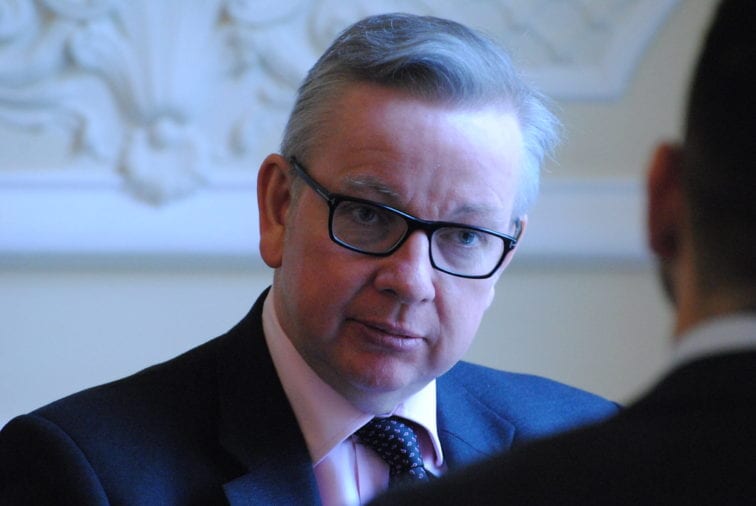
Michael Gove confirms post-Brexit trade barriers will be imposed on both imports and exports
Michael Gove has told businesses that trade with Europe they need to prepare for “significant change” with “inevitable” border checks for “almost everybody” who imports from the EU from next year.
In the first official confirmation that the government is going to impose trade barriers post-Brexit, he warned there would be checks on food and goods of animal origin, plus customs declarations and mandatory safety and security certificates required for all imports.
Gove, who as chancellor of the Duchy of Lancaster is de facto deputy prime minister, also warned delegates it could take five years to get a smart border involving online processes up and running and said businesses had to be ready for the change next January, whatever the outcome of the next phase of Brexit negotiations.
Later the government issued an official update confirming checks on both imports and exports (see next item)
The Guardian 10 Feb
Press release from HM Government
Government confirms plans to introduce import controls
Today, the government has confirmed plans to introduce import controls on EU goods at the border after the transition period ends on 31 December 2020.
This morning HMRC extended the deadline for businesses to apply for customs support funding to 31 January 2021. To date, applications have been made for around £18.5 million out of a possible £26 million – meaning there is at least £7.5 million left to claim from HMRC.
This is aimed at GB/EU traders. This approach does not apply to the flow of trade between Northern Ireland and Ireland, or between Northern Ireland and GB. [my italics]
https://www.gov.uk/government/
Source: Cabinet Office 10 Feb
Free ports: will investment drivers for ‘Global Britain’ secure the Tories’ new northern strongholds?
Little known Shannon Airport on the west coast of Ireland unknowingly started a trade revolution back in 1959 when it became the world’s first free trade zone.
Ben Houchen, Tees Valley Mayor and a member of the Government’s Free Ports advisory panel believes the benefits of Shannon’s transformative free port were gradually eroded by Ireland’s membership of the EU.
More than 30 ports are believed to be readying bids to become one of the 10 free ports – many in northern areas seized by the Conservatives in the election. Aberdeen, Belfast, Liverpool, Southampton and the huge ports on the Humber are amongst those believed to be mulling bids.
Daily Telegraph 10 Feb
EU clamps down on free ports over crime and terrorism links
Brussels is clamping down on 82 free ports or free zones after identifying that their special tariff and duty status has aided the financing of terrorism, money laundering and organised crime.
A set of new rules was introduced by the European commission just weeks before the launch on Monday of a UK government consultation on the creation of up to 10 free ports in post-Brexit Britain.
Authorities across the EU have been obliged since 10 January to take extra measures to identify and report suspicious activities at the ports and zones as a result of the “high incidence of corruption, tax evasion, criminal activity”.
The Guardian 10 Feb
Could Sinn Fein derail a Brexit trade deal?
Brexit trade talks have taken another twist after Sinn Fein unexpectedly emerged as the most popular party in Ireland in a move which could harm the UK’s chances of striking a deal with the EU.
Sinn Fein’s new found place at the heart of the battle for power will likely spark concern in Number 10 Downing Street because the party vehemently opposed the Brexit divorce deal.
It suggested that Taoiseach and Fine Gael leader Leo Varadkar gave away too much in the crunch talks with Boris Johnson last year which led to the updated divorce deal being agreed.
Crucially, all EU27 member states will have to ratify any trade deal struck between Brussels and Britain which means potential Sinn Fein opposition could hamper progress and reduce flexibility on what could be agreed.
Daily Mail 10 Feb
What does the Irish election result mean for Brexit?
All three of the leading Irish parties are pro-EU, and whoever is in government will adhere to the Brexit deal and the Northern Irish protocol, which involves checks along the Irish border.
But Sinn Féin, more than any party, is advantaged by the Brexit deal because Northern Ireland remains a de facto member of the EU single market, pushing it into closer economic union with the republic.
Jonathan Tonge, professor of British and Irish politics at Liverpool University, said: “The more friction there is in terms of Northern Ireland trade, the better for Sinn Féin, although they won’t say that publicly.”
Michel Barnier has met Mary Lou McDonald and her team on several occasions so Sinn Féin are not an unknown quantity. However, as a nationalist party with policies of the left, “they would face dilemmas given their own ideology in trade talks where they would be rubbing up against neoliberalism”, said Etain Tannam, professor of international peace studies at Trinity College
Guardian 10 Feb
Irish unemployment to rise even if EU-UK free trade deal struck
The Irish Central Bank has published a paper that warns of the economic impact even in the event of an EU-UK free trade deal.
Irish unemployment will increase by 1 per cent and economic output will fall by about 3.5 per cent even in the event the European Union and the United Kingdom successfully strike a free trade deal, the Central Bank has said.
It argues that the imposition of World Trade Organisation (WTO) tariffs, which would take place in the event a deal cannot be struck, would substantially reduce, or potentially wipe out UK demand for Irish exports of meat and dairy products.
While an orderly move to an FTA would result in smaller upfront losses than those associated with a disorderly no-deal Brexit, a basic FTA would still imply “significantly higher trade frictions than exist today”.
Irish Times 10 Feb






