If you’ve ever asked an animation studio “how much does a 60-second explainer video cost?” and watched them dodge the question for ten minutes, you’re not alone. Pricing transparency is one of the worst-kept secrets in the UK creative industries — and one of the biggest reasons businesses delay or abandon animation projects that would have paid for themselves within months.
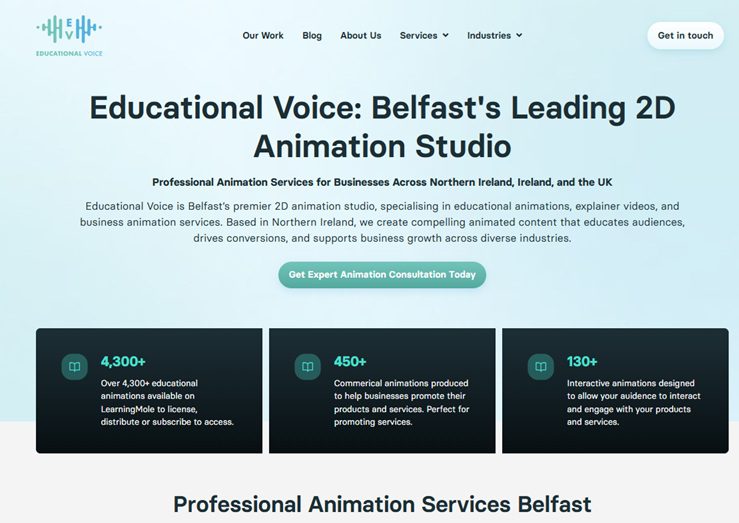
I’ve spent the last six years running a 2D animation studio out of Belfast, working with UK businesses ranging from SMEs to enterprise organisations. What I’ve learned about pricing is straightforward: there’s no good reason to keep it vague. The number depends on five or six clear factors, and any studio worth working with should be able to walk you through them inside a 20-minute discovery call.
Here’s what business animation actually costs in 2026, why the numbers vary so much, and how to know whether the quote you’re holding is fair.
The honest answer: £1,500 to £15,000+ for most business projects
Most professional 2D animation projects in the UK fall between £1,500 and £15,000. That’s a wide range, and the spread isn’t accidental. It reflects real differences in scope, style, and what the animation actually has to do.
To give you a clearer picture, here’s roughly what each budget tier buys you:
£1,500 to £3,000: A short (30 to 60 second) explainer in a simpler style. Motion graphics, kinetic typography, or basic character animation with limited scenes. Single voiceover. Typically a 3 to 4 week turnaround. Suitable for social media, landing pages, internal comms, or product launches where you need to explain one clear thing.
£3,000 to £8,000: A 60 to 90 second explainer with custom character design, multiple scenes, original storyboarding, and tailored music. Two or three rounds of revision baked in. This is where most SME marketing budgets land — and where most of the ROI sits. Production typically takes 5 to 7 weeks.
£8,000 to £15,000: Longer-form pieces (90 seconds to 3 minutes), complex character work, multiple animated sequences, custom illustration, sometimes interactive or web-embedded versions. Suitable for sales videos, investor presentations, training series, and regulated-industry communications (healthcare, financial services) where accuracy and polish both matter. Production timeline: 8 to 12 weeks.
Above £15,000: Multi-video campaigns, full course content, animated series, branded content that needs to scale across multiple platforms. Educational animation projects in this tier often run to 20 or 30 individual videos under a single brief.
These numbers reflect real UK studio pricing in 2026. London-based studios will often quote 30 to 50% higher for the same work, partly due to overhead and partly because they can. A Belfast or Manchester studio with the same craft typically lands at the lower end of these ranges. (For a more detailed breakdown of what affects pricing in each tier, Educational Voice’s animation cost guide walks through each variable.)
The five things that actually drive the price
Every quote you receive should be explicable in terms of five inputs. If a studio can’t break it down this way, that’s a signal.
- Length. Animation is priced per finished second, not per minute. A 60-second video typically costs roughly twice a 30-second video in the same style, not exactly the same. Most professional studios think in terms of price-per-second ranges (often £40 to £150 for 2D, depending on complexity).
- Style. A whiteboard animation is faster and cheaper to produce than custom character animation. Kinetic typography sits between them. Motion graphics with custom illustration runs higher again. The style decision sits at the top of the pricing tree because it determines almost everything that follows.
- Custom assets. Animation built from a studio’s pre-built character library costs less than fully custom character design. Same for illustration, backgrounds, and UI mockups. If your animation has to feature your specific product or workflow, expect to pay for the custom assets.
- Script and storyboard scope. A 60-second video with a clean, focused script costs less than the same length trying to communicate three different messages. Tight scripts are also more effective. If a studio offers scripting included in the quote, ask whether that’s a single revision or unlimited — there’s a meaningful difference.
- Revisions. Most studios include two or three rounds of revision in their quote. Additional revisions are billed by the hour or scene. The biggest budget overruns in animation projects come from unclear revision scope at the start.
Why production timelines and pricing are linked
One question that almost never appears in initial briefs: how long should this take?
A 60-second professional explainer typically needs 5 to 7 weeks of production time. Educational Voice has produced over 3,300 educational animations for the LearningMole platform, and even with established workflows, that timeline rarely compresses below 4 weeks for a single bespoke video. Anything faster usually means corners cut on scripting, storyboarding, or revision time — the three places where animation projects either succeed or fail.
If a studio offers a 1 to 2 week turnaround for a custom explainer, it’s likely either using template-based animation (legitimate, but not bespoke), AI-generated assets without human creative direction (variable quality, hard to revise), or pulling overnight shifts to hit the deadline (sustainable for nobody).
Belfast-based studios benefit from this conversation honestly. The cost of doing business outside London means we can afford to spend the right amount of production time on each project without inflating budgets to match. It’s part of why a growing number of UK businesses across Northern Ireland, Ireland, and the wider UK are choosing regional studios for their animation work.
What the ROI actually looks like
Animation gets justified to finance teams on the basis of conversion improvements, engagement metrics, or training effectiveness — depending on where it sits in the business. The honest answer for most use cases is that a well-produced 60-second explainer earns back its cost inside three to six months for SMEs and inside one to three months for businesses with higher transaction values.
Three usage patterns where animation tends to pay back fastest:
- Product or service explanation on a high-traffic landing page. Conversion rate uplifts of 20 to 40% are realistic for businesses moving from text-only or static imagery to embedded video.
- Sales enablement for technical or complex products. Sales cycles shorten because prospects arrive at calls with a baseline understanding of what the product does.
- Employee training, particularly for compliance, safety, or onboarding. Training animations are reusable assets that compound in value with every new hire.
For a more detailed breakdown of how animation ROI shows up across different industries — and which animation styles tend to work best for each — Educational Voice maintains a healthcare animation services overview, a financial services breakdown, and similar pages for technology, retail, manufacturing, education, and non-profit clients.
How to evaluate a quote
If you have a quote in front of you and want to sanity-check it, three questions cut through most of the ambiguity:
How long will production take? Anything under 4 weeks for a custom 60-second video deserves a follow-up question.
What’s included in revisions? Two rounds is typical. Anything offering unlimited revisions is either factoring the cost in elsewhere or is going to push back when revision 7 arrives.
Who owns the assets at the end? You should own the final delivered video. Some studios retain rights to the underlying character designs or illustration assets, which limits what you can do with them later. Get this in writing.
If the studio can answer all three clearly, you’re probably dealing with a serious operator. If any one of them produces vague answers, you have information about how the project will run.
The bigger picture
Animation pricing isn’t actually opaque. The vagueness in the industry comes from a generation of studios that found they could quote higher numbers to clients who didn’t ask the right questions. That’s changing, partly because business buyers are more informed and partly because there are now enough regional UK studios producing London-quality work at honest prices to make obfuscation harder to sustain.
If you’re a UK business considering animation for the first time, the most useful thing you can do isn’t to collect more quotes. It’s to spend 20 minutes with a studio that will walk you through the variables, agree a clear scope, and tell you exactly how the timeline maps to the budget.
That conversation should be free, it should be specific, and it should leave you with a number you trust.
About the author:
Michelle Connolly is the founder and director of Educational Voice, a Belfast-based 2D animation studio that produces business, educational, and training animations for clients across Northern Ireland, Ireland, and the UK. A former primary school teacher, Michelle founded the studio to help businesses and educators communicate complex ideas through professional animation. The team has produced over 3,300 educational animations for the LearningMole platform and works with UK businesses across healthcare, financial services, technology, education, and manufacturing.