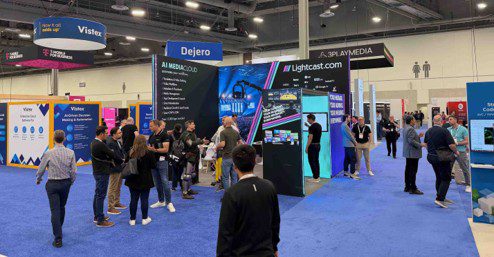
For many businesses, exhibiting at a trade show is not a one-off marketing activity. A company may attend several events across the UK and Europe in the same year, from industry exhibitions and product launches to retail pop-ups, roadshows and regional business showcases.
That creates a practical challenge. A stand needs to look professional, support the brand message and help staff start conversations with visitors. At the same time, it needs to be realistic to transport, install, reuse and adapt for different spaces.
This is why reusable exhibition stands have become an important option for growing brands. Instead of treating each event as a completely new build, companies can invest in display systems that work across multiple shows while still allowing the graphics and layout to change when needed.
Why Exhibition Stands Need to Work Harder
A good exhibition stand does more than fill a booth space. It helps visitors quickly understand who the company is, what it offers and why they should stop to learn more.
This is especially important at busy trade shows, where attendees are moving past dozens or even hundreds of stands. Small and mid-sized businesses often do not have the largest floor space, so the display itself has to carry more of the visual work.
An effective stand should make the brand visible from a reasonable distance, communicate one clear message quickly and create a professional space where conversations can happen.
Lighting, graphics and structure all play a role in this. A standard printed backdrop can work in some settings, but it may not always stand out in a crowded hall. A backlit exhibition stand can give the brand area more presence, especially when the surrounding environment is visually busy.
The Role of Lightbox Displays
A lightbox display uses internal lighting to illuminate fabric or graphic panels. In an exhibition setting, this can help make colours appear more consistent and brand messaging easier to see.
For businesses comparing different display systems, the main benefit is not just brightness. It is control. Exhibition halls often have uneven lighting, high ceilings and competing visual distractions. A backlit display gives the stand its own visual focus rather than relying only on venue lighting.
Lightbox displays can be useful for trade show booth back walls, product launch areas, retail pop-up spaces, event entrances, roadshow display zones and branded demonstration areas.
For companies attending multiple events, the ability to reuse the frame and change the graphics can also make the display more practical over time.
Why Modular Backlit Lightboxes Suit Repeat Events
A modular display system is designed around repeat use. Instead of building a fully custom stand for every event, businesses can use standard modules that can be arranged for different booth sizes and layouts.
For European trade shows and roadshows, this can be useful because event requirements often vary. One show might require a compact display wall, while another may need a wider booth setup or a double-sided presentation area.
For companies comparing reusable event display systems, modular backlit lightbox displays can be a practical category to review because they combine illuminated branding with flexible stand planning.
The modular approach can support different booth widths, single-sided or double-sided display needs, replaceable SEG fabric graphics, reuse across multiple campaigns and a cleaner visual presentation than many temporary display options.
This does not mean every business needs the same type of stand. The right choice depends on event frequency, transport needs, brand standards and available setup time. However, for businesses that exhibit repeatedly, modularity can reduce the need to start from zero each time.
Transport and Setup Matter
A stand that looks good but is difficult to move or install can create operational problems. Event teams often work under tight timelines, especially when travelling between cities or setting up in shared exhibition halls.
For this reason, transport and setup should be considered before choosing any exhibition stand. Businesses should ask how many people are needed for setup, whether the system can be packed and transported efficiently, whether the graphics are easy to replace and whether the same display can be used at more than one event.
A reusable lightbox display should not only support the brand visually. It should also make the event process easier for the team using it.
Choosing a Stand for UK and European Exhibitions
Businesses planning trade shows or roadshows in Europe should think about the stand as a long-term marketing asset, not just a short-term event cost.
Before choosing a system, it helps to review the types of events the company expects to attend over the next 12 to 24 months. A business attending one local event may need something simple. A company planning several exhibitions, pop-ups or product demonstrations may benefit from a more flexible structure.
Key points to consider include booth size, likely event formats, whether the display needs to be single-sided or double-sided, how often graphics will change, whether the stand will travel between cities or countries and how much setup time is available.
Businesses reviewing lightbox-based display options for European events can explore Frame Plus Europe as one example of how modular exhibition display systems are structured for trade shows, pop-ups and branded environments.
Final Thoughts
Reusable exhibition stands are not only about saving money. They are about creating a more consistent and practical event presence.
For growing businesses, the goal is usually to look professional without making every show more complicated than it needs to be. A modular backlit lightbox can help by combining illuminated graphics, reusable structure and flexible booth planning.
The best exhibition stand is one that supports the brand visually, works across multiple events and is realistic for the team to manage. For companies attending UK and European trade shows, roadshows or retail activations, that balance can make a significant difference.