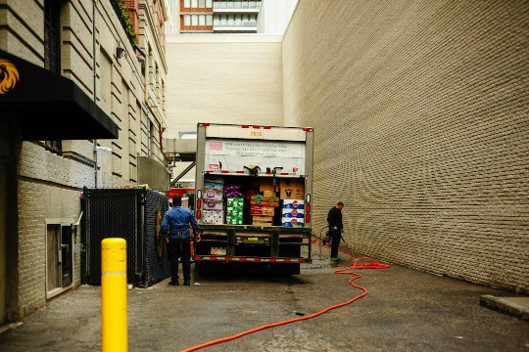
Every autumn the Health and Safety Executive for Northern Ireland sends inspectors into yards, depots and warehouses. On 16 October 2025 it announced a programme aimed at back and joint injuries in haulage and logistics. Inspectors ask one question first: show me the risk assessment for this handling task. Many small firms cannot.
That gap is avoidable. Manual Handling Training has a free guide to what to include in a manual handling risk assessment for employers who need a defensible assessment on file before an inspector asks. This article sets out what Northern Ireland firms are asked to show, and how a ten-person business gets there without a safety officer.
Why Is Manual Handling On the HSENI Inspection List?
HSENI estimates that 19,000 people in Northern Ireland experienced a work-related musculoskeletal disorder in 2024/25. Work-related illness cost the region around 660,000 working days in the same year. Lifting, carrying, pushing and pulling sit behind a large share of those cases.
The Manual Handling Operations Regulations (Northern Ireland) 1992 set three duties in order: avoid hazardous handling where reasonably practicable, assess what cannot be avoided, and reduce the risk. The HSENI inspection programme for haulage and logistics examines the controls employers have for moving and handling. Enforcement follows where risks are significant.
Great Britain’s figures point the same way. Britain’s HSE reported that handling, lifting and carrying caused 17% of non-fatal workplace injuries in 2024/25, second only to slips, trips and falls.
What Will an Inspector Ask a Ten-Person Firm to Show?
An inspector does not expect a consultancy report. They expect evidence that someone looked at the real tasks and acted. In practice the request comes down to six items:
- A list of the handling tasks in the business, with the heaviest and most frequent marked out.
- A written assessment for each hazardous task, covering the task, the person, the load and the environment.
- The controls chosen for each task, such as a sack truck, a split delivery or a two-person lift.
- Proof that staff received manual handling training, with dates and names.
- Records of any handling injuries and what changed afterwards.
- A review date, and evidence of a fresh look after a change of premises, product or process.
An insurer handling a back injury claim will ask for the same six items. A verbal account rarely satisfies a loss adjuster.
How Does an Assessment Hold Up Without a Safety Officer?
Most Northern Ireland employers have nobody with “safety” in their job title. NISRA’s business register counted 81,135 VAT or PAYE registered businesses in March 2025. Of those, 72,465, or 89.3%, employed fewer than ten people. The regulations apply to them in full.
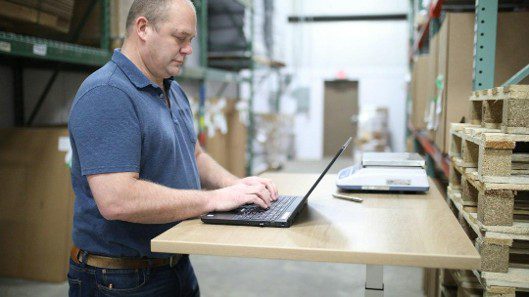
Photo by TheStandingDesk on Unsplash
The workable approach treats the assessment as a management task, not a specialist one. The owner or a supervisor walks the premises with the people who do the lifting. They note each handling task and score it on weight, frequency, distance and posture. The record your findings guidance on nibusinessinfo.co.uk asks for a document that is “suitable and sufficient”, not perfect, and supplies a free template.
The record should also show that the people affected were consulted and that the precautions are reasonable. Northern Ireland firms that cut lost working time from safety incidents tend to follow the same principle. A short, honest document beats a long borrowed one.
Which Northern Ireland Sectors Carry the Heaviest Loads?
Every sector handles something, but five dominate the local injury picture:
- Agri-food and farming: feed bags, carcasses and crates in cold rooms, often lifted alone.
- Manufacturing: components, tooling and finished goods moved between stations, alongside the other manufacturing workplace risks on a factory floor.
- Haulage and logistics: tail-lift deliveries, roll cages and pallet breakdown, the focus of HSENI’s 2025 programme.
- Construction: 11,470 Northern Ireland construction businesses in March 2025, lifting blocks, boards and bagged materials daily.
- Health and social care: moving people rather than objects, where hoists and slide sheets replace the lift entirely.
The hazard differs by sector, but the assessment format does not. Task, individual, load and environment apply to a feed store in Fermanagh as much as to a depot in Mallusk.
What Does a Handling Injury Cost a Northern Ireland Employer?
HSENI puts the combined cost of workplace injury and ill health in Northern Ireland at £647 million for 2023/24. Non-fatal injuries made up £170 million of that figure. Employers carry those costs through sick pay, cover staff, premiums and lost orders.
For a ten-person firm, one back injury removes 10% of the workforce for weeks. An insurer that finds no written assessment may contest the claim or raise the renewal premium. The assessment that prevents one injury pays for itself many times over.
Five Things to Have Ready Before the Inspector Arrives
- A one-page register of handling tasks, ranked by risk and dated within the last 12 months.
- A completed assessment for each high-risk task, naming the controls in use.
- Training records showing every handler completed a course and when renewal is due.
- Receipts or photographs for equipment bought to reduce lifting, such as trolleys.
- A review log noting any injury, near miss or change that triggered a fresh look.
Where a Small Firm Should Start This Month
Pick the three handling tasks that staff complain about most. Assess those first, write down the controls, and set a review date. Book training for everyone who lifts, and keep the certificates with the assessment. Call the HSENI helpline on 0800 032 0121 if a task looks beyond the firm’s own judgement.
The inspector who arrives next autumn wants to see thinking, not paperwork for its own sake. A firm that can produce a dated assessment, named controls and training records has answered the question before it is asked.
Frequently Asked Questions
Does a Firm With Fewer Than Five Staff Need a Written Assessment?
No. Northern Ireland guidance states that employers with fewer than five employees need not record the assessment in writing. The duty to assess and reduce the risk still applies, and a written record is the easiest proof.
Who Inspects Shops and Offices In Northern Ireland?
HSENI enforces health and safety law in manufacturing, construction, agriculture, hospitals and schools. District councils enforce it in offices, shops, hotels, catering and leisure premises. Both bodies apply the same manual handling regulations.
Can HSENI Take Action Over Manual Handling Alone?
Yes. Inspectors can serve improvement or prohibition notices where handling risks are not controlled, and prosecution follows for serious or repeated failures. The October 2025 programme warned of enforcement where significant risks were found.
Does Online Manual Handling Training Count as a Control?
Yes, when it is recorded and matched to the tasks staff perform. Training is an administrative control, so it sits below equipment and task redesign in the hierarchy. An inspector expects to see it alongside physical measures, not instead of them.
Photo by Chloë Forbes-Kindlen on Unsplash