
Between the ongoing energy crisis and soaring inflation, the first few weeks of 2023 have been a turbulent period for supply chains in Great Britain. According to a report by online manufacturing platform Hubs,raw materials shortages, COVID-19 and transportation and logistics issues were the biggest challenges facing supply chains in 2022.
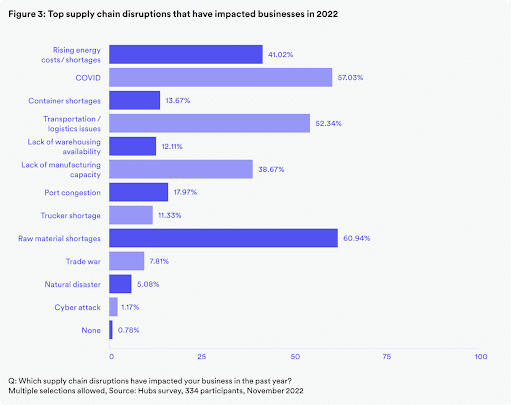
Source: Hubs
These disruptors have forced companies to reevaluate their total acquisition costs and find new ways of driving efficiency. For instance, localising sourcing has emerged as a way for businesses to rein in costs.
Localising your supply chain offers a range of benefits, from saving time and money to reducing risk and uncertainty. We take a look at six of the most important reasons procurement managers should consider localising their supply chain — or at least parts of it — as a key supply chain management strategy in 2023 and beyond.
1. Lower Costs
One of the main advantages of localising your supply chain is that it can help to reduce costs. Eliminating the need for long-distance shipping can reduce packaging and warehousing costs significantly, resulting in savings for your business. Furthermore, you may be able to negotiate better prices with local suppliers as there are fewer competitors in the market.
2. Improved Efficiency
Localising your supply chain can also improve efficiency, as you won’t have to wait for shipments from faraway locations. As a result, it will take less time and effort to source materials or products necessary for production or sale. This could lead to improved customer satisfaction, as orders can be fulfilled faster and more efficiently.
3. Reduced Risk and Uncertainty
There is less risk when sourcing supplies locally since you don’t have to worry about potential issues such as customs delays and damaged shipments from overseas suppliers. Furthermore, local suppliers are typically more reliable and consistent than overseas ones, which means you won’t have to worry about price fluctuations or disruptions in stock availability due to unforeseen events such as natural disasters or political unrest in other countries.
4. Improved Quality Control
Localising your supply chain helps ensure quality control because you are dealing with nearby suppliers who understand the needs of the local market better than foreign ones do. This means you can ensure all materials and products sourced meet certain minimum quality standards before they are used in production or sold on store shelves.
5. Increased Sustainability
Localising your supply chain also has an environmental benefit, as it reduces carbon emissions associated with long-distance shipping (by sea or air). Moreover, sourcing supplies locally allows businesses to support their local economy by helping to create jobs and keep small businesses afloat during difficult times.
6. Support Local Communities
Finally, when businesses source locally, they give back to the communities where they operate, helping spur economic growth and development. By investing in their own backyard, businesses can foster relationships with customers, vendors, employees and other stakeholders — relationships that would not be possible if they were sourcing from abroad.
Author: Alex Minett
| Alex Minett is the Head of Product & Markets at CHAS, the UK’s leading health and safety assessment scheme and provider of risk mitigation, compliance and supply chain management services. With a working history in the audit and management consulting industry, Alex is experienced in implementing visions and strategies. Skilled in negotiation, management and business development, he is passionate about driving CHAS in its mission to safeguard organisations from risk in the UK. |

LinkedIn: Alex Minett