If your business needs fabrication machinery to thrive, you will need to approach the process of picking the right equipment with care.
Part of the challenge involved in this is knowing which kinds of kit are worthy of your investment, and which represent the best value for money.
To help you out, this brief introduction to fabrication machinery should give you a basis on which to start your search.
Plate rolls
In order to transform standard slabs of sheet metal into cylinders and other curved shapes, you will need a plate rolling machine.
These important units can increase the capabilities of your business and allow you to fulfill more complex orders for major clients, so looking for a well priced plate rolling machine for sale on the used market makes sense. Be sure to compare capacities and capabilities of the available models to determine their suitability.
Press brakes
Also used in conjunction with sheet metal, press brakes let you bend and manipulate metal precisely through the liberal application of pressure and the use of a forming die.
All sorts of materials are capable of being combined with a press brake to great effect, including aluminum, stainless steel and even softer examples like brass.
Again, this type of equipment can come in many shapes and sizes, depending on the intended task, as well as offering varying levels of automation.
Laser equipment
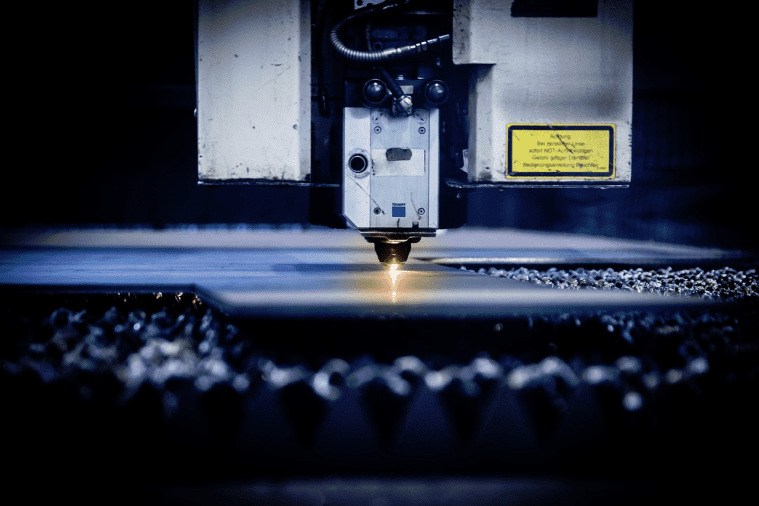
Modern laser-based fabrication solutions are incredibly versatile as well as being low maintenance in comparison with mechanical equivalents.
High powered fiber lasers can be deployed to cut through a range of materials, as well as to etch and engrave the surface, mark it with branding and relevant information, and even clean rust and corrosion off the surface of metal.
There are a number of other advantages that laser equipment bring to the table, including the incredibly precise operation that is achievable through automation, as well as lower energy consumption and improved safety. Upfront costs may be higher, but savings can be made in the long term for all of the reasons covered so far.
Waterjet cutters
Lasers are not the only medium capable of cutting through many materials and objects in a fabrication context; high pressured jets of water are also fit for this purpose, and may be preferable for several reasons.
The main selling point of a waterjet cutter is that it can power through steel, plastic, rubber and even glass without creating any nasty by-products. If you want to minimize the hazardous output and associated contaminants of your business then this could tip the scales in favor of this type of equipment.
Waterjet cutters are controlled with similar levels of accuracy to lasers, which means that you do not need to make compromises in this area either.
Shearing machines
Not all fabrication equipment needs to be incredibly precise or highly versatile; in the case of shearing machines, the main aim is to act as the first port of call for new plate and sheet materials that are then cut down to size before going on to other parts of the production process.
Shearing machines can do more than subdivide large workpieces into smaller ones, as they are also well equipped to trim off excess material and generally speed up the output and productivity of an organization which is eager to expand and grow its potential.
Further research and close comparison of all fabrication machinery is essential to ensure you make the right choice, and prior planning will give you the ability to avoid potential pitfalls as a manufacturing startup.
Image Source: Pixabay