The World Meteorological Organization also said on Tuesday that it’s looking to verify the temperature reading, which would be unprecedented for the region north of the Arctic Circle.
“The Arctic is figuratively and literally on fire – it’s warming much faster than we thought it would in response to rising levels of carbon dioxide and other greenhouse gases in the atmosphere, and this warming is leading to a rapid meltdown and increase in wildfires,” University of Michigan environmental school dean Jonathan Overpeck, a climate scientist, said in an email to Reuters news agency.
“The record warming in Siberia is a warning sign of major proportions,” Overpeck wrote.
Much of Siberia had high temperatures this year that were beyond unseasonably warm. From January through May, the average temperature in north-central Siberia has been about 8 degrees Celsius (14 degrees Fahrenheit) above average, according to the non-profit Berkeley Earth, which is focused on climate science.
“That’s much, much warmer than it’s ever been over that region in that period of time,” Berkeley Earth climate scientist Zeke Hausfather told Reuters.
Siberia is in the Guinness Book of World Records for its extreme temperatures. It’s a place where the thermometer has swung 106 degrees Celsius (190 degrees Fahrenheit), from a low of minus 68 degrees Celsius (minus 90 Fahrenheit), to now 38 degrees Celsius (100.4 Fahrenheit).
But for scientists, “alarm bells should be ringing,” Overpeck wrote.
Such prolonged Siberian warmth hasn’t been seen for thousands of years “and it is another sign that the Arctic amplifies global warming even more than we thought,” Overpeck said.
Russia’s Arctic regions are among the fastest warming areas in the world.
The temperature on Earth over the past few decades has been growing, on average, by 0.18 degrees Celsius (nearly one-third of a degree Fahrenheit) every 10 years. But in Russia it increases by 0.47 degrees Celsius (0.85 degrees Fahrenheit), and in the Russian Arctic by 0.69 degrees Celsius (1.24 degrees Fahrenheit), every decade, said Andrei Kiselyov, the lead scientist at the Moscow-based Voeikov Main Geophysical Observatory.
“In that respect, we’re ahead of the whole planet,” Kiselyov told AP news agency.
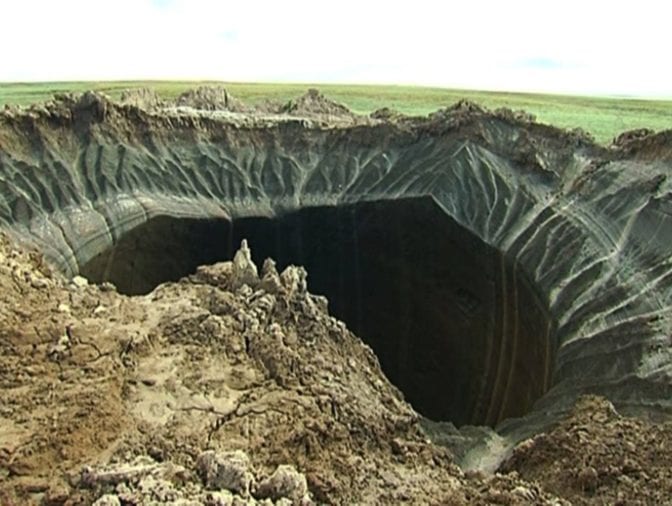
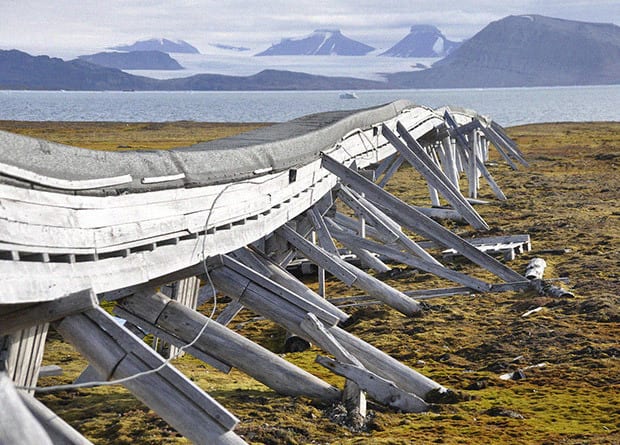
The increasing temperatures in Siberia have been linked to prolonged wildfires that grow more severe every year and the thawing of the permafrost is a huge problem because buildings and pipelines are built on them. Thawing permafrost also releases more heat-trapping gas and dries out the soil, which increases wildfires, said Vladimir Romanovsky, who studies permafrost at the University of Alaska Fairbanks.
“In this case it’s even more serious, because the previous winter was unusually warm,” Romanovsky said. The permafrost thaws, ice melts, the soil subsides and then it can trigger a feedback loop that worsens permafrost thawing and “cold winters can’t stop it,” Romanovsky said.
And what happens in the Arctic can even warp the weather in the United States and Europe.
In the summer, the unusual warming lessens the temperature and pressure difference between the Arctic and lower latitudes where more people live, said Judah Cohen, a winter weather expert at Atmospheric Environmental Research, a commercial firm outside Boston.
That seems to weaken and sometimes even stall the jet stream, meaning weather systems such as those bringing extreme heat or rain can stay parked over places for days on end, Cohen said.
Scientists agree that the spike is indicative of a much bigger global warming trend.
“The key point is that the climate is changing and global temperatures are warming,” said Freja Vamborg, senior scientist at the Copernicus Climate Change Service in the U.K. “We will be breaking more and more records as we go.”
“What is clear is that the warming Arctic adds fuel to the warming of the whole planet,” said Waleed Abdalati, a former NASA chief scientist who is now at the University of Colorado.
Warming climate in Siberia will cause permafrost to melt, this may cause the destruction of cities in this region, writes the Swedish newspaper Svenska Dagbladet, citing climatologist Johan Kuylenstierna.
According to climatologists, such hot weather in Siberia is a link in the overall chain and calls for tracking the overall trend. If permafrost begins to melt faster, it will hit the infrastructure hard. The soil will become unstable, it will affect cities and dams (in Siberia), he said. Recall earlier, BNN Bloomberg reported that a fuel leak due to damage to a reservoir in Norilsk was caused by melting permafrost in the Arctic region.
It was also claimed that the infrastructure of the region is collapsing in this regard, and the accident is likely to damage permafrost in the region in the long term.