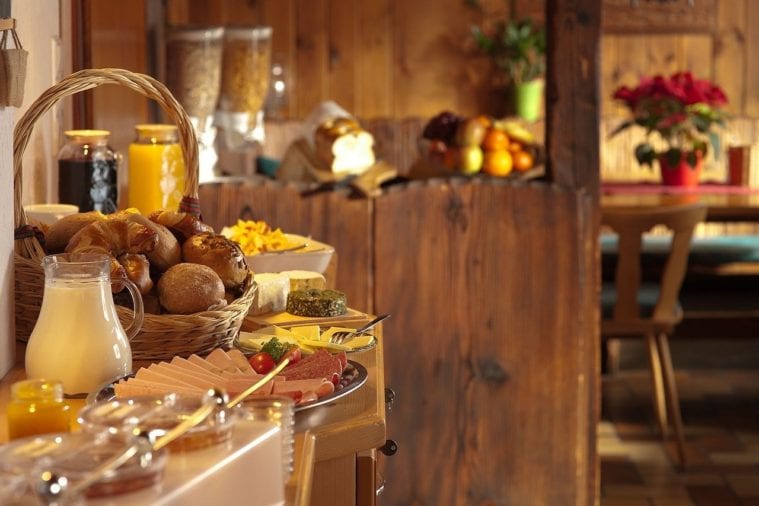
Post-virus everything is going to change. That’s the dominant view of national and international media. But how exactly do they see the future? Hotel breakfast buffet to go. This regular digest section gives some of their answers and views/Edited by George Hamilton
In this edition (June 4)
NI will still be an attractive proposition for businesses worldwide, says research
- Northern Ireland could still be in a “strong position” to continue to attract international businesses to invest here despite the global impact of coronavirus, it’s been claimed.
Coronavirus: Northern Ireland economy facing £5.4bn hit
- It will also mean a jobless rate of 12%, says report
How Northern Ireland hotels breakfast buffet will look after lockdown
- Bye bye breakfast buffets, hello keyless check in and temperature checks
Plans for live music drive-in gigs in Ireland
- People will be able to enjoy live performances from the comfort of their cars
Coronavirus crisis accelerates march towards cashless society
- The march towards a cashless society has gathered pace during the lockdown with analysts more confident than ever that the end is nigh for notes and coins.
Coronavirus means women won’t earn as much as men for an extra 30 years
- Women are more likely to have lost or quit their job since lockdown and experts predict they may now not achieve pay parity for 90 years
Coronavirus fears may have driven over 300,000 UK smokers to quit
- Survey of UK smokers suggests many have quit or are thinking about it
NI will still be an attractive proposition for businesses worldwide, says research
Northern Ireland attracted only 28 new foreign direct investment (FDI) projects in 2019, compared with 33 a year earlier, according to EY.
The research suggests that “NI should remain relatively resilient in its ability to attract FDI this year, despite the impact of Covid-19”.
“It’s important to consider the nature of investment. What we see is strong focus on value added services – and around 80% are in digital, finance, communications and media,” Feargal De Freine, partner and head of FDI, EY Ireland, said.
“We surveyed a panel of international decision makers in late April and May to get sentiment and impact on investment in 2020.
“What is interesting is none are saying they are going to cut back entirely on investment. All countries in Europe are in the same position as Northern Ireland.”
Research from EY and the Centre For Towns, also published today, shows Belfast attracted 22 new projects in 2019, representing a 10% increase on last year.
That sees Belfast retain a fourth place on its ‘UK Core Cities’ list – behind Manchester, Birmingham and Glasgow.
“My interpretation is that large corporations will continue to need to make investments,” Mr De Freine said.
He said investors see areas such as technology and digital among the keys sectors of growth – those of which Northern Ireland is “in a strong position”.
“Companies (may be) thinking about a Far East, plus one (additional location such as Northern Ireland) … somewhere nearshore might complement quite nicely, with advantages in Europe.”
He said both Northern Ireland and the Republic have a similar profile, and the US would still be a key area of investment.
“Both sides of the border depend on the US – it’s very important.”
And he said he would expect to see investment from the US continuing.
“Notwithstanding the impact of the crisis on workforces and operations, US firms will continue to look at optimising returns and firms looking at Europe will continue to do so.” Belfast Telegraph May 29
Coronavirus: Northern Ireland economy facing £5.4bn hit
Unemployment is expected to peak at 12% this year in Northern Ireland, according to a new report by Ulster University’s Economic Policy Centre which warns councils inMid Ulster; Newry, Mourne and Down; the Causeway Coast and Glens, and Mid and East Antrim will be worst hit.
They also forecast that the economy will contract by 12.7% in 2020, up from a previous estimate of 9.7% – the equivalent of a £5.4bn fall in economic output in one year.
A contraction of that size is unprecedented in recent history and the centre predicts there will be 249,500 employees in Northern Ireland on furlough or temporarily laid off before the end of the year – the equivalent of almost half of all private sector jobs here, and an increase of 14,000 from the previous estimate.
The report predicts 67,000 employees to be laid off or furloughed in Belfast and 15,900 in Derry and Strabane, with economic output drops of 10.6% and 9.5% respectively.
Dr Eoin Magennis, senior economist with the centre and one of the authors of the report, said: “We also argue that any local response will have to equally take into account existing sectoral strengths and new opportunities to repurpose into new sectors.
“The tourism sector is a case in point and promotion of this to staycations or other replacements for international visitors will have to tap into local attractions.
“In a similar fashion we would argue that regeneration plans for town centres and re-skilling work should also draw on local assets to make these most appropriate to the different council areas.
“Finally, the partnership approach seen in Community Plans provides a good basis on which to build local policy response that can best reach those businesses, households and communities most in need of assistance at this time.” Belfast Telegraph June 1
How Northern Ireland hotels breakfast buffet will look after lockdown
Say bye bye to breakfast buffet, ciao to the concierge and hello to a 24 hour supply of hand sanitiser.
There will also be keyless check in, temperature checks, thermal cameras, aerofog generators, wall and floor signage and social distancing measures for staff and guests.
Welcome to the wonderful new world of the hotel stay in the post Covid-19 society.
Pandemic-era policies are in the throes of being developed at establishments in Northern Ireland and around the globe and they will no doubt vary widely.
But it’s safe to say that guests will see big changes the next time they check in anywhere.
Industry experts believe that, for the foreseeable future, hotel stays are likely to be a stripped-down affair, particularly in higher-end premises where personalized service and amenities are a big part of the attraction.
There will be less communal access in hotels, so no buffets or minibars and many of the elements of luxury, such as spa treatments and valet services, may be suspended.
Guests are also likely to want keyless and contactless check-in and checkout and few personalized interactions.
Bookings for overnight stays and day visits can now be made at the Galgorm Resort, which closed on March 21 due to Covid-19.
The luxury hotel, which employs more than 750 staff, said it was rolling out “a new and comprehensive series of industry-leading measures” in order to reassure guests of their safety and comfort during their stay. And while their plans remain subject to further updates from the Northern Ireland Executive, Galgorm said they hoped to welcome guests from the end of July.
Galgorm said it aimed to reopen the Thermal Spa Village, River Room Restaurant and Conservatory, Fratelli, Castle Kitchen and Bar and McKendry’s Bar and Lounge.
It added that after “working closely with a range of leading hospitality bodies” it had developed hygiene procedures for every aspect of the resort.
Various new measures being introduced include thermal cameras to monitor temperatures of staff and guests upon arrival, temperature checks and aerofog generators to sanitise all areas of the resort.
The hospitality group also said that hand sanitiser will be available 24 hours a day.
Ken Sharpe, owner of The Salty Dog in Bangor, said his team are ready to welcome visitors back, adding that he’s “hoping that it won’t be too far away”.
“With 15 rooms we will easily be able to cater for hotel guests who wish to use our restaurant and we’ll also be offering bespoke room service for which we were previously renowned.”
Mr Sharpe said health and safety measures are now in place.
“Our staff will be wearing regulatory PPE for cleaning rooms and once sanitised, items like remote controls for instance will be placed in sealed bags to reassure our guests that everything has been expertly cleaned prior to their arrival,” he said. Belfast Telegraph May 3o
Plans for live music drive-in gigs in Ireland
Fans could be able to get their fix of live music this summer with plans afoot for a series of drive-in gigs in Ireland.
People will be able to enjoy live performances from the comfort of their cars, with hopes that the outdoor events could be held in Northern Ireland.
The ‘Live at the Drive-In’ is part of a new live music initiative during the Covid-19 pandemic with gigs already announced for Cork, Limerick, Waterford and Kilkenny.
It aims to provide a live music experience for fans, who can enjoy it while adhering to the continuing social distancing guidelines.
Irish singer/songwritter Gavin James has been announced as the first headline act, but organisers are set to announce further events and artists with hopes that venues in Northern Ireland will be included on the list.
The drive-in gigs will include a full production stage as well as specially erected big screens to enhance the visual experience for attendees.
Those attending will have to remain in their vehicle throughout the gig, with no alcohol allowed. The music will be broadcast through car radios with only 250 to 300 vehicles allowed at each gig
With all spring and summer events cancelled, organisers MPI and 360 Events said “the artists will perform live from the stage and you can watch from the comfort of your car,” they said.
“This is a family friendly event, each artist will perform two concerts per day one matinee and one evening show.” Irish News May 28
Virus drives march towards cashless society
A survey by Amaiz, an online banking company for small businesses, revealed that 54 per cent of small businesses were now cashless or were planning to be. Twenty-one per cent of those said that they had no plans to return to cash payments.
The results add to the findings of Link, which runs the UK’s cashpoints. It said that the use of the machines had fallen 62 per cent during the lockdown.
While volumes have risen slightly over the past week as businesses began to reopen, cash transactions were predicted to stay down by between 30 and 40 per cent, according to Link.
B&Q, which reopened last month, has asked customers to pay by card to reduce contact between them and staff. Kurt Geiger, a fashion retailer reopening on Monday, will also refuse cash.
Debit card payments overtook cash for the first time in 2017, according to UK Finance, the banking trade body. That year, 13.2 billion debit card payments were made compared with 13.1 billion in cash. Richard Lim, head of Retail Economics, a research consultancy, said: “What we’ve had over the last decade is a trend towards the end of cash. The impact of the pandemic has certainly sped up that trend.”
He predicted that experiments with contactless sales would become more common in shops, citing a 2018 partnership between Snapchat and Adidas. Users of the social media app visiting Adidas stores could select an augmented reality filter that made it look like they were trying on a pair of shoes. “Because of social-distancing measures and the frequency of contact with products, it’s going to force retailers to be more innovative,” Mr Lim said.
The virus has forced even traditional businesses to innovate. Some village shops have reintroduced ledgers, now in a digital format, to keep track of customer spending and charge them at the end of the month. Richard Howlett, 37, head of the Sandford Talking Shop in Oxfordshire, has asked self-isolating villagers to pay online for food deliveries. He said: “It’s worked very well. We invoice them online and they put in their bank details. Now 95 per cent of people are paying by card.” The Times May 30
Coronavirus means women won’t earn as much as men for an extra 30 years
Women may have to wait almost a century until they earn the same as men as Covid-19 wreaks havoc with careers and drives earnings prospects dramatically off course, setting women back 30 years.
Before coronavirus the Fawcett Society, a women’s charity, calculated that it would take 60 years to close Britain’s gender pay gap – the difference between average male and female earnings. However, it said the crisis and subsequent economic fallout could delay this by three decades, meaning women might not achieve pay parity until the year 2110.
Thousands of working mothers have had to take unpaid leave or voluntarily go on furlough to look after their families during lockdown. Women still bear the brunt of care duties for children and older parents.
They are also more likely than men to be working in sectors that have shut down during the pandemic and could well be the first to face the tsunami of job cuts expected to hit once the furlough scheme ends.
Mothers whose income has dropped, either because of job cuts or childcare, have suffered falls of £512 a month on average, according to research by Fidelity, an investment manager. Mothers are 47pc more likely than fathers to have lost or quit their job since the lockdown began, the Institute for Fiscal Studies, a think tank, has found. Those still in paid work have reduced their hours substantially and by more than fathers.
Almost 20pc of women work in sectors that have closed during lockdown, such as hospitality or retail, compared with 13pc of men, according to the Centre for Economic Performance, another think tank.
Women are also more likely to be looking after an elderly relative, according to Carers UK, a charity. More may end up having to shoulder care responsibilities if families are reluctant to put parents into a home.
Maike Currie of Fidelity said an extended period out of full-time work would cut women’s earnings in the short term and also leave them with less in their pension pot. “We need better awareness of shared parental leave and more investment in childcare provision to encourage families to split care duties more evenly,” she said.
In light of the current health crisis, the Government relaxed its rules stating that companies have to report their gender pay gap, meaning that only half of firms did so this year. Their data showed that the pay gap increased in 2019 to 12.8pc. Daily Telegraph May 30
Coronavirus fears may have driven over 300,000 UK smokers to quit
More than 300,000 UK smokers may have quit in recent months, with concerns about the additional health impact that cigarettes may have during the coronavirus outbreak.
A survey of UK adults conducted by YouGov and the campaign group Action on Smoking and Health (ASH) suggests that a further 550,000 smokers have tried to quit, and 2.4 million have cut down.
Some evidence seems to suggest that smokers are more vulnerable to COVID-19, as their fingers are frequently in contact with their lips, increasing the likelihood of the virus being transmitted from their hands. Smokers may also already have lung problems and reduced breathing capacity, which could impact their ability to battle coronavirus. A small study from China found that COVID-19 sufferers who smoke are significantly more likely to develop severe pneumonia.
Dr Nick Hopkinson, chairman of ASH and a respiratory specialist at Imperial College London, told the Guardian: “Smoking harms the immune system and our ability to fight off infections. Evidence is growing that smoking is associated with worse outcomes in those admitted to hospital with COVID-19.
“Quitting smoking also rapidly reduces people’s risk of other health problems such as heart attacks and strokes. Those are bad whenever they happen, so preventing them is an end in itself, and is especially important at a time like now when everyone is keen to stay out of hospital.” The European Sting May 28






