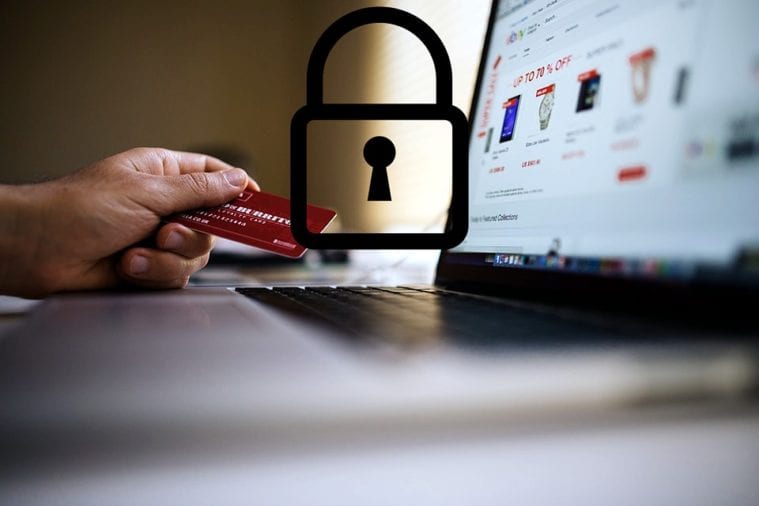
Back in the summer of 2014, a new campaign was launched by Google in a bid to improve the security and authenticity of the internet. Their ‘HTTPS Everywhere’ campaign was designed to educate and encourage webmasters and businesses to utilise Hypertext Transfer Protocol Secure (HTTPS) encryption – you’ll know if a website has it if their URL begins with https://.
Google has always prioritised the security of websites listed within its search engine. This initiative was geared towards making it a priority for millions of others too. Google’s cloud-based services such as Gmail and Google Drive have long been encrypted using HTTPS and the search giant sought to steer the online world down the same path.
In order to use HTTPs, a website requires a Secure Sockets Layer (SSL) certificate. This is a digital certificate that authenticates websites and fosters encrypted connections between websites and their users. Why is an SSL certificate more of a necessity than a luxury in today’s online climate? Read on as we provide four clear reasons why SSL certificates provide indispensable protection over the internet or on a network.
Safeguard sensitive data of your business and its customers
First and foremost, SSL certificates can provide a much-needed layer of security for data stored by your business. This could be information on your employees or your customers, such as debit and credit card numbers, passwords and email addresses. All of which is data ‘gold’ for the prying eyes of cyber-criminals that lurk in the ether of the world wide web. Upon installation of an SSL certificate, every byte of data shared between your website and its users is 100% encrypted. Put simply, the data is locked and can only be unlocked by the intended recipient of said data.

Any industry that takes online payments – be it via debit/credit card or transactions processed by third parties like PayPal and WorldPay – needs an SSL certificate to look after its customers and maintain their integrity. It’s not only high-street banks that need to offer SSL encryption on their websites. On-demand live streaming services such as Netflix and Amazon Prime encrypt their connections, as do well-established iGaming brands like Coral, with unsurpassable encryption technology needed to take payments for all kinds of digital entertainment today.
Provide a sense of trustworthiness to users
In today’s hyper-competitive climate, businesses of all shapes and sizes relies on their reputation and integrity to turn prospects into customers and customers into brand advocates. A data leak or breach does nothing to improve the trust in a business, often causing immeasurable financial damage. Your loss is your competitors’ gain.
That’s why it is vital to utilise SSL certificates to make sure that data is always transferred securely to where it is intended. Think of an SSL certificate like a ‘handshake’ from web browser to web browser. A quick way of finding out whether a website has an SSL certificate is to look at the address bar in your web browser. There will often be a padlock image next to the website address. Hover over this and it will confirm whether your connection to this site is secured. There are increasing cases of phishing online, whereby cyber-criminals and fraudsters create fake websites purporting to be yours. These fake sites harvest sensitive customer data for their own gain. Rest assured, these fake sites are never encrypted, so consumers are now increasingly wary of any business’ website that doesn’t have an SSL certificate installed.
Ecommerce sites can improve their PCI compliance
For online retailers, an SSL certificate is a crucial aspect of payment card industry (PCI) compliance. PCI compliance stipulates the rules and regulations that online merchants must adhere to when accepting, processing, storing and transmitting sensitive data on their customers’ transactions. These regulations are stipulated by the Payment Card Industry Security Standards Council (PCI SSC), which includes major payment card providers such as MasterCard, American Express and Visa.
The PCI SSC’s requirements for any SSL certificate installation are:
- Migration needed from the earliest SSL version 1.0 to a more secure version 1.1 or greater.
- Strong private encryption keys (2048-bit+ for RSA and 256-bit+ for EC).
- All online retailers may not request for consumers’ card data on a non-HTTPS page.
- Merchants must install only trusted SSL keys and certificates.
- All online retailers should ensure cardholder data is secured securely.
These stipulations are the backbone of the PCI SSC, ensuring that online businesses mitigate two of the biggest threats to customer safety – phishing and man-in-the-middle attacks.
To prevent MiTM and data spying attacks, you should purchase SSL certificates from reputed certificate authorities like positive SSL wildcard from Comodo, sectigo, GlobalSign wildcard, RapidSSL wildcard, GlobalSign wildcard, RapidSSL wildcard, etc. SSL certificate is necessary for the website that accepts online payment.
SSL certificates have a proven impact on your site’s SEO
Back in 2014, Google altered its algorithms to recognise and reward those HTTPS-enabled websites committed to encrypting users’ data and creating a safer online environment for all. As Google voiced its desire to work “towards a web that’s secure by default”, HTTPS-enabled websites have since become an important signal for search engine optimisation (SEO) purposes.
Now, the Google Chrome browser makes its users very aware of HTTP websites operating without SSL certificates, labelling them ‘insecure’ and warning users that their connection to the site is not secure. It is said that 84% of online consumers would now abandon making a transaction online via an insecure connection – further proof that not having an SSL certificate could be financially damaging to businesses that sell online.
Search marketing guru Neil Patel recently published a report on the impact of HTTPS on a website’s visibility in Google’s search engine. He found that websites can experience almost twice as many page-one search engine rankings after installing an SSL certificate. Furthermore, HTTPS-enabled websites also experience improved visibility across all sections of their sites. Typically, an HTTPS-enabled website also loads webpages much quicker than an insecure HTTP website. Given that Google has also altered its algorithms to recognise page load speed times as a search ranking signal too, it’s yet more evidence to online businesses to invest in SSL certificates for the long-term growth of their organic search rankings.
Not having an SSL certificate is already putting online businesses at a disadvantage. Don’t let your brand and its customers be affected by something you can control.