Post-virus everything is going to change. That’s the dominant view of national and international media. But how exactly do they see the future? This regular digest section gives some of their answers and views/Edited by George Hamilton
In this issue
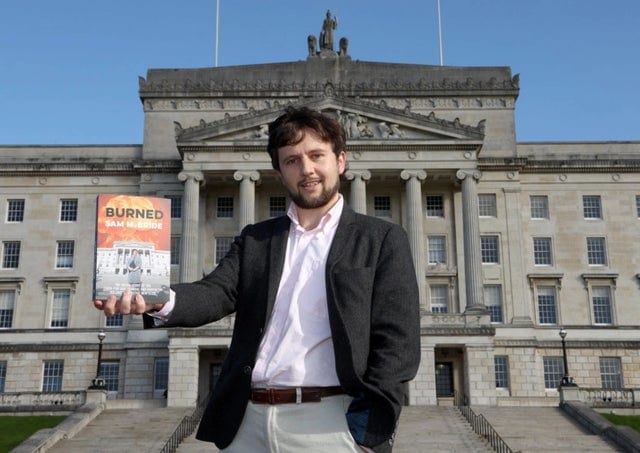
- First, the local question most have been asking: Why did Sinn Fein criticise Stormont’s response to the virus? Sam McBride – who wrote the definitive, and scathing, book on the RHI scandal – suggests an answer. And it doesn’t bode well for the future of the Executive post-virus
- In health and the courts, the pandemic has forced changes in days instead of years, in the use of IT – and they are here to stay
- The pandemic will break globalisation says the editor of tech magazine Wired
- Two views – from the Left and the Right – with the same conclusion: Populist politicians will be the winners when its over.
- And finally Brexit. It hasn’t gone away y’know. The EU wants a Belfast office to oversee the “border in the Irish Sea”, but the UK is not happy.
- ..and feta cheese and sherry vinegar could break the EU/UK trade talks, when these, eventually, resume
Sam McBride: Stormont’s deep divide is not only about the virus, but about the future
At Stormont….January’s rhetoric of a new beginning, an end to departments working against each other and a new era of collective responsibility has evaporated – most dramatically in Michelle O’Neill’s brutal defenestration of Health Minister Robin Swann on prime time television
However, Ms O’Neill’s frequent criticisms of Mr Swann’s actions, and accusation that he is “slavishly” following a flawed Westminster strategy which will cost lives, has significant public support.
With the caveat that few of us know much about the complexities of responding to a pandemic, Stormont’s response to this crisis has appeared sluggish, compartmentalised and unquestionably confused – although some of the confusion stems from the contradictory positions adopted by DUP and Sinn Féin’ ministers.
But Sinn Féin, Stormont’s most strategically astute party, will be aware that what happens over coming weeks may be of enormous significance in the border poll which it hopes will be called within a few years.
Although the NHS is a relatively modern institution, for decades it has been one of the jewels in the crown of the pragmatic argument for the Union. Even for some instinctive nationalists, the idea of paying 50 Euro to see a doctor is unsettling.
But if this pandemic exposes that far from the NHS in Northern Ireland being better than the Republic’s healthcare system, that it could actually be worse, that would have enormous political implications.
Coupled with that could be the creation of an Irish NHS. Last week the Republic nationalised private hospitals, creating its first ever national single-tier health service.
That is only intended for the duration of the crisis, but there is a long history of temporary measures at times of national upheaval becoming permanent.
In an interview with an American reporter in the wake of the 2016 vote for Brexit, Gerry Adams, Sinn Féin’s strategic mastermind for decades, spoke with unusual candour.
He told Vice News: “Never waste a crisis, never waste a difficulty…why should we pick up the bad collateral damage for a stupid decision taken in London?”
There is an ineluctable shared logic to that view of Northern Ireland being forced into a bad decision by London and Sinn Féin’s narrative about this crisis.
Arlene Foster and UUP leader Steve Aiken have in recent days highlighted how Northern Ireland has benefited from being part of the UK – the chancellor’s vast economic stimulus, the NHS and the ability to procure ventilators – while Sinn Féin has argued that because Dublin’s strategy has been more consistently in line with the World Health Organisation’s advice that it is superior.
This emergency has revealed broken elements of the existing world order in most countries. In most nations that may mean a change of government, or maybe economic changes. But in Northern Ireland there is an obvious and far more radical alternative – Irish unity.
On the day in January that the Executive was restored, Michelle O’Neill said: “From today, the parties represented in the Chamber undertake to cooperate in every way that we can in order to rebuild public trust and confidence in, and engagement with, the Assembly and its Executive.”
That has gone. But we cannot yet know what will take its place NewsLetter 4 Apr
How pandemic is set to future-proof the NHS
The NHS is transforming and embracing innovation at an astonishing pace in ways that look likely to outlast the pandemic.
It has taken “two and bit weeks to achieve more than we have achieved in 20 years” in adopting new technology, according to Martin Marshall, chairman of the Royal College of General Practitioners.
Hospital and GP appointments have moved online, and red tape around the sharing of patient records is being cut.
New ways of working, including centralised hubs co-ordinating cancer care, are likely to persist even after the pandemic has passed, experts say.
Professor Marshall said: “The NHS has said cost is no problem. Computers are being provided for remote consultations, software, there are issues about access but by and large there has been a massive NHS investment in virtual access.”
He estimated that even after the pandemic, up to half of GP appointments would be online or by telephone.
James Betteridge-Sorby, a GP in Swadlincote, Derbyshire, said: “We are definitely going to move towards a greater proportion of video consultations in the post-Covid era for all of our patient populations.”
Hospitals, too, have moved outpatient appointments online. The move ties in with a pre-pandemic ambition to reduce travel and thus air pollution.
While the NHS has a troubled history of large projects involving patient records, health officials hope the pandemic might highlight the benefits of easy access to records between community and hospital services, and set the scene for longer-term arrangements. The Times 4 Apr
Coronavirus could permanently alter courts
The legal world’s response to coronavirus has proved that necessity really is the mother of invention.
The outbreak triggered the closure of more than half of the court and tribunal buildings in England and Wales and the suspension of new jury trials.
To keep some cases on track, hearings in the magistrates’ courts, the High Court, Court of Appeal and Supreme Court have been conducted entirely remotely, with judges, lawyers, witnesses, interpreters and journalists dialling in for telephone and video proceedings.
Practices that seemed impossible a month ago are rapidly becoming normal. It turns out that justice can be done without wigs, gowns or the majesty of a wood-panelled courtroom and judicial crest.
Last week a $530 million case brought by the Republic of Kazakhstan against parties including the Bank of New York Mellon became the first High Court action heard with all parties attending remotely, using the video conferencing software Zoom. After the emergency Coronavirus Act cleared the way for hearings to be broadcast, it was also the first to be streamed live on YouTube.
“What would have taken lengthy consultation over months or years, has been achieved in days,” says Tom Lidstrom, a litigation partner at Linklaters.
While online hearings are never likely to be appropriate for jury trials, the Court of Appeal’s criminal division is dealing with cases remotely.
The first trial conducted entirely by Skype — a three-day case in the Court of Protection, provides a reminder that the court process is not all about the legal profession. Seventeen continuously active participants, including 11 witnesses and two journalists, scattered across the country from Northumberland to Cornwall and Sussex, took part.
Richard Susskind, a lawyer turned legal technology expert predicts that cost savings and increased access to justice will make retaining remote working “irresistible” after Covid-19 fades. The Times Apr 2
The pandemic will break globalisation
Greg Williams: According to Bloomberg, US Intelligence sources reported that “China has concealed the extent of the coronavirus outbreak in its country, under-reporting both total cases and deaths it’s suffered from the disease.”
“I think this will do more to speed up the decoupling process than Donald Trump would have ever been able to secure,” says Steve Tsang, the Director of the China Institute at the University of London’s School of Oriental and African Studies (Soas). “When this is over, I would not be surprised if, not only the US, but governments in Europe will start to review their relationship and policies towards China.”
The reason western nations, not just the US, have experienced shortfalls of both protective equipment for frontline healthcare workers and the necessary medicines and chemicals to make, for instance, hand sanitiser, is the same as reason that your iPhone is made in Shenzhen: globalisation has meant that manufacturers in multiple sectors – from electronics to apparel, packaged goods to healthcare – have pursued the relatively cheap costs of labour available in China.
In the west, major pharmaceutical companies focus research and production on new, branded drugs that are highly profitable. Reproducing generic drugs isn’t a money spinner. This means that production of basic drugs falls to countries such as China and India – which manufactures 70 per cent of the UK’s paracetamol – where the mass volume of production makes it economically feasible.
“This crisis will likely lead European nations and others to reconsider the extent of supply chain dependence on either the US or China since Covid-19 is, among other things, a shock that has disrupted supply chains,” says Linda Yueh, the Chair of the LSE Economic Diplomacy Commission. “This crisis will likely accelerate that process – along with additive manufacturing and other technological developments – towards greater localisation.” Greg Williams is Wired’s editor-in-chief.Wired magazine 3 April
Democratic leaders win surge of approval during Covid-19 crisis
Jon Henley: The approval ratings of democratic leaders around the world have soared during the coronavirus crisis, but political scientists say it will not last – and warn that populist opposition parties, in particular, will bounce back strongly as it subsides.
Whatever it is that drives it, “rally round the flag” generally has the effect of pushing opposition parties and their leaders – particularly those, such as western Europe’s far-right populists, who habitually attack governments aggressively – out of the spotlight.
Catherine Fieschi, director of the Global Policy Institute at Queen Mary University of London said there could well see “an economic crisis after this health crisis – with a social crisis as a consequence”
“People without jobs, high unemployment. No matter how much governments – and, of course, the EU – have done, it will never be seen to have been enough. No incumbent leader can run on a platform of ‘but it could have been so much worse’. And that’s the populists’ opportunity.”
Will Jennings, a professor of political science at Southampton University agreed. “Now isn’t the time for populist leaders to attack,” he said. “They will be seen as going against the flow, as unpatriotic – undermining the very principles they stand for. But as the crisis subsides, and inquiries are begun into how it was handled, their ‘elites failing the people’ narrative will be back.” Guardian 2 April
The coronavirus recession will shift British politics – but not to the Left
Allister Heath: The greatest change AC (After Coronavirus) will be to our culture, and this won’t help the Left: we will rediscover the advantages of economic growth and have to relearn to live with unemployment.
There will be a cost of living crisis, and reduced support for taxes or green policies that hurt the poor and middle class, just as there was in 2008-09. It may delay but won’t derail Brexit: national self-interest is back worldwide. The EU is facing severe strains, with fury at how member states aren’t helping each other and Hungary going fully undemocratic.
Most important of all, Johnson’s plans for a big government conservative spending spree are in tatters. With the national debt at 100-110 per cent of GDP, it will become imperative to keep the finances under control, and only spend more on projects to prevent another pandemic.
Nobody can know for certain how politics will change as a result of this humanitarian and economic catastrophe. But as our shell-shocked society, stunned that it isn’t as advanced as it thought it was, goes back to basics, I wouldn’t bet on a Left-wing renaissance. Daily Telegraph 1 Apr
Stormont leaders write to PM after UK knocks back EU Belfast office request
Four Stormont leaders – from Sinn Fein, Alliance, SDLP and the Greens – have written a joint letter to Boris Johnson expressing their concern at the UK’s rejection of a request by the EU to establish an office in Belfast.
RTE reported the bloc asked to set up an office in the city in order to ensure agreements made in the withdrawal deal were being followed.
The protocol would see checks carried out on goods coming into Northern Ireland from Great Britain to determine if they were to enter the EU through the Republic.
It’s reported the EU wants a physical presence, which would have customs and veterinary staff, saying there is provision in the protocol for such an office, however this request has been declined by the UK Government.
A UK government spokesperson said: “We received an initial request from the EU and responded to decline the proposal in February. We have since received a follow up letter to which we will respond in due course.” Belfast Telegraph 2 Apr
UK pushes back on Brexit promises on EU regional trademarks
The UK is pushing to water down its obligation to recognise valuable EU regional food trademarks (geographical indications or GIs) for products like Parma ham and Champagne, in a move that risks souring trade negotiations between London and Brussels.
Under the Withdrawal Agreement signed last October, the UK agreed to recognise the entire “stock” of GIs currently on the EU’s books in a move that trade experts warned would limit its negotiating options with the US on a future trade deal.
The GI protections cover more than 3,000 products ranging from feta cheese to Vinagre de Jerez sherry vinegar, meaning that imitations with the same name cannot be sold in the EU single market.
David Henig, a former UK trade negotiator now director of the UK Trade Policy Project at the European Centre for International Political Economy, a think-tank, said “EU geographical indications are the number one ‘ask’ of the EU in all trade talks, which is a problem for the UK in a US trade deal, since the US top priority is also food exports,” he said.
The European Commission declined to comment on this aspect of the future-relationship talks, but a spokesman said that “the Withdrawal Agreement is clear as regards the protection of GIs”.
A UK government spokesperson said the Withdrawal Agreement made it “entirely possible” that the GI system could be superseded with an alternative”, adding that it was important that the UK retained the ability “to set its own laws and regulations”. Financial Times 2 Apr






