Can we interpret the crash of the main Russian liberal Foundation as a sign of liberalism in the country fading off?
What is the Russian Dialogue Foundation?
The Civil Society Development Foundation ‘Dialogue’ (former Aleksei Kudrin’s Foundation for the support of citizens’ initiatives) has lost its major income stream and is inches away from a big crash. The leading mass media channels announced that most of Kudrin’s programs will be closed down following the massive layoffs.
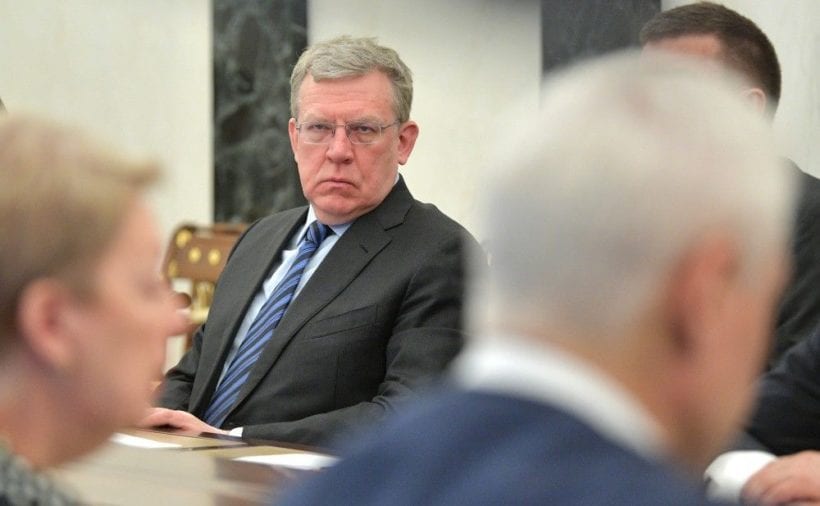
Being the longest-serving Finance Minister in post-Soviet Russia (from 2000 to 2011) Aleksei Kudrin is currently a liberal politician and a Chairman of the Accounts Chamber since 2018. Owing to his 11-year governance, Russia has considerably decreased its foreign debt, which was accumulated in the 1990s and ended upon the list among countries with the lowest foreign debt. Yet, this achievement has no positive impact on the situation that arose today.
Aleksei Kudrin’s Foundation for Support of Citizens’ Initiatives was created in 2012 and it has been supported by the ‘Dialogue’ Foundation since 2017. The committee members include a former governor of the Kirov region – Nikita Belykh – who was convicted for corruption, a politician – Leonid Gozman – with big initiatives in the 1990s, a former Minister of Economy – Andrey Nechaev – and a number of famous Russian figures.
The Foundation represents itself officially as a community of experts (not an organization or legal entity) and is also the organizer of the research, informational, analytical and advisory work. It exists owing to contributions and donations from Russian individuals and legal entities.
Why has financial support ended?
The reasons behind the dramatic end to the story this year have been published on many mass media channels that tried to investigate this case. Since the major activities of the Foundation and its income sound quite ambiguous, journalists looked through the reports in search of answers.
Luckily, they shed light on the effectiveness of the Dialogue and its activities.
According to the official reports for 2018, available in the Web, the expenses for special events and such activities as research, conferences and business trainings reached 8.84 mln rubles (USD 132 K) and human resources expenses, including outsourcing companies along with the Foundation’s premiums, are over 4 mln rubles (USD 63K). Another report contains 2.8 mln rubles (USD 44K) for the events and 1 mln rubles (USD 16K) for “acquisition of fixed assets and other property.”
Furthermore, the third report mentioned Kudrin’s Foundation for the Development of Civic Initiatives, which included the following expenses: “maintenance, rental costs and transportation” – 89 mln rubles (USD 1.4 mln); “research and special events (conferences, seminars, meetings)” – 89.5 mln rubles (USD 1.4 mln); and “other expenses” – 120 mln rubles (USD 1.9 mln). The last stunning figure is basically an answer for refusal of further financing from the third-parties including one of the key sponsors—Vladimir Potanin, an owner of the Nornickel metallurgical company.
Words that are not supported by actions can form a large gap between people despite their mutual liberal views. Even Mikhail Khodorkovsky, an exiled Russian billionaire and oppositionist, declined an offer to support the Dialogue Foundation despite the fact that he is one of the most famous advocates of liberal values in Russia.
As of today, it’s hard to say how long the Foundation will live without considerable changes in its activities and programs or perhaps it has already reached a dead end.
One thing has become obvious though; “research, analytical and advisory work on the development of the economy, entrepreneurship, tax, financial and credit and budgetary systems, the social sphere, socio-political system, international relations, the state and development of the country’s legal system” are not effective enough for Kudrin’s community to survive.
Eventually, it looks like optimistic hopes about the Foundation of financiers and liberalists becoming effective mediators between the Western countries and Putin’s politics are broken.