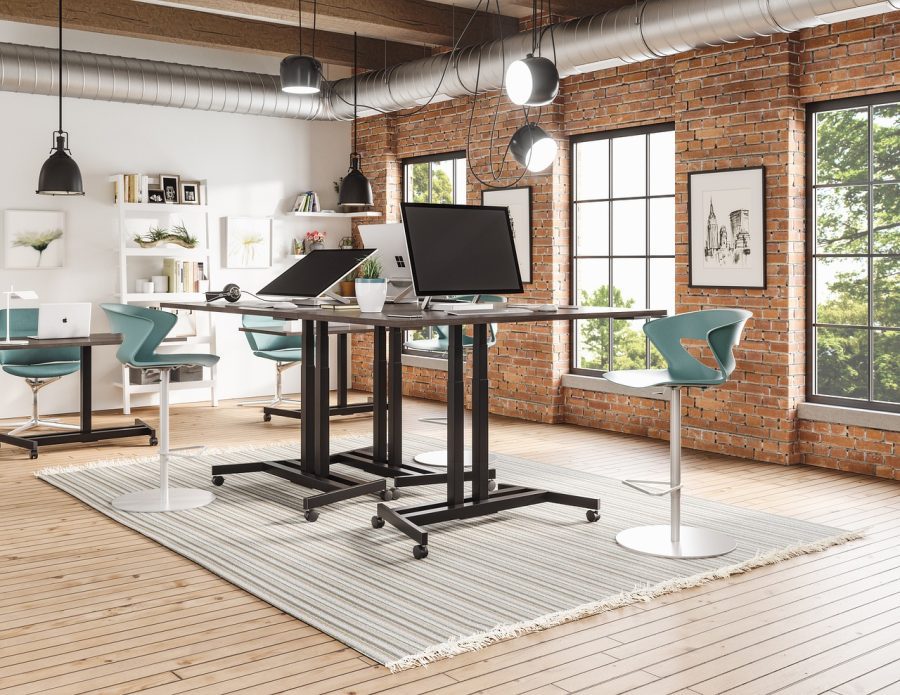
Workplace design has changed significantly in recent years. Businesses are looking beyond desks, meeting rooms, and visual appeal to consider how the building itself affects the people using it. Indoor air quality, energy efficiency and employee comfort are now important parts of that conversation.
Natural ventilation can support all three. By allowing fresh outdoor air to enter and warmer, stale air to leave, workplaces can create more comfortable internal environments while reducing their dependence on mechanical ventilation and cooling systems.
Creating Healthier Indoor Environments
People can spend a large part of the working day indoors, making air quality an important consideration when designing offices and other commercial spaces. Without sufficient ventilation, heat, humidity, odours and indoor pollutants can accumulate.
Natural ventilation encourages regular air exchange through openings such as windows, vents and roof lights. Rather than allowing a workspace to become stuffy, a carefully designed ventilation strategy helps bring fresh air into occupied areas and allows stale air to escape.
For employers placing greater emphasis on workplace wellbeing, this makes ventilation a fundamental design consideration rather than an afterthought.
Reducing Reliance on Mechanical Systems
Mechanical ventilation has an important role in many commercial buildings, but it requires energy to operate and regular maintenance. Natural ventilation can reduce the amount of time that mechanical systems need to run when external conditions are suitable.
This is particularly relevant as businesses and property owners look for practical ways to improve the energy performance of buildings. A workplace designed to take advantage of natural airflow may require less mechanical cooling during suitable periods, helping to reduce energy consumption.
Natural and mechanical ventilation do not have to be competing approaches. Many workplaces can benefit from a mixed strategy that uses each method when appropriate.
Giving Occupants Greater Control
Comfort is not identical for every employee. Some people prefer a cooler environment, while others are more sensitive to draughts or changes in temperature. Workplace design therefore needs to consider how occupants interact with their surroundings.
Openable features can provide a greater degree of control over the internal environment. Depending on the building layout, solutions such as electric opening roof lights can also allow warm air to escape at a higher level while bringing the practical benefits of ventilation into spaces where conventional windows may not provide the ideal solution.
Automated controls can make this approach even more practical by responding to changing internal or external conditions.
Supporting More Sustainable Workplace Design
Sustainability is increasingly considered throughout the lifecycle of commercial buildings. This means looking not only at construction materials but also at how much energy a workplace will require during everyday use.
Passive design measures can contribute to this goal. Natural ventilation uses differences in air pressure, wind and temperature to encourage airflow without depending entirely on powered equipment.
Its effectiveness does, however, depend on factors including the building’s layout, location, occupancy and surrounding air quality. These considerations should therefore be addressed early in the design process.
Designing Workplaces for the Long Term
Modern workplaces need to balance comfort, wellbeing, energy performance and practicality. Natural ventilation can contribute to each of these priorities when it is properly integrated into the building.
Rather than treating ventilation as a purely functional requirement, designers can consider airflow alongside daylight, temperature and spatial layout from the beginning. The result can be a workplace that feels fresher, responds more effectively to changing conditions and is better equipped for the expectations placed on commercial buildings today.