Rugs represent substantial capital investments that enhance interior environments through acoustic dampening, thermal insulation, and aesthetic definition. The UK carpet and rug sector is expected to generate approximately £2.2 billion in annual revenue, reflecting significant consumer expenditure on these textiles. However, maintenance practices frequently fail to protect this investment. Surface vacuuming creates an illusion of cleanliness while abrasive particulates, biological allergens, and chemical residues accumulate within fiber matrices. Research indicates that untreated rugs harbor up to one kilogram of dust per square meter annually, with dust mite populations exceeding one million individuals per square meter. Professional rug cleaning in London addresses these hidden contaminants, extending textile lifespan and maintaining indoor environmental quality.
What Actually Hides in Your Rug
-
The Dust You Cannot See
Rug fibers work as filters. They trap airborne particles that would otherwise circulate through your home. This filtration benefits air quality temporarily, but creates a reservoir of contamination that requires periodic removal. Research indicates that a single square meter of carpet or rug can accumulate up to one kilogram of dust annually. This dust contains sharp particles, including silica and calcium carbonate, which act like sandpaper when compressed by foot traffic.
Each step grinds these particles against fiber surfaces, causing microscopic damage that accumulates over months and years. The result is visible wear patterns, flattened pile, and premature replacement. Regular professional cleaning removes these rough particles before they destroy the fibers that give your rug its texture and appearance.
-
Biological Contaminants
The dust accumulating in rugs contains more than inert dirt. Dust mites thrive in the warm, humid environments created by heated London homes. These microscopic creatures feed on human skin cells and produce waste pellets containing potent allergenic proteins. A heavily used rug can harbor millions of dust mites, with their waste becoming airborne during normal activity and vacuuming.
This biological loading creates genuine health impacts for allergy sufferers and those with respiratory conditions. The National Institutes of Health recognizes textile surfaces as primary allergen reservoirs requiring systematic management. Beyond dust mites, rugs can harbor bacterial populations, fungal spores, and pet dander that contribute to indoor air quality problems.
-
Chemical Residues and Odors
Modern homes contain numerous sources of chemical contamination that settle into rug fibers. Cooking oils, tobacco smoke residues, and volatile organic compounds from cleaning products all bond with textile polymers. Pet urine presents particular challenges, as uric acid crystallizes within the rug structure and produces persistent odors that resist surface cleaning.
These chemical contaminants do not remain static. They off-gas slowly into the home environment, contributing to that stale odor noticeable in rooms with neglected textiles. Professional cleaning breaks down and extracts these bonded compounds, restoring both freshness and indoor air quality.
Understanding Rug Materials and Their Needs
-
Natural Fiber Considerations
Wool dominates high-quality rug construction, comprising over ninety percent of hand-knotted pieces. This fiber offers natural resilience and soil resistance due to microscopic scales that shed particulates. However, wool is vulnerable to alkaline damage and shrinkage if exposed to improper cleaning agents or excessive moisture.
Silk rugs require even more delicate handling. The fiber structure is sensitive to mechanical agitation and pH extremes. Cleaning must utilize neutral formulations and gentle processes that preserve the characteristic luster that makes silk rugs valuable. Cotton foundations common in hand-knotted pieces can shrink or distort if dried improperly, causing the entire textile to warp or buckle.
-
Synthetic and Blended Textiles
Machine-made rugs often incorporate nylon, polyester, or polypropylene fibers. These materials resist staining and generally tolerate more aggressive cleaning than natural fibers. However, synthetic rugs with latex backing can suffer adhesive degradation if oversaturated during cleaning. The backing separates from the face fibers, causing rippling and premature failure.
Understanding your rug’s composition is essential before attempting any cleaning intervention. Misidentification leads to inappropriate treatment that can cause irreversible damage. Professional assessment by trained technicians eliminates this risk.
-
Construction Matters
Hand-knotted rugs with wool pile and cotton foundation can withstand immersion washing when properly executed. Tufted rugs, where fibers are punched through the backing material and secured with latex, require different approaches. Hooked rugs, flatweaves, and machine-woven textiles each present distinct cleaning requirements based on their structural integrity and fiber combinations.
Professional Cleaning Methods Explained
-
Immersion Washing
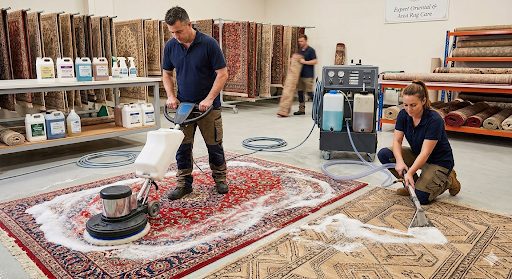
For appropriate textiles, immersion provides the most thorough cleaning outcome. The process involves complete submersion in conditioned water with specialized surfactants formulated for the specific fiber type. Controlled agitation releases embedded soils, while thorough rinsing removes suspended contaminants and cleaning residues.
The WoolSafe Organization, which certifies carpet and rug care products, emphasizes significant pH levels prevent fiber damage while achieving effective soil removal. Professional technicians test dye stability before immersion to prevent color bleeding that ruins the rug’s appearance.
Drying is equally critical to the process. Rapid, controlled drying prevents mold growth and fiber distortion. Professional facilities use centrifugal extraction to remove excess water, followed by climate-controlled drying rooms that maintain proper humidity levels. Tensioning frames keep the rug in correct dimensional alignment throughout drying, preventing the shrinkage and warping common in DIY attempts.
-
Low-Moisture Alternatives
Certain textiles cannot tolerate immersion. Dry cleaning using specialized solvents addresses moisture-sensitive fibers and dyes. Encapsulation cleaning applies crystallizing polymers that bind soil particles for subsequent vacuum removal, suitable for maintenance of commercial installations. These methods provide viable alternatives when immersion is contraindicated, though they may not achieve the same depth of cleaning for heavily soiled pieces.
-
Specialized Treatments
Beyond basic cleaning, professionals offer targeted treatments for specific problems. Enzymatic treatments break down organic stains and odor sources. Protective treatments apply soil and stain resistors that extend cleaning intervals. Mothproofing protects vulnerable wool textiles from insect damage during storage.
What Happens Between Professional Cleanings
-
Vacuuming Technique
Regular vacuuming remains essential maintenance, but the technique significantly affects results. Adjustable height settings maintain proper brush contact without excessive fiber penetration. Slow, overlapping passes in multiple directions maximize soil removal. Empty vacuum containers when half-full to maintain suction efficiency.
Wool and silk pile can suffer mechanical damage from aggressive brush action. Use suction-only settings or specialized attachments for these delicate fibers. Protect fringe elements from brush entanglement, as the mechanical stress can tear decorative borders from the rug body.
-
Immediate Spill Response
Speed matters when accidents happen. Blot spills immediately with white absorbent material to remove excess liquid without spreading the contamination. Identify the spill type before applying cleaning agents. Water-based stains respond to mild detergent solutions. Protein-based stains, including blood and food, require enzymatic treatment. Oil-based stains need solvent application.
Work from the stain periphery toward the center to prevent lateral spreading. Avoid over-wetting, which can cause backing delamination or dye migration. When uncertain about appropriate treatment, professional consultation prevents well-intentioned damage that complicates restoration.
-
Environmental Controls
Reduce rug soiling through preventive measures. Entryway matting systems capture tracked soils before they reach interior rugs. Five meters of effective matting can remove eighty percent of particulate contamination from foot traffic. Implement shoe removal policies to further reduce exterior contaminant introduction.
Maintain relative humidity below fifty percent to inhibit dust mite population growth. Use high-efficiency air filtration to reduce airborne particle concentrations that eventually settle into rug textiles. These measures extend intervals between professional cleanings while maintaining healthier indoor environments.
Determining When Professional Cleaning is Needed
-
Usage-Based Guidelines
Cleaning frequency should reflect usage intensity. Low-traffic bedroom rugs may need professional attention annually. Living areas with regular family use benefit from six-month intervals. Commercial environments or homes with pets may require quarterly service.
Specific situations modify these recommendations. Households with allergy sufferers should prioritize low allergen loading over convenience schedules. Smoking environments deposit residues that yellow fibers and generate odors requiring more frequent attention. Homes with young children or pets face higher biological loading that demands proactive management.
-
Signs Your Rug Needs Attention
Visual cues indicate cleaning necessity. Loss of pile vibrancy and color saturation suggests accumulated soiling has reached visible thresholds. Texture changes, including matting or stiffness, indicate residue accumulation. Odors detectable upon entering a room signal biological activity or chemical contamination requiring professional attention.
A simple test reveals hidden soiling. Dampen a white cloth with cleaning solution and rub it across the pile. Soil transfer visible on the cloth demonstrates that the rug needs attention even when appearing clean to casual observation.
Selecting Professional Service
-
Qualifications and Expertise
Professional rug cleaning London requires specific knowledge and equipment. Look for technicians certified by recognized industry organizations. Experience with your specific rug type matters significantly. A company skilled in cleaning synthetic wall-to-wall carpet may lack expertise in handling valuable oriental pieces.
Inquire about facility capabilities. Proper cleaning requires controlled environments for washing and drying, not simply portable equipment brought to your home. Immersion washing and controlled drying are impossible to perform properly in residential settings.
-
Service Convenience
Logistics matter as much as technical competence for busy London households. Collection and delivery services eliminate the burden of transporting bulky textiles. Clear communication regarding timelines, pricing, and expected outcomes builds confidence in the service relationship.
Conclusion
Rugs represent significant investments that enhance our homes and daily lives. Protecting these investments requires understanding what proper care entails. Surface vacuuming addresses only visible debris, while deep contamination continues to degrade fibers and compromise air quality. Professional cleaning at appropriate intervals removes what domestic methods cannot reach, extending rug lifespan and maintaining healthier indoor environments.
For London residents seeking expert rug cleaning in London, Snow White Laundry and Dry Cleaning provides specialized care tailored to the textile type and condition. With fifteen years of experience handling wool, silk, and synthetic rugs, the company offers trained technicians, appropriate cleaning methodologies, and convenient collection and delivery services across the capital. Their controlled facility processes ensure thorough cleaning without the damage risks of improper handling.