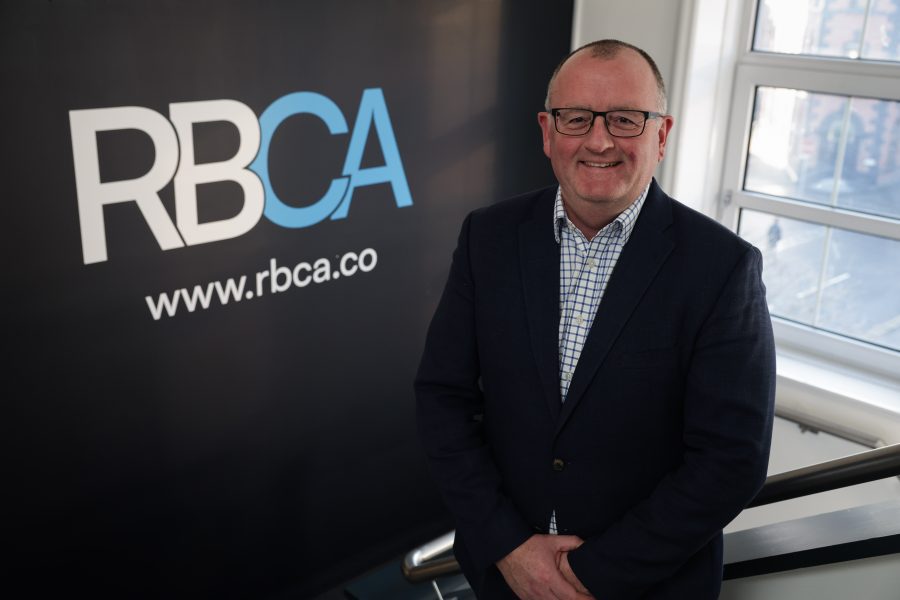
“As a new financial year looms for taxpayers, owner-managed businesses and entrepreneurs across Northern Ireland find themselves navigating a growing mix of unpredictable variables, many of which continue to confound even experienced economists. Spinning the economic roulette wheel is now a calculated risk for many businesses as they try to maintain margin in a turbulent business landscape”, says Ross Boyd, founder and director of Belfast-based chartered accountancy, RBCA
“Rising tax burdens sit firmly at the top of the concern list. An additional 2 per cent of tax on dividend income from April 2026 is not helpful for corporate business owners on modest incomes. There is a need to make sure that allowances are fully utilised prior to the end of the tax year. Incremental increases, frozen thresholds, and reduced allowances are combining to reduce margins and challenge business owners to be even more entrepreneurial when it comes to maintaining or growing profits. Some will even be optioning breakeven as a hopefully achievable (and by no means disastrous) forecast for 2026/27, especially for many of the owner-managed firms already operating on razor thin margins, such as the hospitality or other service sectors. Minimum wages changes also remain a key pressure point for many.
“Layered onto this is the continued rollout of Making Tax Digital. While positioned as a step forward in efficiency, its legislative requirements introduce new costs, systems, and administrative demands. For sole traders in particular, the challenge lies in balancing compliance with the day-to-day realities of running a business. Many will wonder if the change is worth the burden for government unless there is an undisclosed plan to use it simply to collect tax.
“Compounding matters is the near certainty of an inflationary spike driven by rising fuel prices due to geo-political challenges. Economists often use this phrase ‘geo-political’ and what that really means is ‘beyond anyone’s control’. It always hits business owners in the pocket. In Northern Ireland, where sectors such as tourism, hospitality, agriculture, and manufacturing are deeply interconnected to transport and energy costs, the ripple effect of this could be significant. Things will cost more when fuel inflation hits – and when combined with reduced consumer spending power, squeezed margins are inevitable.
“Yet within this uncertainty lies opportunity. Independent, locally owned businesses are often best positioned to respond quickly, adapt pricing, diversify services, and capitalise on their knowledge of their customer base. Agility, not scale, may prove to be the defining advantage in the months ahead. Driving productivity through improved systems and processes, often with new technology and innovation, are key to profitable growth.
“In a landscape increasingly shaped by complexity and constant change, sound business advice remains essential. For sole traders, entrepreneurs, and owner-managed businesses, the ability to understand and interpret the shifting sands of the economy and plan accordingly will be key to turning economic unpredictability into strategic opportunity.
“We also need to recognise these businesses need support – it doesn’t take a genius to realise that with margins being squeezed due to external factors, our private sector won’t be able to expand easily, invest, recruit or support the local towns and rural communities within which they operate until they have addressed these cost and tax pressures. These businesses are the lifeblood of these hyper local economies, and they need help. The Treasury needs to recognise that these businesses are being forced to play economic roulette, but they shouldn’t be gambling their very existence. The autumn budget now looks very uncertain and the biggest question of all is will businesses have to pay again?”