The Financial Conduct Authority (FCA) has today announced that new rules around Deferred Payment Credit, often referred to as ‘buy now pay later’ (BNPL), will come into effect under its remit this July.
The new rules will include requiring lenders to check that customers can afford to repay BNPL loans, and offer support if customers get into financial difficulty. BNPL borrowers will also be able to complain to the Financial Ombudsman Service.
BNPL is form of short-term financing, which has become increasingly popular in the last five years. Rather than paying the full amount for a purchase, BNPL allows consumers to spread the cost into smaller interest-free amounts over a short period of time. The difficulty comes when providers charge a fee for any missed payments, quickly accumulating if more are unpaid.
In Northern Ireland, Advice NI’s data reveals a sharp increase in the number of people using the credit method. Its consumer debt service dealt with £80,000 related to this type of debt alone in 2025, up 61 per cent on 2024.
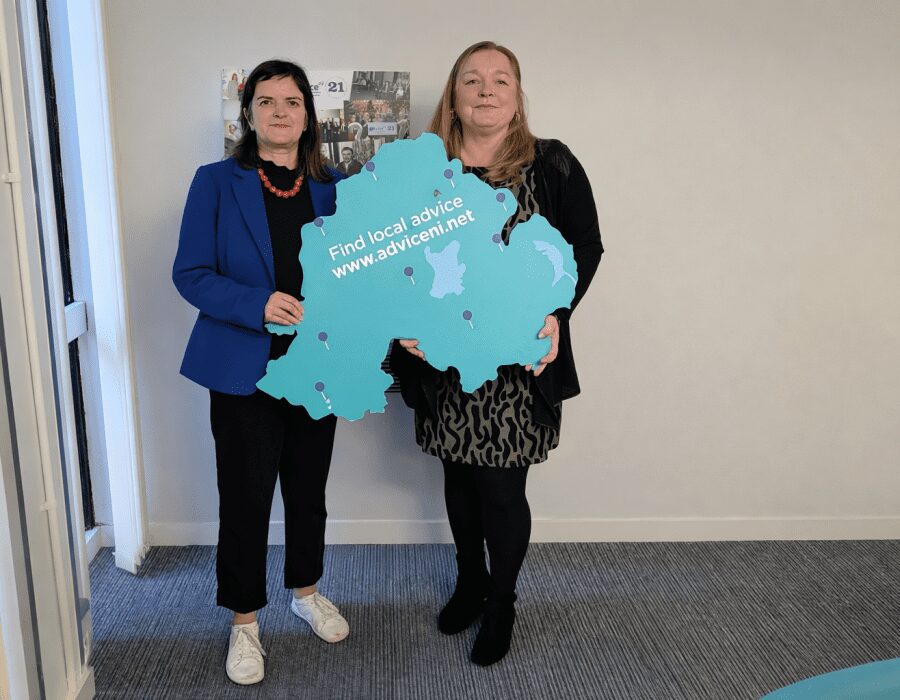
The FCA’s Deputy Chief Executive, Sarah Pritchard, was in Belfast this week to support Advice NI’s debt service to prepare for the upcoming changes. The new rules are welcomed by Advice NI. The organisation is concerned that people don’t fully understand the risks associated with this type of lending, and often spend more than they can afford, adding to existing debts and becoming more vulnerable financially.
Its Interim Chief Executive, Fiona Magee, said, “We welcome these important changes. They will deliver stronger rights and clearer protections for consumers. Many of the clients we have supported with Buy Now Pay Later debt haven’t fully read the terms and conditions that they accepted with the lender. For instance, the interest rate for unpaid instalments can range from 18 to 30 per cent.
“In today’s challenging economy, we need to prevent people from accumulating unaffordable debt. We commend the FCA for its dedication to this issue, and look forward to supporting the organisation as Buy Now, Pay Later comes under its remit, and the new rules are introduced in July.”
Advice NI has revealed that the average debt owed by individuals in Northern Ireland is now £11,239.
Sinead Campbell, Head of Debt, Money and Quality at Advice NI said, “Since 2019, our debt service, supported by the Department for Communities, dealt with 25,894 clients with £301m in debt. There is a clear upward trend in the number of people falling into debt because the cost of living outweighs their household budget.
“As of today, the most common causes of debt are housing, household bills, childcare, and high interest lending often taken out to cover essentials such as food. The clear upward trend in the number of people falling into debt because costs outweigh their household income means that not only are more people in debt, but more people are likely to be at risk of debt too. Breaking this cycle is long overdue.”
Advice NI is urging those feeling the negative impact of debt to reach out for support.
Sinead concluded, “Debt can be complex, and we recognise that reaching out for help can be daunting, but our advisers provide a free, confidential, and impartial service. We are here to help. Every day we see the detriment that debt can have on people’s wellbeing and our aim is to alleviate the burden – there is no need to feel shame or judgement.”