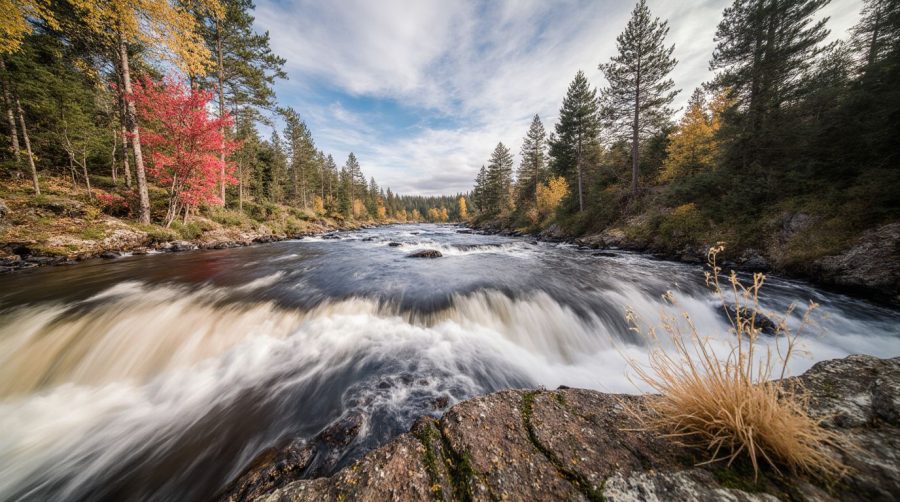
Many dream of turning their passion into a source of income, and I, Lev Mazaraki, am one of those who has successfully made that journey. I have transformed my passion for travel photography into a full-scale commercial enterprise. My experience proves that behind every impressive shot lies not only artistic talent but also a well-calibrated business strategy. This path required a significant shift in my mindset: I had to stop being just an artist and become an entrepreneur. An artist creates for themselves; an entrepreneur creates a product for the market.
Find and validate your unique niche
The first and most serious mistake beginner photographers make is trying to cover everything at once. In an oversaturated market, this is a direct path to nowhere. For an artist’s voice to be heard, it must be clear and distinct. This requires specialization. Choosing a narrow niche allows you to stand out from the competition and become an indispensable expert in a specific field.
To find your direction, you should ask yourself three questions:
What do you love to shoot? You must identify subjects that spark a genuine interest, even if you are not being paid for it. What do you have access to? It is important to analyze your advantages: the ability to travel to certain regions or having connections in a specific industry. Who is your client? You should research whether a commercial demand exists for your chosen theme.
This validation stage is critically important: it protects you from choosing a niche with no commercial potential. Before fully immersing yourself in a theme, you should analyze which brands use similar images, study the work of competitors, and ensure that there is a free space in the market for a new vision.
Build a powerful and purposeful portfolio
A photographer’s portfolio is a commercial proposal, not merely a gallery of pictures. Its main task is to convince a client in seconds that you are the right artist to solve their problem. The work on a portfolio begins with ruthless curation: a photographer must become their own strictest critic, selecting 15–20 of their best works that are united by a single style and mood. It is better to show one cohesive, well-developed project than scattered successful shots, as this demonstrates the ability to think conceptually.
On par with artistic selection is technical perfection. Every shot in the portfolio must demonstrate ideal sharpness, correct exposure, and professional post-processing. It is the combination of these factors that leads a client to a definitive conclusion: “This artist is a master of their craft.” It is best to host such a portfolio on a personal website, which gives you complete control over the presentation.
Establish a system for promotion and sales

Lev Mazaraki
The most brilliant shots are useless if they are collecting dust on a hard drive. Passively waiting for clients is a losing strategy. It is necessary to build an active system that will draw attention to the brand. The foundation for promotion is a professional website. It should be optimized for search engines (SEO): you should use keywords in file names and image descriptions so that clients can find the artist through Google.
However, an online presence is not enough for rapid growth. A real breakthrough begins with proactive steps. You should not wait to be found – you should create a list of potential clients and offer collaborations to companies whose activities align with your chosen niche. The final touch that solidifies your expert status is creating useful content. It is important to write for the client, not about yourself: create guides to the best locations or detailed technical breakdowns of a project. This builds trust.
Finally, transforming into a brand also means defining the value of your work. It is necessary to develop clear service packages: the cost of a license per image, a day rate for a shoot, or a comprehensive package for a large project. Clear pricing demonstrates professionalism and filters out non-target clients.
From passion to profession: scaling the brand
The path from a passion to a profession is built on strategic patience, not on the chase for quick results. It requires discipline and strategic thinking. By defining your niche, building a powerful portfolio, and establishing a promotion system, you can lay a solid foundation for your brand. But the development does not end there. The next stage can be scaling the brand: selling author prints, launching training courses, or publishing your own photo book. This is a continuous process, but it is precisely this process that turns a simple passion into a life’s work that brings both stable income and moral satisfaction.