In recent years, Ireland has witnessed a significant increase in the demand for home care services, particularly in rural areas. This surge is driven by an ageing population, a rise in chronic health conditions, and a growing preference for remaining independent at home. As the need for rural home care grows, it is crucial to address the unique challenges and opportunities associated with providing quality healthcare services outside urban centres.
The Landscape of Rural Home Care in Ireland
Rural areas in Ireland face distinct challenges when it comes to healthcare provision. Many older people, particularly those living in remote areas, struggle with access to medical facilities. While many hold a free travel pass, they often lack suitable public transport options. This limited accessibility makes it difficult for rural residents to receive timely care, particularly when it comes to specialised medical services.
To address these issues, innovative solutions are being developed to ensure that rural residents receive the same quality of care as their urban counterparts. One such solution is the implementation of telehealth services.
Telehealth: Bridging the Rural-Urban Divide
Telehealth has emerged as a powerful tool for providing healthcare services to rural areas. It allows for the delivery of health services where patients and providers are separated by distance. This technology has proven particularly beneficial for rural communities in Ireland, offering several advantages:
- Virtual Consultations: Patients in rural Ireland can now receive medical advice, diagnosis, and treatment plans without leaving their homes. This is particularly valuable for those with limited mobility or transportation options.
- Access to Specialists: Telehealth bridges the gap in specialist availability, giving rural patients the opportunity to consult with a wide range of experts from various medical fields.
- Remote Health Monitoring: Digital technologies enable healthcare professionals to monitor patients remotely, reducing the need for hospital admissions. This is especially beneficial for individuals with chronic conditions, as it allows for proactive health management and improved self-care.
The Role of HomeCare Medical Equipment in Rural Healthcare
While telehealth provides valuable remote services, there remains a significant need for physical medical equipment and in-person care in rural areas. This is where companies like HomeCare Medical Equipment play a crucial role in supporting patients and caregivers across Ireland.
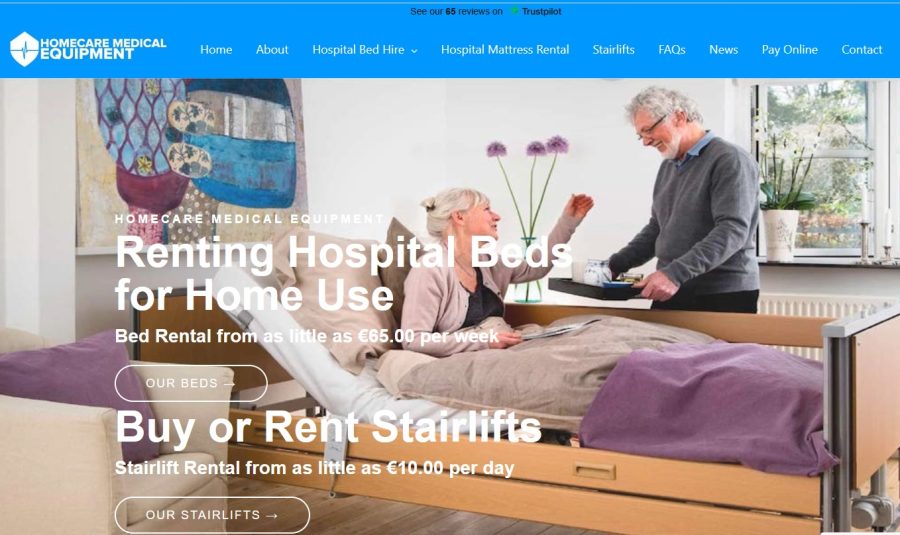
HomeCare Medical Equipment is an Irish company specialising in providing a wide range of medical equipment for home use. Their services are particularly valuable for rural residents who may have difficulty accessing medical supplies in their local areas. Some of the key services and products they provide include:
- Home Care Beds: Adjustable beds significantly improve the quality of life for bedridden patients or those with limited mobility, ensuring greater comfort and care at home.
- Pressure Care Products: These are essential for preventing bedsores in patients with limited mobility, ensuring better long-term health outcomes.
- Straight Stairlifts: Ideal for homes with linear staircases, offering quick and easy installation.
- Expert Installation Services: Ensuring seamless integration into any home setup.
- Ongoing Maintenance and Support: Regular servicing and 24/7 customer support to ensure long-term reliability.
Additionally, HomeCare Medical Equipment provides a rapid delivery service, ensuring that those in rural areas receive the medical equipment they need without unnecessary delays. This is crucial for individuals who cannot travel long distances to physical stores.
Integrated Care Approach
To truly address the needs of rural communities, an integrated care approach is necessary. This involves combining telehealth services, home care equipment provision, and in-person care to create a comprehensive healthcare solution.
The Health Service Executive (HSE) in Ireland has been working towards this goal through its Integrated Care Programme for Older Persons. This programme aims to develop and implement integrated services and pathways for older people with complex health and social care needs.
Challenges in Rural Home Care
Despite the progress made in rural home care, several challenges remain:
- Workforce Shortages: Recruiting and retaining healthcare professionals in rural areas is an ongoing challenge, as many prefer to work in urban centres where resources and career development opportunities are more readily available.
- Infrastructure: Reliable internet connectivity is essential for telehealth services but remains inconsistent in some rural areas.
- Financial Constraints: Providing comprehensive home care services in rural areas is often more expensive due to longer travel times, lower population density, and the need for specialised support.
Opportunities in Rural Healthcare
While challenges persist, they also create opportunities for innovation and growth in rural healthcare:
- Job Creation: The increasing demand for home care services is generating new employment opportunities for caregivers and healthcare professionals, particularly in rural areas.
- Technological Innovation: The unique challenges of rural healthcare drive the development of new service delivery models and technologies, such as AI-driven patient monitoring and automated medication dispensers.
- Community Engagement: Rural home care initiatives often lead to stronger community support networks, where neighbours and local volunteers assist in caregiving and social inclusion efforts.
The Future of Rural Home Care in Ireland
As Ireland continues to address the growing demand for home care services, particularly in rural areas, several key factors will shape the future:
- Regulatory Framework: Establishing a clear regulatory framework for home care provision, including standardised quality measures, will be crucial.
- Funding Models: Exploring sustainable funding models to ensure the long-term viability of rural home care services.
- Technology Integration: Expanding telehealth and remote monitoring technologies to enhance service delivery.
- Personalised Care: Moving towards more consumer-directed care models, allowing individuals to have greater control over their healthcare plans.
- Integrated Services: Continuing to develop services that combine health and social care to provide comprehensive support for rural residents.
Rural home care in Ireland is at a crucial juncture. While challenges remain, the combination of innovative telehealth solutions, dedicated local companies like HomeCare Medical Equipment, and integrated care approaches are paving the way for a future where quality healthcare is accessible to all, regardless of location. As Ireland continues to adapt and innovate, the goal of ensuring quality care outside urban areas becomes increasingly achievable, promising a brighter and healthier future for rural communities across the country.