What makes a good leader? How does a good leader lead? How does a good leader guide their business through crisis? Such questions are critical to ask in the ever-changing waters of business, writes Dale Cree CEO of 3EN,
But how do we go about seeking answers to such pertinent questions? How do we go about becoming the kind of leader we want to be?
Recognise the leadership structures you’re unhappy with
I believe we must begin by interrogating the structures of leadership that are currently in place around us. It’s apparent to me that there is a worrying lack of direction and vision Northern Irish businesses, particularly as we emerge from the shake-up of COVID-19 and enter new territory.
An undeniable gap exists in the leadership stances of the political parties of Northern Ireland on this front. By holding opposite end views of the exact same problem, and sticking vehemently to these views, Northern Irish business owners, like myself, are being offered little to no direction on how to navigate in the current unstable environment.
The power struggle between a socialist viewpoint on the one hand, and a capitalist viewpoint on the other, has created a muddy middle ground in which the leaders of this country appear to be stuck. As a result, we business owners are being left in the lurch with hypothetical nothings as guidance and inadequate answers to the questions on how we begin to move our businesses forward towards a successful future. In this regard, I feel that we are leaderless.
How do I see things?
It’s not for me, or anyone else, to say what the future will look like for businesses after the repercussions of the past few years. We simply do not know. However, it is of utmost importance that in the face of bad communication and a lack of transparency from our political leaders that business leaders, like me, step up to the mark and share our thoughts on how we lead and manage our teams.
Our approach to leadership is character and business defining, both on an individual and a collective level. It’s simply not enough to blindly accept the norms that we know from the overarching structures at work on a national scale, or to accept that things must always remain as they are. I believe that we will be unable to combat problematic mainstream leadership norms on a macro level if we do not firstly address our own foundations and share our findings amongst ourselves.
Look at your own practices
As I’ve grown, I’ve become a business leader who takes things one day at a time. I know that I cannot say to my staff that tomorrow will be better than today, or that today will be better than tomorrow, but I can guarantee them that if today is good, we can look forward to tomorrow. That means that if today is bad, we identify problems, fix them quickly and efficiently, and we move on. The plans we put in place are about much more than simply survival, they are about driving success. These plans may be slow to move or painful and exhausting to enact, but they will steer staff away from the fear, uncertainty, and doubt that can so easily lead to a dysfunctional team.
Amidst planning and pivoting for circumstances beyond my control, I continually adjust my leadership tactics, making small changes to how I guide for the good of my team. Change is driven from where we are placed, and so I urge other business leaders to utilise their positions of power to lead their teams well. We are required to be much more than bosses who hand out instructions to employees, we are also human beings, leading other human beings. The weight of this responsibility bolsters me to lead with transparency, integrity, and clarity.
I truly believe that our views towards leadership, and the way we run our businesses in the middle of global crises, can cultivate positive attitudes, behaviours, and cultures in our workplaces. The simple decisions we make each day to encourage and communicate with our teams are the decisions that allow trust to develop. I refuse to be a leader who wants followers. I strive to be a leader that my team can interrogate on the same level that I do with the leaders above me, and I hope to come through the questioning proven as a leader who is followed because he is trusted, and his actions and plans are understood.
Change begins from where you are placed
To change the society around us, we must, as I have stressed, begin where we are placed. Problematic norms on a macro level must be combatted first from a micro level. To dismantle and reorientate the structures of leadership around us, we must recognise the need for those of us in positions of leadership to form newer, stronger foundations that benefit our employees.
It’s our responsibility to offer direction and support to our staff – without them, we have no business. These same staff members are those who will, with the right encouragement and support, go above and beyond when it’s required. I have seen it in my own business and heard of it from others. Employees at every level have become leaders overnight at 3EN.
Good leadership permeates through every level of a business, from the most junior employee, to the CEO. A confident leader will give their team room to flourish without fear of being usurped. Leadership is not about how you feel, but rather about how you make others feel. Good leadership makes other people feel like they can make valuable and respected inputs. If our own way of leading has proven to be strong, we must reinforce the signs of leadership within our businesses, at every level.
Now is not the time for floundering
Business leaders of Northern Ireland and beyond, we cannot rest on our laurels. We must be clear with our vision. We must communicate with our teams in a way that encourages a collaborative approach to bringing our businesses forward. We must be forward thinking, but not to the extent that it distracts us from the problems of today. Embrace the adversities of the present and manage the ongoing changes to your benefit. Ask your team for input, expect them to step up, and watch your internal business practices flourish.
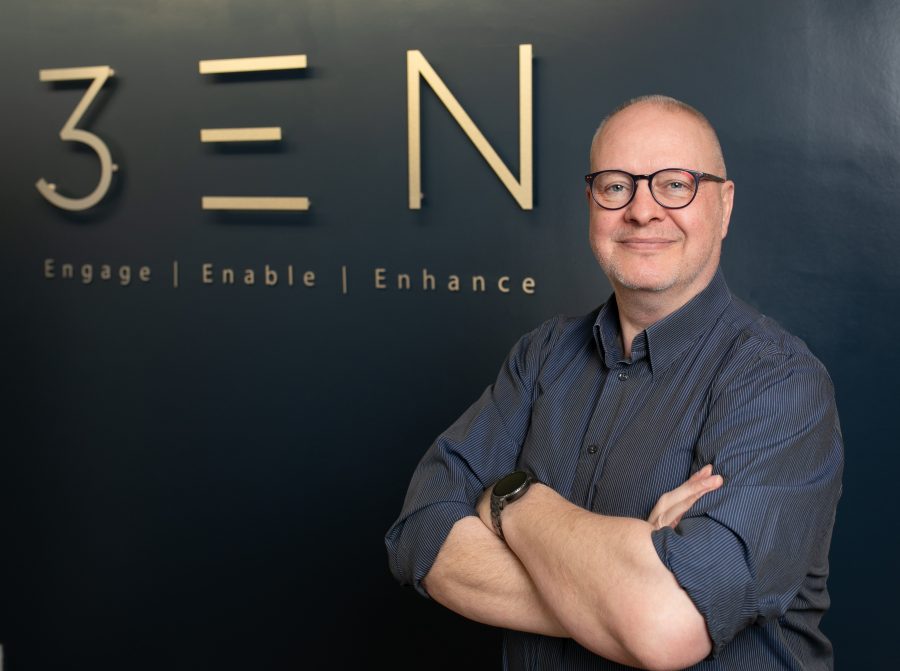
Dale Cree is CEO of 3EN, one of the world’s leading Oracle NetSuite Enterprise Resource Planning (ERP) Solutions Partners, with operations across Europe. Its cloud technology helps businesses to drive growth through improving efficiency with seamless integration between Oracle NetSuite and other software platforms. 3EN’s clients include Fitbit, Medguard and B-secure.