Industry leaders are urging Irish employers to act on workplace mental health after research revealed a sharp rise in staff struggles.
A survey by St. Patrick’s Mental Health Services found that 37% of Irish adults report work-related issues affecting their mental health, while 26% of workers say colleagues have disclosed mental health difficulties to them – almost double the 14% figure from 20191.
With poor mental health costing Irish employers up to €2,000 per employee annually according to IBEC’s 2024 report2, business leaders gathered in Dublin to address the crisis head-on.
Workplace wellbeing has now evolved from a “nice to have” to a critical business imperative, according to Irish experts in wellbeing, with leadership accountability and strategic design identified as key factors for successful implementation by industry specialists.
It’s this need for employers to prioritise the mental health of their employees that dominated the discussion at a recent event attended by some of Ireland’s leading business figures.
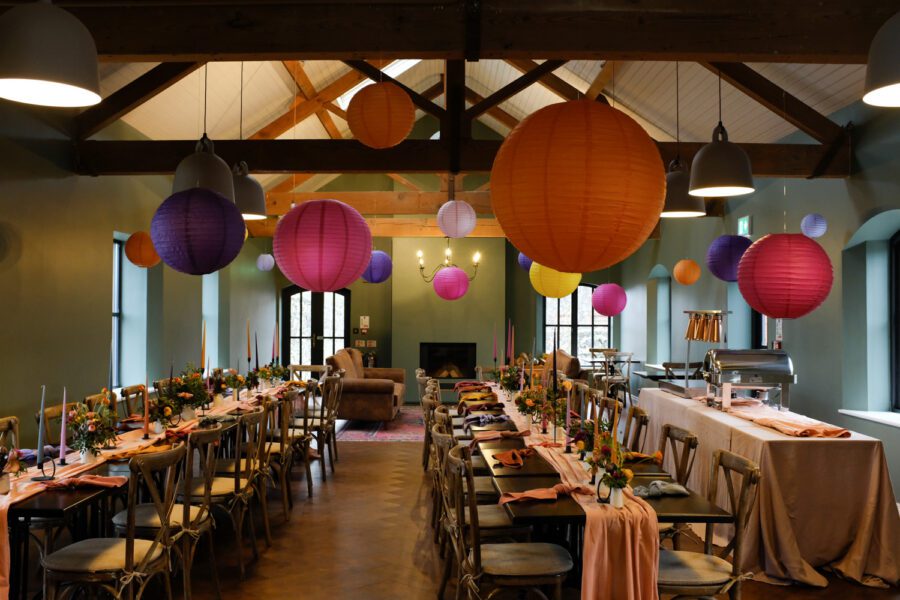
Industry experts convened for Calibro Workspace’s latest ‘Inspired Session’ to discuss prioritising employee mental health and wellbeing in the modern workplace. The event was co-hosted by Lena by Inspire, a social enterprise that delivers wellbeing solutions to over 750,000 lives through Employee Assistance Programmes and therapeutic support services. Speakers included leaders from Lena by Inspire, HSE Ireland, and Work Transformers.
The discussion highlighted the fundamental shift in workplace expectations, with hybrid working becoming the norm rather than the exception, bringing both opportunities and challenges for organisational wellbeing strategies.
Leadership responsibility: the foundation of effective wellbeing strategy
“The biggest wellbeing challenge is the evolving nature of work and what’s happening around us,” said Alex Bunting, Group Director at Lena by Inspire. “We need to be switched on and understand the needs of our people. In a data-driven world, we need to embrace the data to understand the impact.”
Bunting emphasised that successful wellbeing strategies require senior buy-in and leaders who can demonstrate their commitment through consistent actions, explaining that with senior buy-in, “you’re already 50% of the way there.” This foundation enables organisations to address a critical gap he has observed in management capabilities.
“I’ve come across a lot of managers – some of the most efficient people I’ve ever worked with – who struggle to connect with their team when it comes to their wellbeing, because they’ve never developed these skills,” Bunting added. He stressed that there is “an absolute necessity for organisations to help develop those skills” around emotional intelligence, active listening, and coaching approaches, “because managers have to understand the needs of all people on their team.”
“Organisations need to live their values, not just display them on walls. Every single contact point is an opportunity for positive wellbeing engagement,” Bunting explained.
Evidence-based approach to mental health support
Morgan Lucey, Head of Employee Assistance Services for HSE Ireland, stressed the importance of building wellbeing strategies on solid foundations, rather than following popular trends.
“One of the biggest mistakes organisations make is focusing on what’s trendy rather than getting the fundamentals right,” said Morgan Lucey. “You need people with occupational health expertise, clinical knowledge, and well-trained HR professionals all contributing to your strategy.”
Morgan Lucey highlighted the significant increase in help-seeking behaviour since the pandemic, noting it as one of the most positive changes in workplace culture. However, he cautioned against initiatives that look impressive but don’t equip employees with practical skills.
“If you’re bringing in resilience programs, they shouldn’t just provide information about resilience – they should equip staff with actual tools and skills they can use tomorrow,” he explained.
The HSE uses evidence-based tools like Work Positive, a European psychosocial risk management system that provides both data insights and actionable blueprints for addressing wellbeing challenges.
Strategic design: creating workspaces that support wellbeing
Sam Sahni, Workplace Strategy Director at Work Transformers, challenged organisations to move beyond ‘gimmicky’ wellbeing features towards understanding how their people actually work.
“I’ve walked through workplaces claiming to be the healthiest in the world, but when you ask about usage statistics of their wellbeing investments, they can’t tell you because the truth is they’re not being used as promised,” Sahni observed. The panel identified a critical gap in organisational responsibility, with Sahni noting: “When I ask in boardrooms whose responsibility wellbeing is, there’s always a moment of silence. Nobody raises their hand.”
His approach focuses on creating agility in office environments, addressing factors like acoustics, lighting, temperature, and neurodiversity needs through varied workspace options.
“Your best position is your next position. We’ve known about the importance of movement for 20 years, but we’re still not applying it at mass level,” Sahni noted.
He advocates for a ‘perpetual beta’ approach to workplace design, treating wellbeing and workspace strategy as ongoing experiments rather than one-time projects.
The data imperative: measuring what matters
All panellists emphasised the critical role of data in developing effective wellbeing strategies. The discussion revealed significant challenges with employee engagement, with European data showing only 13% of workers are actively engaged according to Gallup’s 2025 report3.
“If seven out of ten people are showing up just for a paycheck, that’s a very poor starting point for wellbeing initiatives,” Sahni explained. “Organisations need to create a sense of purpose and belonging to address this fundamental engagement crisis.”
The experts recommended regular wellbeing audits, focusing on outcome KPIs rather than just activity metrics, and ensuring strategies are continuously refined based on employee feedback.
The business case for wellbeing
Ronnie Crawford, Managing Director at Calibro Workspace, spoke of the strategic importance of integrating wellbeing into core business planning. “So often we focus as leaders on business strategy, but wellbeing strategy has got to be a key part of that.”
Crawford shared how his own organisation transformed its approach to values-based culture:
“Going back three, four years ago, we had a set of values that were just individual words on the wall. We took an offsite day and worked through creating new values that truly reflected who we were as an organisation. Today, you can test any of our team and they’ll know our values straight off because we live them, talk about them every day, and recognise people for demonstrating them.”
Looking ahead: practical steps for organisations
The panel concluded with practical recommendations for organisations beginning their wellbeing journey:
- Establish clear leadership accountability for wellbeing outcomes
- Invest in management training for emotional intelligence and coaching skills
- Use evidence-based assessment tools to establish baselines and track progress
- Focus on getting HR fundamentals right before implementing additional programs
- Design workspaces that support diverse working styles and neurodivergent needs
- Maintain consistent, ongoing communication about wellbeing initiatives
Crawford rounded off the event by emphasising the partnership approach: “We formed a partnership with Lena by Inspire going back almost two years now. A lot of that came from synergy in both our visions – to improve the wellbeing of people at work. That’s really where we kicked off these sessions and why we’re here today.”
“Wellbeing isn’t rocket science, but it does require commitment, consistency, and a willingness to listen to your people,” concluded Lucey. “Get the basics right, and everything else builds from there.”