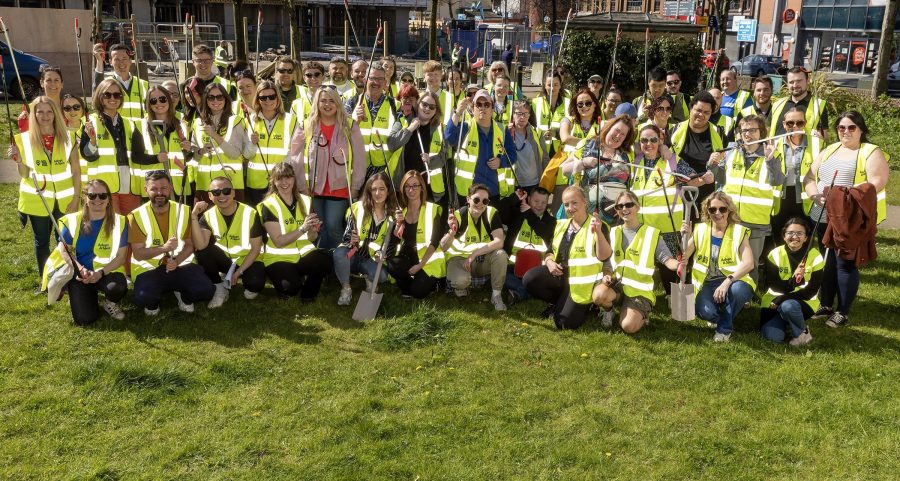
Live Here Love Here, Northern Ireland’s leading community and civic pride campaign, has announced the return of its flagship environmental volunteering initiative, the Big Spring Clean. Running from 1 March to 30 April, the campaign is set to once again inspire thousands of volunteers across the region in what has become Northern Ireland’s largest volunteer-led cleanup effort.
This year’s campaign – sponsored by Power NI, Helping Hand and Belfast Harbour, with continued support from the Department of Agriculture, Environment and Rural Affairs – invites individuals, families, schools, businesses and community groups to roll up their sleeves and volunteer in cleanups that brighten shared spaces, protect wildlife and reduce pollution. And the call to get involved has never been more timely, with this year’s campaign arriving against the backdrop of new research highlighting the scale of public concern around litter.
According to 2025 research commissioned by Live Here Love Here, 85% of people in Northern Ireland agree that littering is a major problem, and 73% say it negatively affects mental health. The findings also show that eight in ten people believe littering places a financial burden on domestic and business rates. With such strong negative public sentiment, Big Spring Clean offers a practical and positive way for people to take action.
Big Spring Clean
While concern about litter is clear, the survey also shows a slight decline in the number of people who say they never litter[1] – a small but meaningful shift that underlines the need for continued community‑led action, as Live Here Love Here Manager Lynda Surgenor explains.
She said: “Last year alone, over 55,000 volunteers got involved in more than 150 clean‑up events throughout the campaign, uniting communities in every corner of Northern Ireland. And over the past 16 years, hundreds of thousands people have rolled up their sleeves to take part. That level of commitment shows just how powerful local action can be when people come together with a shared purpose.
“What makes the Big Spring Clean so impactful is its simplicity and accessibility. Anyone can get involved – whether that’s joining a local cleanup, organising an event with neighbours or colleagues, adopting a favourite spot to care for throughout the year, or even taking a few minutes on a daily walk to lift litter safely. Every action, no matter how small, contributes to a cleaner, healthier and more hopeful Northern Ireland. Our sponsors play a vital role in making that possible. Their support ensures volunteers have the equipment, resources and guidance they need for safe, effective and enjoyable cleanups throughout the two-month initiative, and we look forward to welcoming even more people into the movement this spring.”
Live Here Love Here’s work in Northern Ireland represents a collective effort to build pride in local places and encourage people to care for the environment around them, and this is strongly reinforced by the survey finding that 88% of people agree everyone must take responsibility for their own litter.
As part of this year’s programme, Linen Quarter BID and Live Here Love Here will join forces on Earth Day, April 22, for a litter-picking event across Belfast City Centre in what will be a key moment in the campaign – aimed at highlighting the collective responsibility in keeping urban spaces clean and welcoming.
Lynda concludes: “Whether you’re joining a coastal clean‑up or tidying your local street, just remember the basics – wear gloves, stay aware of traffic, and look out for each other. Make sure youuse a litter picker, avoid lifting anything sharp or heavy, and always wash your hands afterwards. Afterwards, don’t forget to register your clean up and results on the Live Here Love Here website. A little care goes a long way in keeping everyone safe while making a real difference.”
For more information, including safety advice and how to get involved, visit liveherelovehere.org/bigspringclean.
[1] 64% of people in 2024, 60% of people in 2025.