There is at least one houseplant in every household. Plants bring warmth to the home and their growth or even bloom will make you very happy. But how do you take care of them properly?
Do you know what kind of plant you actually have?
The first piece of information you need is the type of plant you have. There are hundreds and thousands of different houseplants and each one has slightly different requirements. So there is general advice, but there is no general guide that fits 100% for every plant you have indoors.
So, if you have houseplants that aren’t doing well, it’s most likely due to improper care. But it could also be due to pests or mechanical damage during transport.
How to water your houseplants?
In general, the soil in the pot should not be dry. The plant will then wilt or its leaves will turn yellow. However, the opposite extreme is not good for most plants either. If they are overwatered, they may rot. In short, the water must be just right. Most houseplants are watered once a week, some once every 14 days. The temperature of the room or the size of the plant in relation to the size of its pot also plays a part.
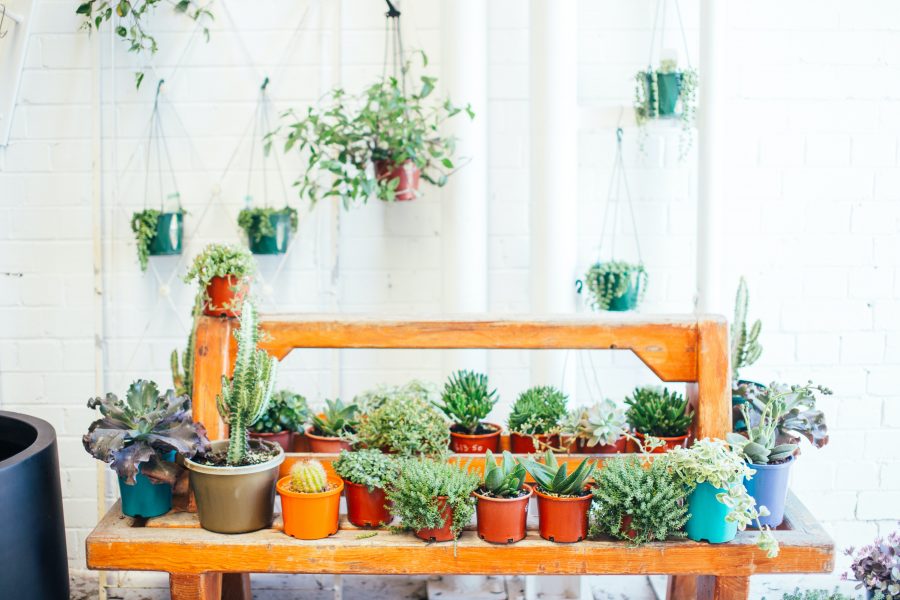
You should also pay attention to the watering method that suits your houseplant – from above, from below through its saucer, or perhaps by dripping. So if you want a houseplant in a hanging pot, for example, remember that it is better to put in a houseplant that likes to be watered from above.
Don’t forget to add fertiliser regularly during the summer months.
What about the light?
Plants generally like light. However, there are some species that thrive best on a windowsill, while others prefer partial shade. Almost all species, however, will have trouble with prolonged direct sunlight coming through the window pane. The leaves of plants exposed to this heat cannot withstand the intensity and the plant may die. So, preferably find a window that does not receive direct sunlight – or one that gets direct light for only a small part of the day.
Pot size, amount of soil, replanting
Choose the pot in proportion to the plant size. Most plants will use as much space as there is in the pot, and if you regularly replant it into a larger pot, it will not be angry with you. On the other hand, pots can’t grow indefinitely in your room; at some point you will simply stop replanting to a bigger pot. You can see how the plant’s root system is “compacted” in the ground. If the plant visibly wants to grow more, you would do well to allow it.
Plant reproduction
Houseplant reproduction is already a slightly higher level of horticulture. Anyway, some species will make your job much easier – the rhizomes will start growing spontaneously along the pot’s edges. These can usually simply be replanted into new containers. Other plants can easily be reproduced by taking cuttings which will root in a jar of water. Other plants can be “seeded” simply by separating the leaves and root system into individual clumps. Again, however, it’s a good idea to study the appropriate procedure in relation to your particular houseplant.