Whether you want a busy restaurant or a dedicated butcher shop, picking the right commercial butcher block comes with various features that make you enjoy your butcher block for years. A good butchering block can form the heart of your food preparation zone, focusing on offering a practical workspace while upgrading the quality of your aesthetic in the kitchen. Here are the top five features to look out for when picking the best commercial butcher block.
1. Material Quality
The type of wood used to make a butcher block, especially for commercial butcher blocks, is significant in its importance. There are large demands for hardwoods, including maple, oak, and walnut, since they are dense and last longer. Every type of wood has its characteristics::
- Maple: Maple wood is very hard with great scratch resistances; they top the list in many commercial kitchens. Their fine grain resists absorption of odors and bacteria.
- Oak: Oak wood is strong and has an obvious grain feature. It resists wear pretty well but is often more porous than maple.
- Walnut: Although walnut is expensive, as a wood, it entails profound color and aesthetics. It is rather hard and, of course, rather high in maintenance compared to other woods.
The method in which the block is constructed; whether it is edge-grain, face-grain, or end-grain butcher block also determines its longevity. Out of all the types, however, end-grain butcher blocks-the ones in which the wood fibers at the surface face outward-prove to be surprisingly resilient for they, over time, can reseal themselves against knife marks.
2. Size and Thickness
Depending upon its application, size and thickness matter for the butcher block. In a commercial kitchen:
- Thickness: Thick block This will offer you much more stability and durability. Large blocks can support chopping with heavyweights without denting or cracking.
- Size: Dimensions must be able to fit your kitchen’s space but provide enough surface area for some food preparation tasks. Larger blocks can be convenient for multiples, but there needs to be space in that kitchen to maneuver correctly.
The perfect size lets the butcher block fit nicely into your workflow-in fact, let you prepare food without over-crowding your space.
3. Hygiene and Maintenance
Hygiene should not be compromised in any food preparation area. Maintaining it demands serious consideration of your demands for a butcher block. Features that help in effortless cleaning are features you should look at.
- Non-porous Surface: Some woods naturally resist bacteria better than others. For example, some hardwoods have antimicrobial properties which inhibit bacterial growth.
- Ease of Cleaning: The butcher block should be easily cleaned by mild soap and water without risking damage to the surface. Sanitization is advisable in a commercial kitchen to avoid cross-contamination.
- Maintenance Requirements: Consider how often you will have to oil or treat the surface to maintain its new appearance. Low-maintenance blocks, meaning infrequent treatment, can be great for high-volume operations.
Create a regular cleaning and maintenance schedule that is going to help extend the life of your butcher block but is also going to address all food safety requirements.
4. Stability and Weight
A stable butcher block is essential in food preparation as it facilitates safety and efficiency in use. Some features that are associated with stability are:
- Weight: It is heavier, thus it mostly stays put while chopping or cutting; this minimizes movements.
- Base Design: Some butcher blocks feature a strong base or legs for extra stability. Be sure that such designs feature non-slip feet or have attachment capability to the countertop so as not to allow the butcher block to shift beyond control while the cook is in use.
It is not itself a feature of greater safety, but conducive to smooth workflow if cooks are not interrupted or distracted by a surface that is sliding at times.
5. Aesthetic Appeal
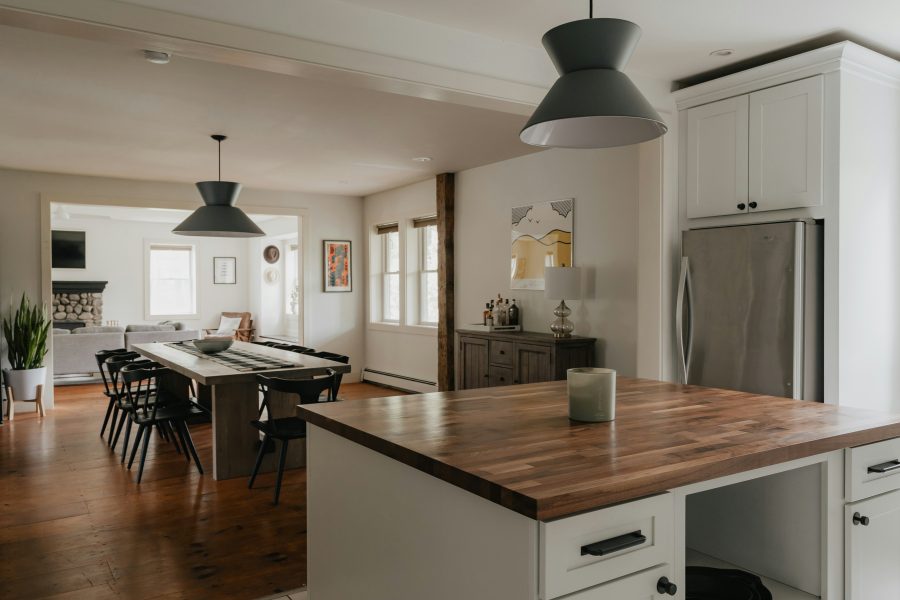
While functionality is paramount, the look of a commercial butcher block should not be forgotten. It could brighten up your kitchen overall with an aesthetically pleasing design:
- Available Finish: You’ll have a decision between a naked finish that only exposes the grain of the wood and a stained finish that would easily echo your kitchen design
- Available Design Style: There are just so many styles of butcher blocks-from rustic to modern -and you will surely be able to find one that will fit your current kitchen design.
An attractive butcher block can not only be useful in its purpose but also make a positive contribution to the environment of your kitchen.
Conclusion
Commercial butcher block selection must be made with full care. Considerations should encompass material quality, size and thickness, hygiene and maintenance needs, stability and weight, and aesthetic appeal. All these will ensure the right investment on a butcher block that shall not only serve as a perfect functioning area but also add beauty to your kitchen space.
A good commercial butcher block will provide you with years of reliable service. Considering all things, any professional kitchen setting is not complete without such a tool. It might be preparing meat in a busy restaurant or crafting artisanal products in a specialty shop. Investing in quality will definitely pay dividends for performance and longevity.