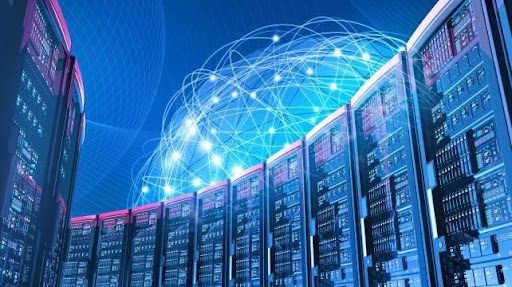
The widespread use of portable electronics gives impetus to the development of many industries, including the Internet itself as a means of communication. And it allows us to have “communication” not only between people, but also between objects, with the help of which we access the World Wide Web.
As can be seen, we are moving toward the complete automation of everyday life. And those actions that only a person could do before have long been done for us by machines. And the work that previously could only be done independently can now be replaced with an “online” icon. For example, this is online shopping, online food ordering, etc.
But in order for all this to function perfectly, it is necessary to achieve high computing power for all devices, as well as increase their portability, and, accordingly, reduce their size. These are the ones we have available today. As a result, the possibilities of the iot networks are almost limitless.
Euristiq, which provides custom IoT development services for various industries, helped us to understand this topic in more detail.
The origin of the “Internet of Things” concept
1926
Nikola Tesla said in an interview for Collier’s magazine that in the future, radio would be transformed into a “big brain”, all things would become part of a single whole, and the tools that made this possible would fit easily in a pocket. That’s an amazingly accurate prediction about our time, isn’t it?
1990
The first “Internet thing” appeared in 1990. This is a toaster designed by American John Romkey, one of the creators of TCP/IP (Internet protocol suite). By connecting this kitchen assistant to the World Wide Web, the engineer was able to turn it on and off remotely. He did it just like that, for fun, not even suspecting that his experiment would become a trigger that would cause an “avalanche effect” and begin to form a new reality.
1999
Kevin Ashton, co-founder of a research group at the Massachusetts Institute of Technology (MIT), in a presentation to the management of a very large firm, put forward the theory that all terminals for supply chain management could be connected into one network, which in turn would allow regulating some issues without the participation of people.
For example, a certain item is out of stock. And the machines themselves determine what is missing and immediately send a request to suppliers. The management of that company really liked this idea. It later gained widespread support and fascination from many other major companies around the world.
That’s how the idea was born. And in the same year, the Auto-ID Center was established, which was engaged in radio frequency identification (RFID) and sensor technologies. It is thanks to them that this concept has become widespread.
2008-2009
And, finally, there was a transition from the “Internet of People” to the “Internet of Things”. This means that the number of devices connected to the network exceeded the number of people.
IoT Implementation Process
What was the foundation? It consisted in using ordinary things in human life not just as static objects, but as irreplaceable things that can analyze the environment. Now we can hear about them under the general adjective “smart”: smart cities, smart transport, smart homes, smart refrigerators, smartwatches… The Internet of Things combines all these things into a single whole, the parts of which can closely interact with each other, that is, literally, item with item. For example, a smart home: all or almost all devices in the house are connected to a single network.
Let’s take a chandelier as an example. It turns on only at night and only when there are people in the room, which is explained by the interaction of various sensors in your home directly with this chandelier. On the other hand, if you are far from home, it will not be a problem for you to use your smartphone to connect to this gadget in order to track any activity or control it from a distance.
Internet of Things (IoT): Benefits for Everyone
The Internet of Things can make a person’s life much easier or reduce the routine. It can make our everyday activities much more efficient and less time-consuming.
And imagine such an implementation on a more global scale! For example, the Industrial Internet of Things, which is used at the production level and also implements and optimizes business processes. The same principles of functioning work here as in the household systems mentioned earlier, which can be transferred to an infinite number of others, from street lighting and traffic light control to the management of huge enterprises and cities.
In fact, IoT is a promising breakthrough technology that opens up a new era for humankind. As can be seen, it has a wide impact on a person’s professional and personal life.
The Internet of Things is not only about convenience. IoT conserves energy. The Internet of Things is security and control. The management and analytic capabilities of this network provide protection at all points of its connection.
So, in short, IoT is the Internet of Things; a network that combines the usual things, gadgets that, alongside regular tasks, solve some additional ones using information technology. And it has three main functions: interaction with the external environment, transmission of data, and receiving data from outside.