Ensuring that your business meets the legal requirements for workplace toilets in the UK is not just good practice; it’s essential for compliance and employee well-being. UK law mandates that businesses provide accessible, clean, and adequately equipped toilet facilities based on employee numbers.
This includes having enough toilets, washbasins, hot water, soap, and proper ventilation.
By meeting these standards, you promote a healthy and comfortable work environment that can boost employee morale and productivity. Moreover, adhering to workplace toilet regulations helps your business avoid legal penalties, ensuring a smooth operation without unnecessary interruptions.
Understanding these regulations and implementing the necessary measures may seem daunting, but with clear guidance, you can navigate these requirements effectively.
By focusing on providing the right facilities from trusted brands like House of ENKI, you not only comply with the law but also show your commitment to employee welfare.
Understanding Workplace Toilet Regulation Requirements

In the UK, workplace toilet regulations ensure that all employees have access to proper facilities. These standards are part of a broader framework designed to maintain a safe and healthy work environment.
Each requirement aims to support both comfort and accessibility in the workplace.
Overview of the Workplace (Health, Safety and Welfare) Regulations 1992
The Workplace (Health, Safety and Welfare) Regulations 1992 set out rules for employers. It’s vital for businesses to follow these to provide appropriate sanitary conveniences.
Regulation 20 specifies that employers must offer suitable and sufficient toilets that are readily accessible. The regulations also cover factors such as cleanliness, accessibility, and maintenance.
Facilities must be properly lit and ventilated to ensure a pleasant and hygienic environment.
This means that toilets should have running water, handwashing facilities, and a method for drying hands, like paper towels or dryers.
Legal Requirements for Toilets in the Workplace
Legal requirements for workplace toilets in the UK focus on guaranteeing a basic level of comfort and hygiene. All facilities must have flushing toilets and running water.
Each workplace must determine the minimum number of toilets based on the number of employees and the gender ratio.
Toilets should be clearly labelled and segregated if they are used by men and women. Toilets used by men only should also include urinals with adequate privacy barriers. The rules apply to all employees, regardless of their job duration or status, ensuring equal treatment.
Accessible Toilet Facilities and the Equality Act 2010
Accessible toilet facilities are a crucial aspect of compliance with the Equality Act 2010.
This act requires that employers accommodate the needs of all employees, including those with disabilities.
Employers must ensure that accessible toilets are available and meet the specific standards for space, fixtures, and signage. These facilities must be easily reached by individuals with mobility challenges. Features like wide doors, grab rails, and emergency alarms improve accessibility.
Employers should routinely review and maintain these standards to ensure ongoing compliance and support an inclusive work environment.
Practical Guidance on Providing Adequate Toilet Facilities

To comply with workplace toilet regulations in the UK, it’s essential to offer proper sanitary conveniences and maintain hygiene.
Addressing the number and type of facilities, including gender-segregated and handicap-accessible options, is crucial.
Equally important is ensuring cleanliness, adequate soap supplies, and drying options.
Ensuring Availability of Sanitary Conveniences
You should provide sufficient toilet facilities based on the number of employees.
As a guideline from the Workplace (Health, Safety and Welfare) Regulations 1992, the number of conveniences depends on the workforce size, with separate facilities for men and women when needed.
Facilities should be clean and well-maintained, ensuring a constant supply of toilet paper and waste disposal options.
Mixed-use restrooms must be properly equipped and allow for privacy. Additionally, ensure facilities are easily accessible, especially in multi-level buildings, to prevent long walking distances.
Maintaining Hygiene: Washing Facilities, Soap, and Drying
Providing suitable washing facilities is imperative. Ensure hot and cold, or warm, running water is available in basins large enough for handwashing, ideally extending to forearms.
Facilities should be well-ventilated, well-lit, and regularly maintained for cleanliness. Make sure there’s a consistent supply of soap or other washing agents available. Depending on preference or environmental considerations, hand-drying can be via paper towels or hot-air dryers.
Proper disposal receptacles for towels should be included if used. Regular maintenance checks and replenishing supplies help maintain a hygienic and pleasant environment.
Encourage feedback from employees to ensure the facilities meet their needs and address any issues promptly.
Compliance for Different Work Environments
Ensuring compliance with workplace toilet regulations can vary based on the nature of the work environment.
It’s important to consider the differences between fixed establishments and temporary worksites, as well as the unique needs of construction and outdoor workers.
Fixed Establishments vs Temporary Worksites
In fixed establishments like offices or factories, providing adequate toilet facilities is straightforward. You must ensure a set number of toilets and urinals based on the number of employees.
Toilets should be accessible, well-lit, ventilated, and include facilities such as handwashing stations with running water, soap, and towels or dryers.
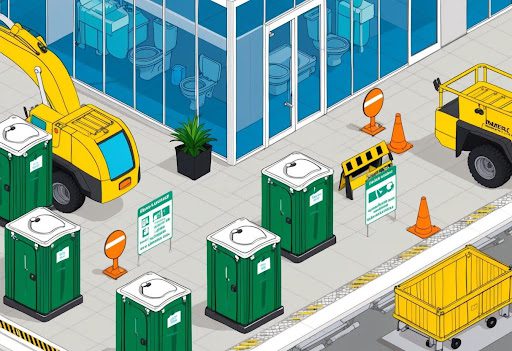
For temporary worksites, both logistical and sanitary challenges require solutions like portable or chemical toilets. Locations such as outdoor events or construction sites may use water containers for handwashing when plumbing isn’t available.
It’s essential that these facilities are regularly serviced to maintain hygiene and conform to health and safety laws. Make sure temporary toilets are both appropriately located and clearly marked.
Facilities for Construction and Outdoor Workers
Construction and outdoor workers often face unique challenges when it comes to toilet facilities.
Mobile welfare units equipped with chemical toilets are a common solution. These units should be placed in convenient locations and regularly cleaned. For larger sites, multiple units may be necessary to provide sufficient access.
When public toilets are used, it’s crucial to remind workers about hygiene practices.
Ensure that workers have access to safe drinking water and rest areas, and consider whether heated shelters are needed during colder months.
It’s not just about meeting regulations; it’s about promoting welfare at work by ensuring comfort and cleanliness for all employees.
Frequently Asked Questions

Understanding the legal requirements for workplace toilet facilities is crucial for UK businesses. This section addresses common questions about regulations and standards that apply to different settings, ensuring both employees and customers have access to proper facilities.
What are the minimum legal requirements for providing toilet facilities in UK workplaces?
UK law mandates that workplaces must provide easily accessible, clean, and well-maintained toilets. They should include washbasins with hot and cold water, soap, and a way to dry hands.
The number of facilities is often based on the number of employees. For more detailed requirements, check out the HSE guidelines.
In what circumstances can an employee leave work if the toilets are not operational?
If toilet facilities are not operational and cannot be fixed promptly, employees may have a legitimate reason to leave work. This is especially true if it affects their health or comfort. Employers are generally expected to provide alternative arrangements or allow employees to take breaks elsewhere.
What are the specific regulations governing toilet facilities in UK workplaces?
The Workplace (Health, Safety and Welfare) Regulations 1992 set out the standards for toilet facilities in the UK, ensuring they are adequate and accessible. This includes requirements for cleanliness, lighting, and ventilation. Following these regulations helps avoid legal penalties and supports employee welfare.
Are businesses required to offer toilet access to customers in the UK, and if so, under what conditions?
While the law mainly focuses on employee facilities, businesses open to the public, like restaurants and shops, often provide toilet access to customers. The requirements can depend on local council regulations. Ensuring customer facilities align with legal requirements can improve customer satisfaction.
What are the Health and Safety Executive (HSE) standards for toilets in the workplace?
The HSE has clear standards, including clean, well-ventilated, and appropriately lit toilet spaces. Facilities must be regularly maintained and stocked with essentials like toilet paper, soap, and towels.
Must event organisers in the UK adhere to particular legal standards for providing toilets?
Yes, event organisers are required to provide adequate toilet facilities based on expected attendance. This often includes portable toilets for outdoor venues. These must be kept clean and properly stocked. Failing to provide suitable facilities can result in complaints or action from local authorities.