Choosing the right workwear for your industry is essential for ensuring both safety and comfort on the job.
Whether you work in construction, healthcare, or any other field, having the appropriate attire can make a significant difference in your daily performance.
Selecting the correct workwear involves considering factors such as durability, comfort, and the specific needs of your job.
For instance, those in the construction industry might need trousers with multiple pockets for tools, while healthcare workers require clothing that is easy to sanitise and allows for a full range of motion.
By understanding the specific requirements of our industry and matching them with practical clothing options, we can ensure our team is both comfortable and protected.
It’s also important to think about brand representation when choosing workwear. Branded clothing can help enhance our company’s identity and create a sense of unity among employees.
By combining functionality with style, we can ensure that our team is dressed in a way that reflects our business’s values and meets the demands of the job.
Understanding Industry Requirements

When choosing the right workwear, it’s essential to focus on the specific safety standards and workplace activities relevant to your industry.
These factors ensure that workers are protected, comfortable, and able to perform their tasks efficiently.
Assessing Safety Standards
Meeting industry standards is critical to ensuring the well-being of workers.
In construction, for example, this includes wearing high-visibility jackets, steel-toed boots, and hard hats. Meanwhile, healthcare workers might need protective gowns, gloves, and masks to handle hazardous materials.
Proper PPE (personal protective equipment) is essential across all sectors.
In trades and outdoor jobs, weatherproof clothing made from durable fabrics like canvas or duck canvas provides protection from the elements.
Compliance with regulations and safety standards is not optional; it’s a legal and moral obligation.
Regulations often dictate the type of materials, visibility requirements, and specific protective features such as reinforced knees or flame-resistant fabrics.
Considering Workplace Activities
The type of activities workers engage in heavily influences the choice of workwear.
Mobility and flexibility are crucial in construction, where workers need freedom of movement to handle tools and equipment safely.
Loose-fitting yet secure clothing can prevent accidents and improve job performance.
In healthcare, ease of movement and hygiene are top priorities. Scrubs with pockets can help keep necessary tools at hand without compromising sterility.
Hospitality staff may require uniforms that are not only stylish but also allow for long hours of standing and serving guests efficiently.
Outdoor jobs demand robust and weather-resistant clothing.
Layering options, such as moisture-wicking base layers and insulating outer layers, can help workers maintain comfort in varying conditions.
Understanding the specific tasks and environments in your industry ensures that the chosen workwear supports both safety and productivity.
Choosing High-Quality Fabrics and Materials

Choosing high-quality fabrics and materials for workwear is essential for ensuring comfort and durability.
This section explores how to identify durable and comfortable fabrics and covers maintenance and longevity considerations.
Identifying Durable and Comfortable Fabrics
When selecting workwear fabrics, cotton and polyester blends are popular.
Cotton is breathable and comfortable, making it ideal for indoor settings. Meanwhile, polyester-cotton blends combine the softness of cotton with the durability and stain resistance of polyester.
Moisture-wicking fabrics are another excellent choice, especially for jobs requiring physical activity. These fabrics keep you dry by drawing sweat away from your skin.
Also, ensure that fabrics are breathable to prevent discomfort in hot environments.
Reinforced stitching and ripstop fabrics add to the durability.
Reinforced areas, like knees and elbows, help withstand wear and tear. Meanwhile, heavy-duty workwear should also resist tearing, ensuring it lasts longer and provides better value for your investment.
Maintenance and Longevity Considerations
Maintenance plays a crucial role in the longevity of workwear.
Easy-care fabrics, like those with wrinkle-resistant properties, reduce the time spent on upkeep.
Always check washing instructions to ensure the fabric retains its quality over time.
It’s essential to choose fabrics that can withstand frequent washing without losing their durability.
Quality fabrics should maintain their shape and strength even after multiple washes. Drying methods also affect longevity; air-drying is often gentler than machine drying.
Consider the weather conditions your workwear will face.
For instance, waterproof or water-resistant materials are important in wet climates.
Investing in high-quality, durable workwear reduces the need for frequent replacements and ensures you remain comfortable and protected in your work environment.
Enhancing Brand Identity and Professionalism
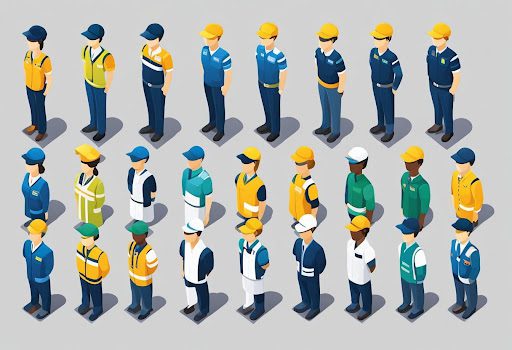
Choosing the right workwear is crucial in enhancing your brand identity and ensuring a professional appearance. This involves incorporating branding elements and selecting styles that reflect professionalism.
Incorporating Branding Elements
Adding branding elements to workwear helps build and maintain a strong brand identity.
For instance, incorporating your logo through embroidery or high-quality print on t-shirts and uniforms makes your brand easily recognisable.
We should ensure the colours and designs used in the workwear align with our company’s brand palette. This consistency helps create a cohesive and professional look.
Materials and comfort are also crucial.
Quality fabrics that are comfortable to wear enhance the overall appeal of the branded workwear, making employees proud to represent the brand.
Using premium softshell jackets or breathable cotton shirts can be very effective.
Selecting Styles for Professional Look
The style of the workwear significantly impacts the perceived professionalism of our brand. Opting for stylish yet practical designs can ensure employees look sharp and feel comfortable at work.
We should consider the level of formality required in our industry. For a corporate setting, smart shirts and tailored trousers might be ideal. In more casual environments, branded t-shirts or polo shirts could work well.
Durability is also important. High-quality workwear that withstands daily wear ensures staff always look their best. Adding details like neat stitching and high-quality buttons can make the apparel more professional.
Finally, ensuring a good fit for all employees promotes unity and a consistent, professional appearance. Offering a variety of sizes and allowing for customized measurements, if necessary, can achieve this.
Partner with Essential Workwear for Your Needs
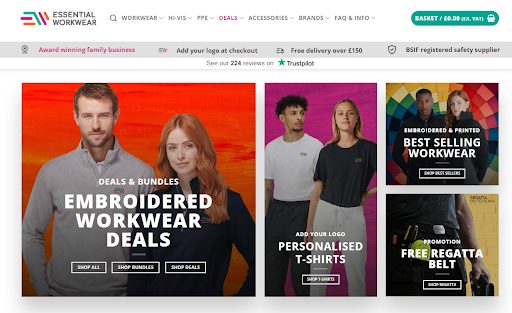
For high-quality, durable, and stylish workwear, Essential Workwear offers a wide range of options tailored to various industries. From construction to healthcare, Essential Workwear ensures your team is safe, comfortable, and represents your brand effectively. Explore their collection to find the perfect workwear solutions for your business.