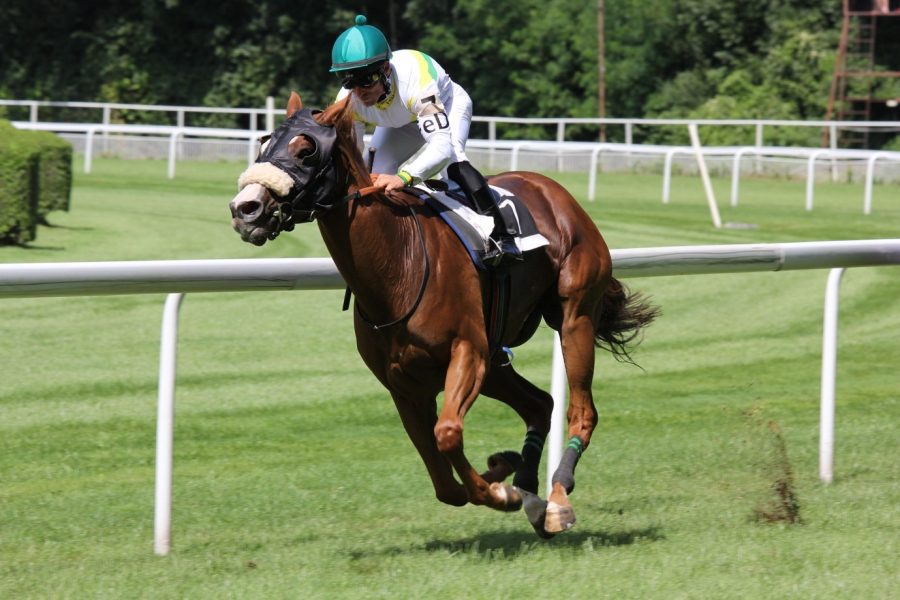
Horse racing globally is one of the most popular sporting and betting events of them all, and it has been for a very long time. The sport in Ireland is just as important as it is anywhere else in the world, and so naturally the industry contributes a great deal to the national economy and in many ways is a really important part of Irish annual life. What’s more is that research shows its importance to the Irish economy is only growing, so today we’re going to look at how important horse racing is in Ireland and why that might be so.
Let’s get started.
The history
To start with, let’s look at the role that horse racing has played in the country’s history. Mentions of horse racing are more or less as old as our oldest Irish texts and primary sources. Ancient Irish texts mention chariot racing on the Curragh in County Kildare, potentially placing the origin of horse racing in Ireland as far back as 110 BC.
By the 17th Century, horse racing had been introduced in something like a modern form that we might recognise today. King Charles II of England introduced the King’s Plate Races, which were meant to favour the fastest and strongest horses. Undoubtedly, then, horse racing was becoming important to the economy already.
It’s plain to see how important horse racing was in Ireland by the 1920s, when off course betting was allowed by the Irish Free State. Efforts were made to regulate and support the industry, and people began promoting Irish horses internationally.
Leading us up to the modern day, then, horse racing has plainly had a big impact—so where does that leave the modern Irish economy?
The figures
The Irish economy currently benefits from horse racing to the tune of about €2.46 billion annually. This is clearly a huge industry in the country, then, purely in terms of the money involved. But there are also as many as 30,000 people whose jobs rely on the horse racing. A further 4,000 owe their livelihoods to the breeding operations, so it’s both a question of stimulating the economy and providing a great many jobs for people.
From the point of view of attendance, too, horse racing is obviously very important to the Irish people. Around 1.2 million people attend the races across Ireland each year, making it one of the most popular sporting events in the country. Only the Gaelic Athletic Association boasts greater attendance figures. Again, events with this much attendance are important to the Irish economy in many peripheral ways as well as in the direct impact of the events themselves. It drives travel and local tourism.
The betting industry is also a really important aspect of the role of horse racing in the national economy. The betting companies again employ a great many people in Ireland, naturally, which in itself is really important on both the local and national level. Leopardstown, for instance, one of Ireland’s biggest tracks, recorded on-course bets amounting to around €2.6 million euros in 2020. The online racing betting sphere is roughly comparable in size, so again there is plainly a lot of money in the betting side of things.
The horse racing also brings in a huge amount of overseas investment. Of around €125 million invested in breeders and auction houses from 2002 to 2016, almost half came from overseas. The government saw it valuable to invest €57 million into refurbishing 20 national racecourses, so that alone goes to show how significant the impact of the industry is.
Horse racing provides jobs, it constitutes one of the nation’s favourite pastimes that shows no sign of slowing in popularity, and it brings in huge amounts of money from overseas—it’s importance to the economy is hard to overstate.
From deep in Ireland’s ancient past, then, does this tradition emerge as it does in so many other countries on Earth. Though things have naturally fluctuated a great deal over the millennia, the centuries, and the decades, what’s clear now is that horse racing is more popular than ever and that popularity is only increasing. All of this, naturally, reflects in the Irish economy, to which horse racing at every level is a huge contributor.