Founded in 1899 in Turin, Fiat stands as one of the pioneering European automotive brands. Over more than a century, the brand has weathered world wars, economic upheavals, and shifting consumer tastes to become synonymous with affordable, stylish mobility. Today, operating as part of the Stellantis group, Fiat faces its greatest test: transitioning from its heritage as the “people’s car” to a competitive electric vehicle (EV) player in the fast‑evolving global automotive market.
Historical Evolution and Production Strategy of Fiat
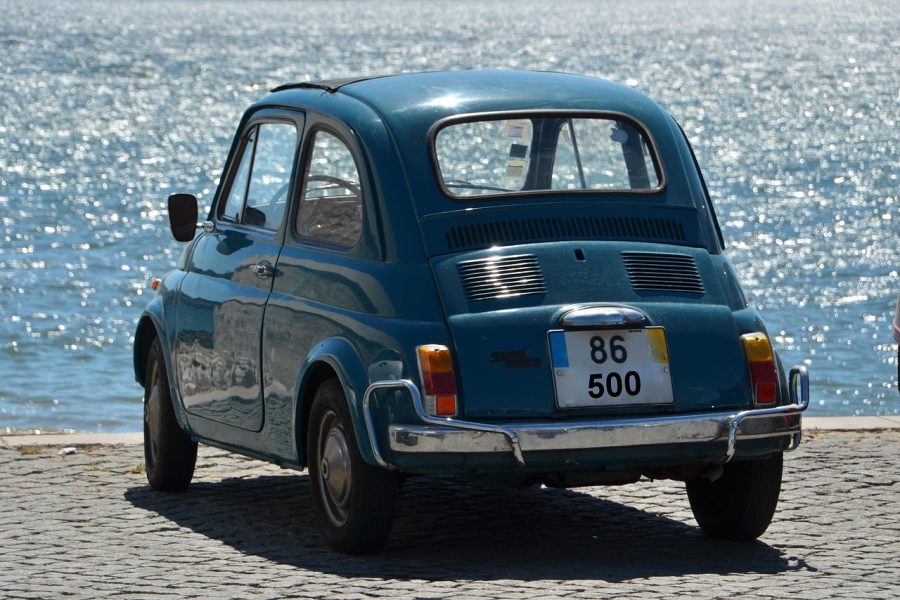
From its earliest models—like the 1912 Tipo 4—to the iconic Fiat 500 of 1957, Fiat built its reputation on small, efficient cars designed for everyday use. The 500, with its rear‑engine layout and sub‑4‑meter length, became a cultural symbol of post‑war Italy’s economic revival.
Everything was moving fine with the brand until the 1980s and ’90s when it struggled with quality perceptions and declining market share. Strategic alliances (notably with General Motors) yielded mixed results. The 2007 relaunch of the 500 as a retro‑styled hatchback, however, marked a high point, reviving Fiat’s image and sparking strong sales in the European markets and beyond, but that wasn’t enough to get the brand fully back on its feet.
In 2021, Fiat Chrysler Automobiles (FCA) merged with the PSA Group to form Stellantis, the world’s fourth‑largest automaker by volume. With this merger, Fiat’s production shifted to leverage shared platforms and powertrains, improving cost efficiency but raising concerns about brand dilution.
Nevertheless, the Fiat 500 remains strong and reliable, even with the newer models. As AUTODOC says, Fiat 500 shock absorber is one of the sturdiest in its class, making the small car a really reliable city car for everyday driving.
Current Model Range and Electrification Plans
Under Stellantis’s Dare Forward 2030 strategy, the group has committed over €30 billion through 2025 to electrification and software development. In this, Fiat’s roadmap includes:
- Hybrid and Mild‑Hybrid Versions:
- Fiat 500 Hybrid: Launched in 2020 with a combined 1.0L petrol engine and a 12kW electric motor.
- Panda Hybrid: Retained the Panda’s utilitarian appeal with mild‑hybrid tech.
- Battery‑Electric Vehicles (BEVs):
- Fiat 500 Electric: Introduced in 2020, with up to 320 km WLTP range. Production pauses in late 2024 highlighted weak demand; Stellantis paused output for four weeks at Mirafiori due to low orders.
- Upcoming Models:
- New Fiat 600 EV: Slated for late 2025, targeting the compact crossover segment.
- Electric Panda: Expected 2026, reviving the Panda nameplate in BEV form.
- Charging Infrastructure:
- Adoption of Tesla’s NACS charging standard by 2025 to allow Fiat BEV owners access to an expanded network.
Positioning Within Stellantis and Emerging Markets
Europe is a core market, where small cars remain popular. Stellantis aims for 70 % low‑emission vehicle (LEV) sales by 2030 in Europe, with Fiat as a key volume contributor. The brand is also expanding to North America with the 500e BEV—although it didn’t record much success in the market, and as such, discontinued the 500e in the North American market; Stellantis focuses on larger brands (Jeep, Ram) in this region.
Key 2025 Forecasts:
| Metric | 2024 Actual | 2025 Forecast |
| Fiat BEV Sales (Europe) | 45,000 | 75,000 (+67%) |
| Fiat BEV Share of Total Sales | 5% | 8% |
| Global Fiat Volume | 800,000 | 850,000 (+6%) |
| Mirafiori Plant Utilization Rate | 60% | 70% |
| R&D Spend on Fiat Electrification | €1.2 billion | €1.5 billion (+25%) |
Table: Fiat electrification KPIs – 2024 vs. 2025 forecast (source: Stellantis investor data, industry consensus).
Challenges and Strategic Imperatives
- The pause of 500e production underscores the sensitivity of BEV demand to incentives and pricing.
- Stellantis aims to be 30 % more capex‑efficient than peers, but Fiat’s small volumes may hinder economies of scale.
Conclusion
Fiat’s transition from the quintessential “people’s car” to an electrified future encapsulates the broader auto industry’s evolution. Backed by Stellantis’s hefty electrification investment, Fiat has the technical roadmap—but execution will determine whether it can reclaim mass‑market appeal beyond Europe. By 2025, success will be measured in BEV sales growth, production stability at Mirafiori, and the brand’s ability to leverage Stellantis synergies without losing its unique identity.
Reference Read: More information at autodoc.co.uk