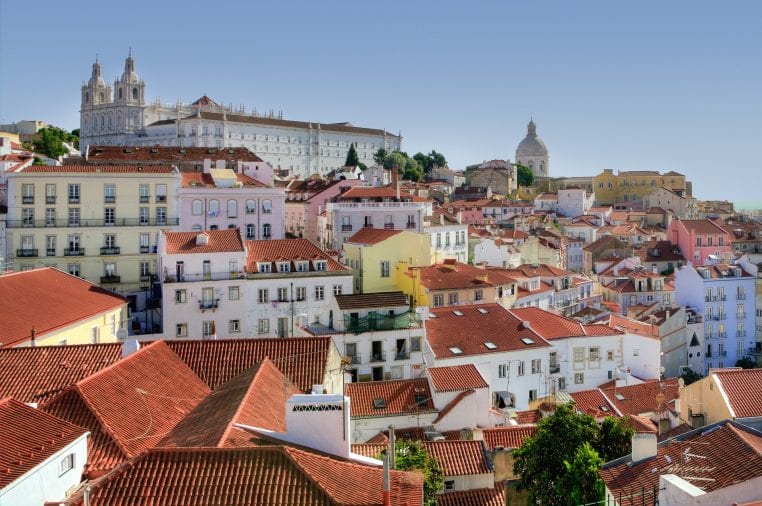
It may seem implausible that a European capital city could ever have been overlooked, but there is a real sense in which Portugal’s coastal capital has only been ‘discovered’ in the last ten years. Its magnificent, but not so long ago dilapidated, ancient buildings have been refurbished and it has become a European property hot spot, attracting international investors and celebrities.
So, what are the factors which have attracted so many people from around the globe to this seven-hilled capital? Well, first off, there’s the climate. Lisbon is one of the sunniest spots in Europe, with around 3,000 hours of sunshine per year and its winters are short and mild. The city has 25 Michelin starred restaurants, high end shopping to rival Paris and is under an hour from some of the best beaches in Europe. In addition, Portugal has one of the lowest costs of living in Europe and is ranked as the third safest country in the world. For investors from outside of the E.U. a key attraction has been the ‘Golden Visa’ scheme which gives foreign purchasers of property in excess of 350,000 euros, residency rights and freedom of travel within the Schengen area.
A survey published by the Institute of Directors in 2019 indicated that a third of British companies were considering opening operations abroad in order to gain easier access to the European market. Lisbon should be high on their list of locations. Under three hours flight time from London, Lisbon’s international airport is connected to 120 cities, making it an ideal location for international business. Another key incentive for business relocation to Lisbon is the competitive cost of office space. The average cost of renting office space in Lisbon is currently 300 euros per square metre per year. This compares very favourably with average costs for London, 1,300 euros and Paris, 890 euros.
Lisbon has also attracted start-ups because of the pool of home-grown expertise: an astonishing 53% of people in Lisbon, between the ages of 20 and 30, are STEM graduates and they can be hired for half the cost of most European cities. The city has become something of a magnet to tech nomads, attracting talent from around the world, particularly Brazil. The Portuguese government has also worked hard to encourage foreign investment, offering ten-year tax breaks to foreigners working in what they regard as strategic industries. The government has also pioneered e-strategies to enable businesses set up and operate with ease. The Fiscal Portal allows freelancers to issue invoices directly and small companies can use Invoicexpress.
Since 2016 Lisbon has been the home of Websummit, which it will be hosting for the next ten years, an indication of the capital’s importance within the tech world. A fact underlined by the establishment of research centres by both Google and Amazon. The city already has start-up hubs and co-working spaces such as Cowork central, Impact Hub, LACS, Start-up Lisboa and Canopy and new European start-up hubs are under development. It seems likely that this attractive capital, where English is widely spoken, will continue to attract business from across Europe in the years to come.