New technology is helping battery storage play an increasing role in Northern Ireland’s electricity system, allowing more renewable energy to be integrated in the system, new evidence from SONI has shown.
The System Operator for Northern Ireland said battery storage units delivered 170% more energy to the electricity grid between 13 November 2025 and 11 October 2026 than during the corresponding period a year earlier.
The increase follows changes introduced by SONI, EirGrid and SEMO through the Scheduling and Dispatch Programme (SDP-02) in November 2025.
The changes enable batteries to participate more effectively in electricity markets and in the scheduling and dispatch of the power system. Batteries can charge when electricity is available and discharge when it is needed, helping SONI to balance supply and demand and make the best use of renewable electricity when it is plentiful.
As the programme approaches its first anniversary, the results show batteries playing a greater role in balancing electricity supply and demand across the island of Ireland, including Northern Ireland.
Across the all-island electricity system, between 13 November 2025 and 11 October 2026, batteries supplied an average of 2.6% of electricity demand during the evening peak period, from 5pm to 7pm, compared with 1.1% during the corresponding period a year earlier. Their maximum contribution during this window reached 8.2%.
Battery charging patterns are also changing. Since April 2026, batteries have charged more during the day than overnight, particularly in the summer months, corresponding with periods of higher solar generation. By storing electricity and discharging when needed, batteries help shift energy to periods when it is most useful to the power system. This flexibility supports SONI as it integrates increasing levels of renewable generation in Northern Ireland.
Battery power supplied to the all-island electricity system reached a maximum of 520 MW on 31 January 2026, which is equivalent to one large conventional gas fired power station. This demonstrates the scale of flexible capacity now available to help system operators balance electricity supply and demand at key times.
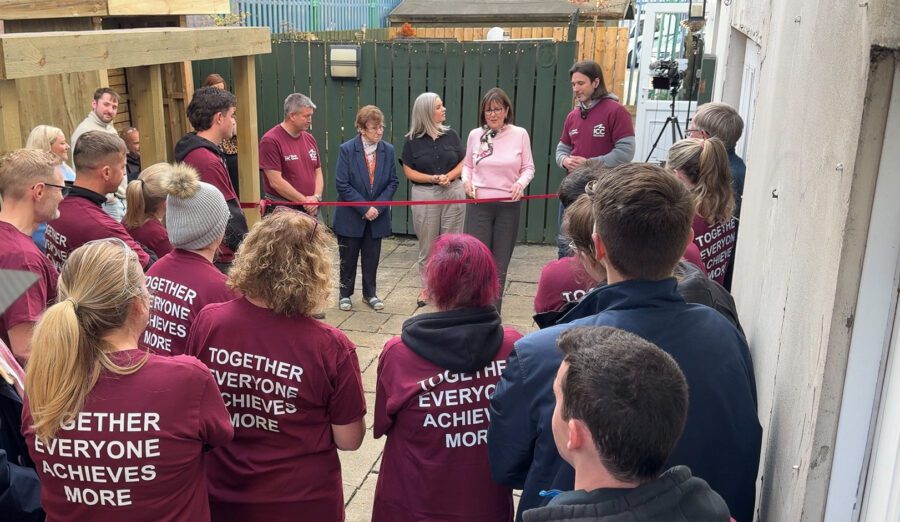
Marking one year of the Programme, Economy Minister Dr Caoimhe Archibald, said: “I welcome the results from the first year of the Scheduling and Dispatch Programme. Battery storage has an important role to play in delivering a secure, affordable and cleaner electricity system for all households and businesses here.
“These results show that the programme is helping to unlock the value of battery storage, enabling us to make better use of locally produced renewable electricity.”
John French, Chief Executive of the Utility Regulator, said: “Enabling battery storage to play a greater role, is an important step towards a more flexible, secure and efficient system that makes better use of renewable electricity.
“For the Utility Regulator, the priority is clear: progress must deliver for consumers. As we move towards a lower-carbon electricity system, we must ensure that the benefits of new technologies translate into long-term value for households and businesses across Northern Ireland.”
Alan Campbell, Chief Executive of SONI, added: “These results show the growing contribution energy storage can make to the electricity system, helping SONI to manage Northern Ireland’s network safely and securely as renewable generation grows.
“This new technology gives our control room more flexibility to balance supply and demand across the all-island system. It helps us make better use of renewable electricity when it is available and supports Northern Ireland’s journey to a cleaner energy future.
“By making better use of this flexibility, we can support a secure, increasingly renewable electricity system and deliver benefits for families, businesses and the wider economy in Northern Ireland.”